
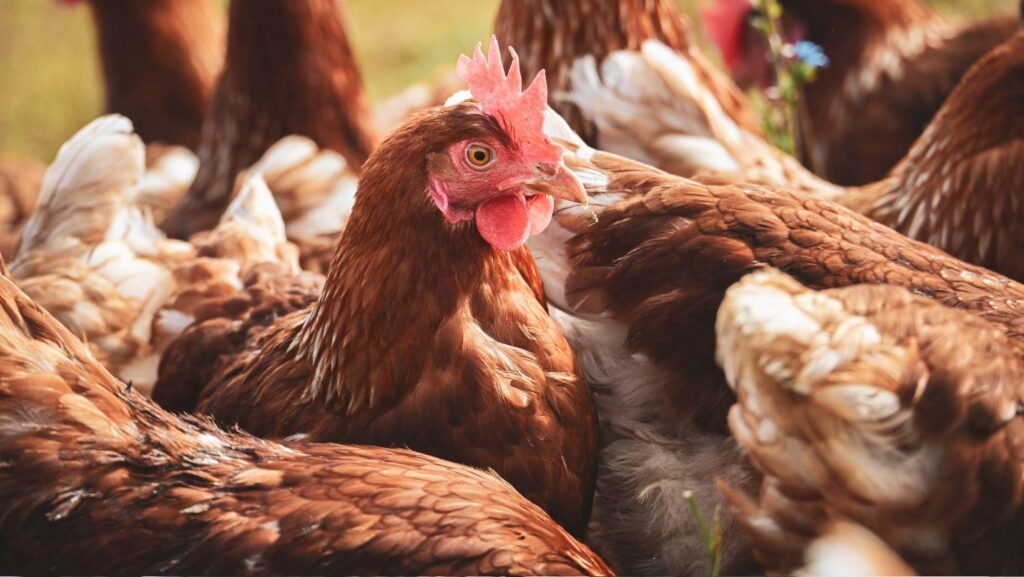
The poultry sector now finds itself at a crossroads, pitting the history of native chickens against the efficiency of hybrid ones. Choosing between a slow-growing chicken and a hybrid selected for rapid development primarily concerns nutritional management and animal welfare.
These two types of poultry have different physiological needs that require a targeted feeding approach to ensure the bird grows healthily and produces quality meat. Whilst native breeds represent a valuable link to biodiversity and hardiness, hybrids are the result of decades of genetic selection aimed at maximizing the conversion of feed into muscle. Understanding these differences is the first step for any farmer wishing to approach the poultry sector with awareness, placing proper nutrition as the essential foundation of all productive and qualitative success.
How to support the rapid growth of hybrids
Hybrid chickens have a very high growth potential, reaching maturity in a shorter time than traditional breeds, thanks to their accelerated metabolism. However, this early maturity places considerable stress on the organism, making diet a critical factor in preventing skeletal or metabolic disorders.
In this complex management scenario, Vetagro's focus is on microencapsulated additives emerges as a key solution, as it allows essential nutrients to be delivered in a protected manner, ensuring that the feed is properly assimilated. Unlike traditional breeds, hybrids require diets with high energy and protein density, precisely balanced to support muscle development without straining the internal organs. The inclusion of additives that promote gut health therefore becomes a priority, as only a perfectly functioning gut can sustain the demanding pace of these breeds, ensuring that nutrients reach their destination to support the balance between weight gain and the structural robustness of the chicken.
The wildness of native breeds and their slow metabolism
Ancient breeds, often linked to specific regions, follow much slower and more natural biological rhythms, often taking twice as long as hybrids to reach maturity. This slow metabolism translates into greater hardiness and an extraordinary ability to adapt to variable environmental conditions and less concentrated diets, especially if the animals have access to pasture.
However, even for native breeds, nutrition plays a key role in determining meat quality and the vigor of the plumage. For these birds the focus shifts towards maintaining a strong immune system and consistent vitality throughout a longer lifespan, avoiding deficiencies that could compromise their natural resistance to disease. The use of feed supplemented with natural substances can help maintain the balance of the gut microbiota, allowing these chickens to fully express their genetic potential without having to resort to excessive calorie intake that they would be unable to manage properly.
Additives and technological precision
Regardless of the breed chosen, modern poultry nutrition science has developed tools to optimize the use of feed resources and reduce environmental impact. The use of targeted additives, such as plant extracts and organic acids, allows for better breakdown of feed components, reducing waste and improving the overall digestibility of the diet. This aspect is particularly important for hybrids, which must process large quantities of food in a short time, but it is also beneficial for local breeds, improving the absorption of minerals necessary for strong bones.
In this regard, microencapsulation technology represents a real breakthrough, as it ensures a slow and targeted release of active ingredients in the intestinal tract, bypassing gastric degradation. This physiological stability also makes it possible to reduce the need for pharmacological treatments, as an organism fed with precision already possesses all the necessary tools to defend itself independently against external threats.
An informed choice between efficiency and tradition
Choosing between hybrid chickens and native breeds means deciding which production model to follow and, consequently, what nutritional commitment to uphold for the birds’ wellbeing. If the goal is speed and feed conversion efficiency, hybrids are the ideal choice, provided they are given a balanced and monitored diet. If, on the other hand, the focus is on promoting biodiversity and a product with more complex flavors, traditional breeds offer great satisfaction with less intensive feed management but with equal attention to the quality of raw materials.
In both cases success inevitably depends on the animal’s gut: it is precisely the addition of specific feed additives that enables the animal to develop healthily. Investing in this precision nutrition means honoring the life of the chicken and ensuring that the end consumer receives safe, nutritious and high-quality food, capable of reflecting the excellence of a supply chain that puts science at the service of nature.