
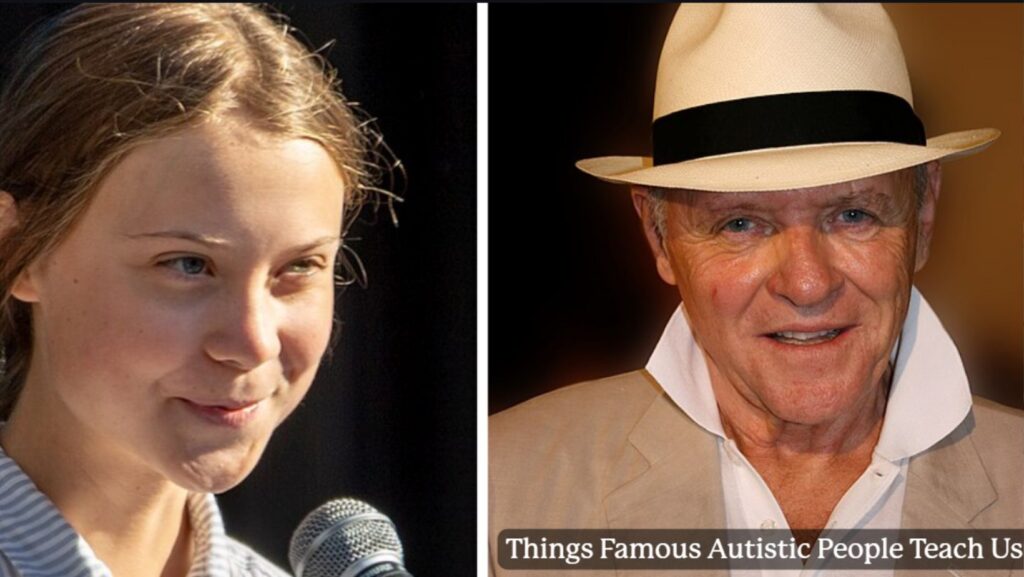
Public conversations about autism often swing between two extremes: deficit-focused narratives that emphasise difficulty, or romanticised portrayals that frame autism as a “superpower.” Both miss something essential.
Autism is neither a tragedy nor a gift reserved for the exceptional. It is a neurodevelopmental difference that shapes how people perceive, process, and interact with the world. For many adults, these conversations prompt personal reflection.
Some people first begin questioning their own experiences when they see autistic traits described in public figures. Others reach a point where long-standing effort, exhaustion, or social difficulty no longer make sense without deeper context. This is often when individuals start considering whether an adult autism assessment might help them better understand their cognitive style, history, and needs.
Looking thoughtfully at well-known autistic individuals can help us move beyond stereotypes. Not to hold them up as templates for success, but to better understand how autistic strengths, challenges, and psychological capital emerge when people are allowed to work with their neurotype rather than against it.
Why Representation Matters (And Can Be Complicated)
Representation matters because autism has historically been misunderstood, misdiagnosed, or overlooked, particularly in adults and marginalised groups.
Seeing autistic people visible in public life can reduce stigma and challenge misconceptions. However, visibility becomes complicated when it turns into expectation. When narratives focus only on extraordinary achievement, they can imply that autistic people must be exceptional to be valued.
In reality, most autistic adults live ordinary, meaningful lives. They are professionals, parents, students, creatives, and carers navigating everyday responsibilities.
Autism and Psychological Capital
Psychological capital refers to four core capacities: hope, self-efficacy, resilience, and optimism. These qualities develop (or erode) over time and in different environments.
For autistic people, psychological capital is shaped by whether differences are understood or repeatedly challenged. Many describe resilience built through necessity. Over time, resilience without recognition becomes unsustainable.
Psychological capital tends to strengthen when autistic individuals experience:
- Validation rather than pressure to mask
- Environments that accommodate sensory, communication, and cognitive needs
- Opportunities to build competence without comparison
Publicly autistic individuals illustrate how psychological capital flourishes under these conditions.
Temple Grandin: Systems Thinking in Action
Dr Temple Grandin, an academic, author, and animal welfare advocate, has spoken openly about being autistic throughout her career. Her work transformed livestock handling by applying visual and sensory thinking—cognitive styles often associated with autism.
Grandin developed systems aligned with how her mind worked. Her success did not come from suppressing autistic traits, but from recognising their value in the right context.
Her story illustrates that when autistic cognition is treated as legitimate, it can generate innovation, benefiting entire industries.
Greta Thunberg: Moral Clarity and Cognitive Focus
Climate activist Greta Thunberg has publicly described autism as part of her identity. She has spoken about experiencing the world with intense clarity, difficulty tolerating inconsistency, and a strong internal sense of right and wrong.
These traits are sometimes misinterpreted as rigidity or inflexibility. Yet from a neurodiversity-informed perspective, they reflect cognitive focus, honesty, and values-driven reasoning. Thunberg’s visibility challenges the assumption that autism must be quiet, detached, or apolitical.
Anthony Hopkins: Late Recognition and Lifelong Difference
Actor Sir Anthony Hopkins has spoken publicly about receiving an autism diagnosis in his 70s. His reflections resonate with many adults who recognise autistic traits only after years of feeling out of step with others.

Late recognition often brings a complex emotional response, including relief, grief, and re-interpretation of past experiences. Hopkins’ experience reflects a broader reality: autism does not suddenly emerge in adulthood.
What changes is understanding, which can restore self-efficacy that was previously undermined by self-blame.
Moving Beyond the “Genius” Narrative
Media portrayals frequently emphasise autistic people who fit the “exceptional mind” trope. This narrative can distort public understanding and create unrealistic expectations.
Most autistic strengths are subtle, contextual, and relational. They may include:
- Pattern recognition and systems thinking
- Deep focus on meaningful interests
- Honesty and direct communication
- Strong adherence to personal values
These qualities may not attract headlines, but they are deeply valuable in everyday life and work.
Autism, Work, and Belonging
Many famous autistic individuals succeed partly because they achieve a degree of autonomy that most people never access. This raises an important question: how many autistic adults struggle not because of their neurology, but because workplaces are inflexible?
When work environments fail to accommodate differences, psychological capital is steadily depleted.
The Risk of Misrepresentation
It is essential to be wary of speculation. Assigning autism to public or historical figures without confirmation may feel validating to some, but it risks oversimplifying complex individuals using stereotypes. Autism is not an identity to be assigned from the outside, but one to be clinically diagnosed, and only named if a person chooses to do so.
What These Stories Actually Teach Us
The common thread among publicly autistic figures is not fame or exceptional talent. It is alignment. When autistic people are supported to live in ways that suit their cognitive style, psychological capital grows. When they are required to mask, conform, or justify themselves constantly, it erodes.
Conclusion
Famous autistic people do not represent a standard to aspire to. They represent visibility—and visibility is only the beginning.
The deeper lesson lies in recognising how autistic potential is shaped by understanding, accommodation, and respect. When autistic adults are supported to build hope, self-efficacy, resilience, and optimism on their own terms, outcomes improve not because autism disappears, but because it is finally understood.
References
Grandin, T. (2006). Thinking in pictures: My life with autism (Expanded ed.). Vintage Books.
Happé, F., & Frith, U. (2020). Annual research review: Looking back to look forward – changes in the concept of autism and implications for future research. Journal of Child Psychology and Psychiatry, 61(3), 218–232. https://doi.org/10.1111/jcpp.13176
Luthans, F., Youssef-Morgan, C. M., & Avolio, B. J. (2015). Psychological capital and beyond. Oxford University Press.
Author Bio
Dr Darren O’Reilly is a Chartered Psychologist and Founder of AuDHD Psychiatry. He writes about ADHD and autism with a focus on clear, practical guidance for families and adults.