
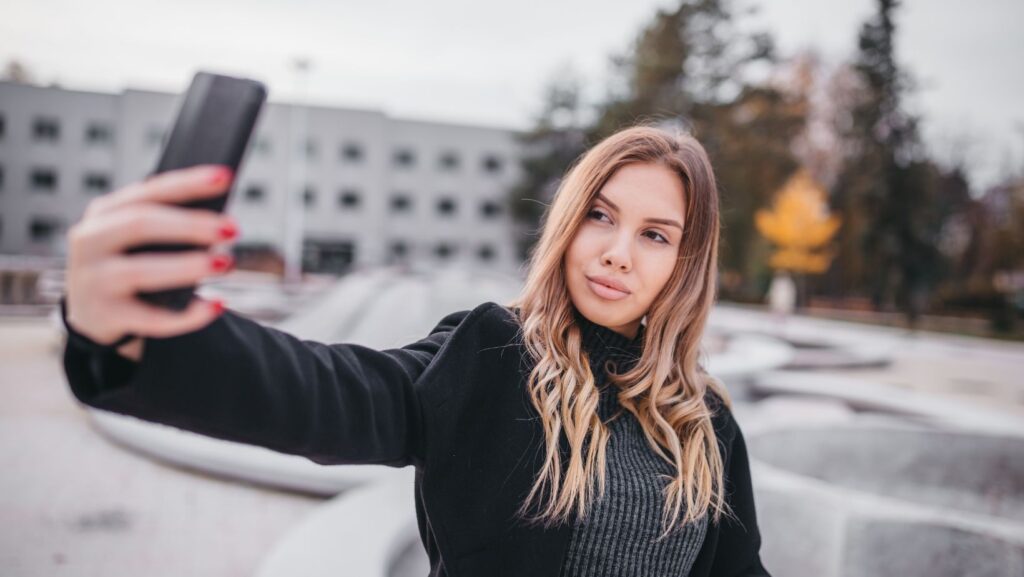
That unsettling feeling when a candid shot looks nothing like your mirror reflection is not in your head. The science behind it is weirder than you think.
Everyone has had the moment. A friend tags a photo from dinner, and the person staring back from the screen is somehow a stranger. The nose looks wider. One eye appears slightly higher than the other. The jawline has vanished. And the immediate thought is some version of “Do I actually look like that?”
The short answer: no, not exactly. But you also don’t look exactly like what you see in the mirror. The truth is more unsettling and more interesting than either version. Your face does not have one fixed appearance. It shifts depending on lens focal length, distance, lighting, angle, and even which side of your face is dominant. And the psychological layer on top of all that, the fact that the brain processes its own face differently than other people’s faces, makes the whole thing even more disorienting.
Understanding why this happens does not just satisfy curiosity. It fundamentally changes the relationship between a person and their reflection.
Focal Length Changes Everything
The single biggest reason a phone selfie looks different from a professional portrait (which looks different from a mirror reflection) is lens focal length.
A smartphone front camera typically shoots at around 24 to 28 millimeters equivalent focal length. At that wide angle, objects closer to the lens appear disproportionately larger than objects farther away. When holding a phone at arm’s length, the nose is the closest feature to the lens. So it gets exaggerated. Wider. More prominent. The ears, being farther back, appear to shrink. The overall face shape distorts toward a narrower, longer appearance with a dominant nose.
A portrait lens, typically 85 to 135 millimeters, compresses those spatial relationships. Features appear more proportional to each other because the camera is farther from the subject and the magnification flattens depth differences. This is why professional headshots tend to look “more flattering.” It is not better photography. It is different optics producing a different geometric rendering of the same face.
Research published in the journal JAMA Facial Plastic Surgery found that photographs taken at close range with wide angle lenses distorted nasal appearance by up to 30 percent compared to clinical measurements. That is not a minor variation. It is the difference between looking at a photo and thinking “my nose is fine” versus “something is wrong with my nose.” Same nose. Different lens. Entirely different perception.
For anyone who has ever fixated on the shape or size of their nose after seeing it in a photo, this visual guide to the wide variety of natural nose shapes offers some useful perspective on how much normal variation exists and why no single photo captures what a nose actually looks like in three dimensions.
The Mirror Lies Too (Just Differently)
If cameras distort, the mirror must be the truth, right? Not quite.
The face in a mirror is laterally reversed. The left side appears on the right, and vice versa. Because human faces are asymmetrical (nobody’s face is perfectly symmetrical, and the differences are more pronounced than most people realize), the mirror version is a face that literally does not exist in reality. It is a reversed composite that the brain has become deeply familiar with through years of daily exposure.
When someone sees a non-reversed photo of themselves, the asymmetries suddenly appear on the “wrong” side. The part slightly off center. The eyebrow that sits a fraction higher. The smile that pulls a touch more to one side. These are features that were always there, but the brain registered them as normal in the mirror orientation. Flipped, they trigger a subtle but real sense of unfamiliarity.
This is called the “mere exposure effect,” documented extensively in psychological research reviewed by the American Psychological Association. People develop a preference for things they see more frequently, including their own mirrored face. When that preference is disrupted by a true-orientation photograph, the result feels like looking at a less attractive version of yourself, even though other people, who see the non-mirrored version every day, perceive it as completely normal.
Lighting Sculpts More Than Makeup Ever Could
The third variable is lighting, and its impact on facial appearance is enormous.
Direct overhead lighting (the kind in most bathrooms and office buildings) casts shadows downward into the eye sockets, under the nose, and below the lower lip. It accentuates texture, deepens wrinkles, and creates the hollowed out appearance that makes everyone look exhausted under fluorescent lights. Side lighting creates depth and dimension, sculpting the cheekbones and jawline in ways that can make the same face look dramatically different from one angle to the next.
Soft, diffused front lighting (the golden hour glow that makes every outdoor photo look effortless) minimizes shadows, evens out skin texture, and creates the flattering, luminous quality that professional photographers chase. Harsh, direct flash flattens the face, eliminates dimension, and makes skin look waxy and pores look larger.
Same face. Same features. Completely different visual impression depending on where the light is coming from, how hard or soft it is, and what color temperature it carries. A person who looks striking in warm afternoon light can look haggard under the LEDs in a dressing room, and neither version is “more real” than the other. They are both accurate representations of how light interacts with three dimensional facial structure under different conditions.
Angles Reveal Different Faces
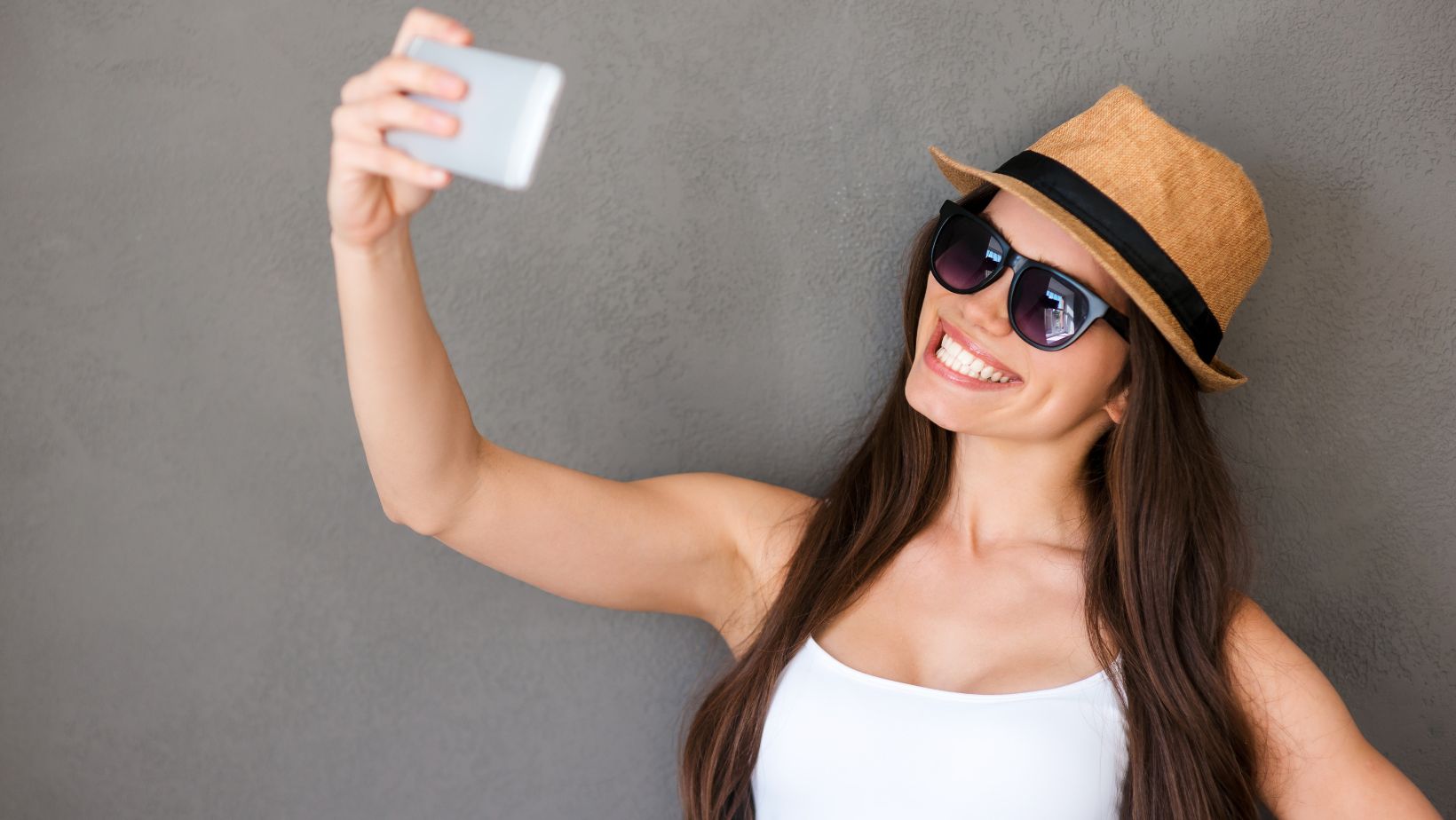
Every face has a dominant side, a more photogenic angle, and positions that emphasize or minimize specific features. Tilting the chin down slightly defines the jawline and makes the eyes appear larger. Tilting it up shortens the nose visually but can soften the jaw. Turning slightly to one side emphasizes the cheekbone on the visible side while slimming the face overall.
This is not vanity knowledge. It is the practical reality of how three dimensional objects are rendered in two dimensional images. Photographers know this intuitively. The average person discovers it accidentally when a candid shot from below catches the underside of the chin and creates a jawline that does not exist in real life, or when a straight on flash photo makes the face look 20 percent wider than it appears in a mirror.
The point is not that people should obsess over their angles. The point is that a single photograph, taken from a single angle with a single lens in a single lighting condition, captures a fraction of what a face actually looks like in motion and in three dimensions. Drawing conclusions about appearance from that fraction is like judging a song by hearing one note.
What This Means for How You See Yourself
The convergence of all these factors, lens distortion, mirror reversal, lighting variation, angular differences, means that no single image of a face is definitive. Not the selfie. Not the mirror. Not the tagged photo from a friend’s phone. Not even the professional headshot. Each one captures a real version of the face, but none of them captures the complete version.
This matters because an enormous amount of appearance related anxiety traces back to photographs. A 2019 study published in the Journal of Plastic, Reconstructive and Aesthetic Surgery found that the rise of selfie culture significantly increased consultation requests for nasal surgery, and that many of those consultations were driven by distorted perceptions created by wide angle phone cameras rather than actual anatomical concerns.
Understanding the mechanics behind facial appearance in photos does not eliminate insecurity. But it does introduce a crucial filter between seeing a photo and drawing a permanent conclusion about what your face looks like. The photo is one rendering. Produced by one set of optical and environmental variables. And the face you live in, the one that moves and expresses and exists in three dimensions across thousands of lighting conditions every single day, is not reducible to any one of them.
That context is worth keeping close. Especially on the days when a bad photo tries to convince you that you are someone you are not.