
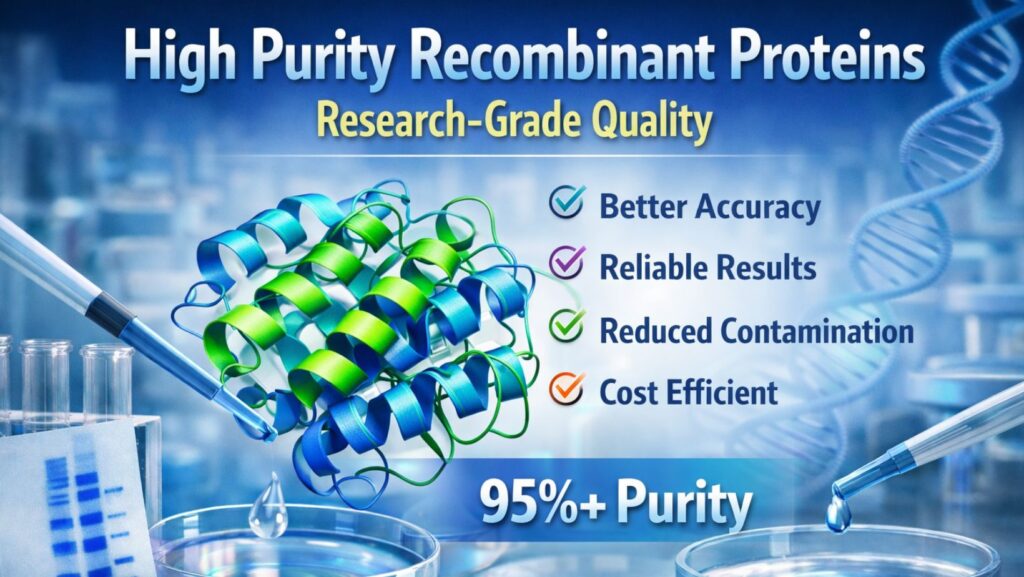
High purity recombinant proteins play a key role in modern lab work. These proteins help scientists push forward in fields like biology and medicine. With top-notch quality, they make experiments more reliable and results easier to trust.
Many researchers look for recombinant proteins for research use that meet strict standards. High purity means fewer impurities, which can mess up data or waste time. This focus on clean, effective proteins saves effort and boosts success in studies.
Choosing the right source for these proteins matters a lot. It ensures your work stays on track without surprises. Let’s dive into what makes high purity recombinant proteins stand out and why they’re worth it for your projects.
What Makes Recombinant Proteins Special?
Recombinant proteins come from genetic engineering. Scientists insert DNA into host cells to produce them. This method allows for large amounts of specific proteins that mimic natural ones.
These proteins open doors in labs everywhere. They help study diseases or test new drugs. Without them, many breakthroughs would slow down.
High purity recombinant proteins take this a step further. They go through extra steps to remove unwanted bits. This results in a product ready for sensitive tasks.
Why Purity Levels Matter in Research?
Purity affects every part of an experiment. Low purity can lead to false positives or unclear outcomes. High purity recombinant proteins cut down on these risks.
Think about it in daily lab life. When proteins are clean, reactions happen as expected. This builds confidence in your findings.
For recombinant proteins for research use, purity often hits 95% or higher. This level supports precise work in areas like enzyme studies or antibody development. It keeps things consistent across batches.
Key Benefits of High Purity Recombinant Proteins
One big plus is reliability. You get the same quality every time you order. This helps repeat experiments without issues.
- Better accuracy in data collection
- Less time fixing errors from impurities
- Stronger support for publication-ready results
Another benefit shows in cost savings. Pure proteins mean fewer failed runs. Over time, this adds up for busy labs.
They also fit well with advanced tools. High purity recombinant proteins work smoothly in assays or imaging setups. This enhances overall productivity.
How We Produce High Purity Recombinant Proteins?
Production starts with careful cell selection. Hosts like bacteria or yeast get the job done efficiently. We monitor growth to keep things optimal.
Purification follows with multiple techniques. Chromatography separates the target protein from others. Filtration removes small contaminants.
Testing wraps it up. We check for purity using methods like gel electrophoresis. This ensures each batch meets research-grade standards.
Recombinant proteins for research use go through these steps to stay dependable. It’s all about delivering what labs need without hassle.
Common Applications in Labs
In drug discovery, these proteins model targets. They help screen compounds quickly. High purity recombinant proteins make this process sharper.
Biotech firms use them for vaccine work. Pure forms aid in immune response studies. This speeds up development timelines.
Academic settings rely on them too. From basic cell biology to complex signaling pathways, they provide clear insights.
- Testing enzyme functions
- Studying protein interactions
- Developing diagnostic tools
These uses highlight their versatility. No matter the project, high purity keeps things on point.
Challenges in Achieving High Purity
Not all proteins purify easily. Some stick to impurities or degrade fast. We handle this by tweaking conditions early on.
Scale-up can be tricky. Moving from small batches to larger ones risks quality drops. Close oversight prevents that.
Contamination from hosts poses another hurdle. We use sterile setups and quick processing to avoid it.
High purity recombinant proteins overcome these through proven methods. It results in products that perform well every time.
Choosing the Right Supplier for Recombinant Proteins
Look for suppliers with a solid track record. They should offer detailed specs on purity and activity. This helps match your needs.
Ask about customization options. Some projects require specific tags or modifications. A good supplier handles that smoothly.

Check for quick delivery times. Delays can stall research. Reliable sources keep stock ready or produce on demand.
Recombinant proteins for research use benefit from trusted partners. It ensures you get value without extra worry.
Maintaining Quality in Storage and Handling
Proper storage keeps proteins active. Most need cold temperatures, like -20°C or lower. We pack them to stay stable during shipping.
Handling tips include avoiding freeze-thaw cycles. This prevents damage to structure. Use fresh aliquots for best results.
Documentation helps too. Labels with lot numbers track batches. This aids in troubleshooting if needed.
High purity recombinant proteins stay effective with these practices. It extends their usefulness in your work.
Future Trends in Recombinant Protein Technology
Advances in gene editing boost production. Tools like CRISPR make engineering faster. This leads to even purer outcomes.
New hosts emerge, like insect cells. They handle complex proteins better. Expect more options soon.
Sustainability gains focus. Greener methods reduce waste. This appeals to eco-conscious labs.
These trends promise exciting developments. High purity recombinant proteins will evolve to meet new demands.
Conclusion
High purity recombinant proteins offer a strong foundation for research success. They deliver clean, reliable tools that drive progress. By choosing research-grade quality, you set your work up for the best possible outcomes.
Recombinant proteins for research use continue to shape discoveries. With the right purity, they unlock potential in countless fields. Make them part of your lab routine for consistent, impactful results.