
Few foods conjure as much opulence and exclusivity as caviar. Synonymous with wealth, sophistication, and indulgence, this tiny jewel of the culinary world has fascinated gourmets for centuries. But what exactly is caviar, how is it produced, and why does it command such lofty prices? This comprehensive guide will take you through everything you need to know about the world’s most luxurious delicacy.
What Is Caviar?
At its core, caviar is the salted roe, or eggs, of certain species of sturgeon—a prehistoric fish that has been swimming Earth’s waters for over 200 million years. True caviar comes specifically from sturgeon, while roe from other fish, like salmon or trout, is technically called “fish roe” and often referred to as “caviar” in casual conversation.
Caviar is prized for its delicate texture, unique flavor, and the luxurious experience of savoring each tiny, glistening bead. The eggs are soft yet firm, bursting with a briny, subtly nutty taste that can vary depending on the species, the fish’s diet, and even the water in which it was raised.
Types of Caviar
Not all caviar is created equal. Different sturgeon species produce eggs with distinct flavors, sizes, and colors. Here are the main types:
- Beluga Caviar – Perhaps the most famous, Beluga caviar comes from the Beluga sturgeon found in the Caspian Sea. It features large, pale gray to almost black eggs and is revered for its creamy, buttery flavor. Beluga caviar is extremely rare and expensive, often costing thousands of dollars per ounce.
- Osetra Caviar – Harvested from the Osetra sturgeon, this type ranges in color from golden brown to dark gray. Its flavor is slightly nutty with a rich, complex finish. Osetra is highly prized among connoisseurs for its balance of taste and texture.
- Sevruga Caviar – Coming from the smaller Sevruga sturgeon, these eggs are smaller and darker, with a pronounced, briny flavor. Sevruga caviar is slightly less expensive than Beluga or Osetra but still a symbol of luxury.
- Kaluga Caviar – Sometimes called the “King of Sturgeon,” Kaluga caviar comes from the Kaluga sturgeon in China. It resembles Beluga caviar in size and creaminess but offers a more nuanced, slightly earthier flavor.
- Sustainable Alternatives – With wild sturgeon populations declining due to overfishing, farmed caviar has become increasingly popular. Many reputable farms now produce high-quality, ethically sourced caviar, ensuring sustainability without sacrificing taste.
How Caviar Is Made
The process of producing caviar is meticulous and labor-intensive. It begins with raising sturgeon, which can take years, as these fish may not mature enough to produce eggs for a decade or more. Once the fish is ready, the roe is carefully extracted, cleaned, and sorted by size, color, and texture.
After sorting, the eggs are lightly salted—a process known as “malossol,” meaning “little salt” in Russian—to enhance flavor and preserve freshness without overpowering the delicate taste. The final product is then packaged under strict conditions to maintain its luxurious quality.
How to Store and Serve Caviar
Proper storage is crucial to preserve the delicate texture and flavor of caviar. It should be kept refrigerated at temperatures between 28°F and 32°F (-2°C to 0°C) and consumed as soon as possible after opening. Caviar is highly perishable, so prompt enjoyment is key.
Serving caviar is an art form.
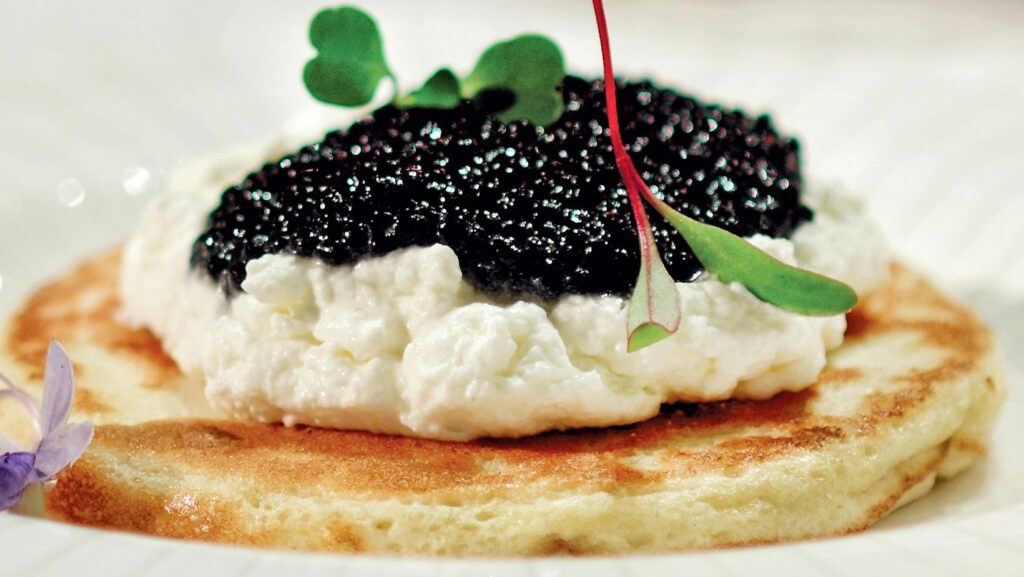
Traditionally, it is served on a chilled plate or bowl, often accompanied by neutral items like blini (small Russian pancakes), toast points, or lightly buttered bread. Many purists recommend eating caviar with mother-of-pearl spoons rather than metal, which can impart an unwanted metallic taste. Champagne, vodka, or dry white wine often accompanies the experience, complementing the briny richness of the eggs.
The Health Benefits of Caviar
Beyond its luxurious reputation, caviar is a nutritional powerhouse. It is rich in omega-3 fatty acids, which support heart health, reduce inflammation, and improve brain function. Caviar is also high in protein, vitamins A, D, and E, and minerals like selenium and iron. The caviar benefits extend beyond taste, making it a worthwhile indulgence for those seeking a nutrient-dense luxury food. Despite being a high-fat food, its healthy fats and nutrient density make it a worthwhile indulgence in moderation.
Caviar Etiquette and Enjoyment
Part of caviar’s allure lies in its ceremonial enjoyment. When indulging in this delicacy, a few tips elevate the experience:
- Savor small bites: Allow the eggs to gently burst in your mouth to fully appreciate their texture and flavor.
- Avoid strong flavors: Caviar pairs best with mild accompaniments to let its natural taste shine.
- Keep it cold: Serving caviar chilled maintains its pristine quality.
In social settings, caviar often signals refinement and exclusivity. Whether at a formal gathering or a quiet, luxurious meal at home, enjoying caviar can be an immersive experience that engages the senses.
The Price of Luxury
Caviar’s high price is due to rarity, labor-intensive production, and the slow maturation of sturgeon. Wild Beluga caviar, for instance, can fetch thousands of dollars per ounce, making it one of the most expensive foods in the world. Farmed alternatives, however, offer accessibility to connoisseurs without compromising quality, thanks to sustainable aquaculture practices.
Final Thoughts
Caviar is more than a food; it is an experience. Its delicate flavor, unique texture, and cultural heritage make it one of the most celebrated delicacies in the world. Whether you are a seasoned gourmet or a curious first-timer, understanding caviar—from its origins and types to proper serving techniques—enhances your appreciation of this timeless luxury.
For those willing to explore the indulgent world of caviar, the journey is as much about savoring each precious bead as it is about connecting with centuries of culinary tradition. From the Caspian Sea to your dinner table, caviar represents the pinnacle of taste, craftsmanship, and elegance—a true symbol of culinary luxury.