
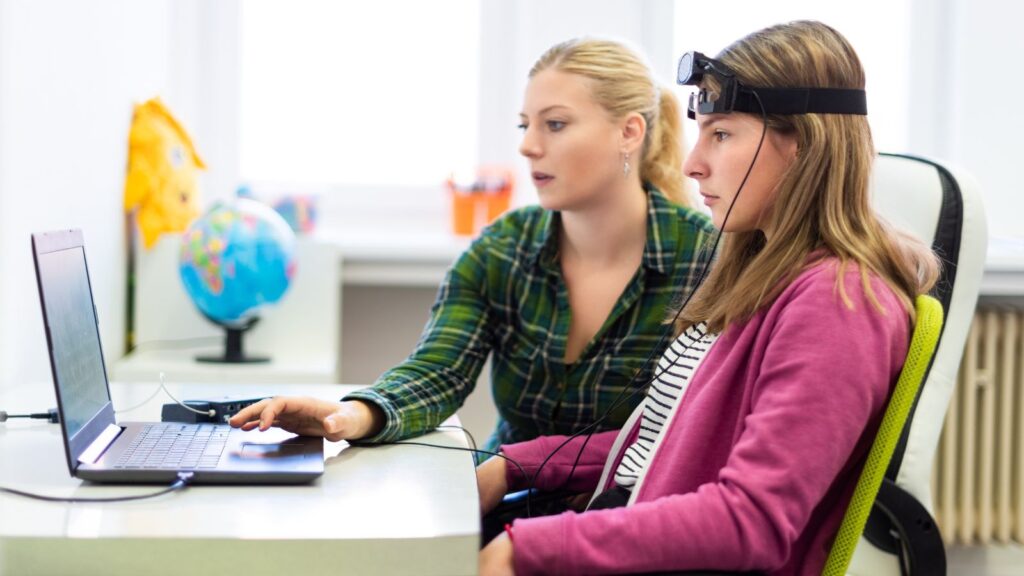
The brain is an impressive living architecture. Its billions of neurons and advanced circuitry are so precise yet flexible enough to be rewired throughout its life. It’s this adaptive nature that lies at the core of why neurofeedback therapy might be the answer to one of the most common mental health problems in the world: anxiety.
The Trouble With the Status Quo
The traditional treatment for anxiety disorders has been a carousel of medication: buspirone, benzodiazepines, or antidepressants, and psychological counseling or cognitive behavioral therapy (CBT).
The current reality is that prescription medicines and therapy don’t just cut it anymore. Not in an age when technology can give people something innovative and, even more crucial, something with fewer issues.
Most people struggle with the unsteady side effects of medication. The confusion, slowed thinking, and headaches (along with a slew of other adverse reactions) can sometimes feel so much worse than the disorder itself that some people choose not to take pills.
On the other hand, psychotherapy is effective, but it could take years and consistency for results to take place. And not everyone experiencing anxiety is open to “opening up” to professionals, even though talk therapy often provides real relief.
Neurofeedback isn’t intended to be the silver bullet of treatment. But adding it to a therapeutic plan has the potential to eliminate crippling anxiety.
What Is Neurofeedback?
Neurofeedback is a noninvasive way to measure and record brain activity. As a form of therapy, it focuses on retraining the brain for better emotional regulation and teaching self-control.
Neurofeedback falls under the umbrella of biofeedback, which measures heart rate, muscle tension, hand response, and other bodily functions. Although interest in this biofeedback for the brain has risen in the last few years, it’s nothing new.
Dr Barry Sterman and Dr Joe Kamiya introduced the concept of neurofeedback in the early ‘50s and late ‘60s. Dr Kamiya, a psychologist at the University of Chicago, discovered how people learned to control their brain activity by following a reward system. Dr Sterman, a researcher at UCLA, and biologist Wanda Warwycka, built upon Dr Kamiya’s work in experiments that showed brainwave modification in cats reduced epileptic seizures. In the ‘70s, Dr Joel Lubar used neurofeedback therapy to treat ADD/ADHD in children and adolescents.
Subsequent applications of neurofeedback therapy include learning disabilities and anxiety disorders (1978), sleep disorders (1980), and (1997) mood disorders, among others.
Today, clinicians may apply this form of therapy alongside biofeedback and CBT (i.e., neurotherapy) to address depression, anger management, and most recently, post-traumatic stress disorder (PTSD).
The Food and Drug Administration (FDA) cleared a neurofeedback intervention for PTSD, which is a noninvasive neuromodulation device. Users wear an electrode-covered cap that records their brainwaves while they watch a monitor. The electroencephalogram (EEG) readouts are converted to an audiovisual format, facilitating training. The device is designed to help users control the neural connection between the amygdala (the tiny, almond-shaped mass of grey matter that controls emotions, especially aggression and fear) and the frontal cortex (the largest of four lobes, responsible for personality formation, some motor function, memory, and others) to regulate emotions and improve resilience to stress.
Interest in neurofeedback as part of a therapy protocol has grown significantly in the last few years, so several devices on the market now come with at-home training.
For example, smart glasses leverage NASA-developed algorithms to improve mental performance by tracking attention, distraction, and relaxation. Another example is a headband that stimulates serotonin, endorphin and melatonin production while decreasing cortisol levels. The device is approved for anxiety, depression, and insomnia.
Although different devices exist on the market, the way they work remains the same whether you’re getting neurofeedback in Dubai or at home in Dallas.
How Neurofeedback Treats Anxiety

Anxiety presents differently in different people, so the neurotherapist needs to get a full picture of what yours looks like before the treatment. Every neurofeedback training session starts with brain mapping (quantitative EEG). A person’s brain map shows areas of overactivity or underactivity. By identifying the location of dysregulated currents, the neurotherapist can use the brain map as a baseline to develop an appropriate training plan.
Using sensors and software, the neurotherapist measures and trains specific brain waves: alpha, beta, delta, and theta. These brainwaves result from neurons communicating through synapses. The sensors then translate brain activity into visual and auditory signals, which are displayed on a monitor. This could mean an animated scene, a video game, music, or visual patterns. The feedback enables your brain to recognize and modify negative patterns, e.g., anxiety. If the EEG readout shows high beta waves, you’re experiencing anxiety.
By focusing on problematic patterns of brain activity, neurofeedback is able to work on your anxiety at the root. It also gives you a sense of control over your treatment, since it’s self-regulated.
Note that the neurotherapist doesn’t transmit signals to the brain; they only monitor the electrical activity and record the information from the EEG readout. The treatment is painless, non-invasive, and non-pharmacological.
Sessions usually last 30 minutes and, in general, provide long-term results after 20 to 30 sessions. Because brains differ, people learn at varying rates. You might start to notice results after five sessions, whereas another patient might notice them after 10 sessions.
Over a number of sessions, you can train your brain (thanks to a little thing called “neuroplasticity”) to respond better to different triggers, creating new neuropathways and reducing old ones.
Limited clinical studies have shown that neurofeedback training can lower levels of anxiety. One study involving 26 participants with high anxiety used real-time fMRI-guided neurofeedback. The results showed that the training improved connectivity between the prefrontal cortex and the amygdala; stronger connections led to stronger reductions in anxiety. After three days, follow-up sessions revealed that although neurofeedback training had stopped, anxiety reduction was sustained. The study shows that once functional connectivity has been established, neurofeedback can help manage anxiety.
Another study involved 38 students with, based on the Beck Anxiety Inventory (BAI) and Generalized Anxiety Disorder-7 (GAD-7), moderate and severe anxiety. The participants underwent 20 sessions (three per week) of neurofeedback training. The results showed significantly reduced symptoms of anxiety.
A review of single randomized clinical trials reveals that, in comparison to no treatment, there’s a statistically significant improvement in symptoms with neurofeedback training in patients with GAD and PTSD.
Clearly, more research is necessary to determine best practices and identify potential side effects.
Are There Limitations to Neurofeedback?
As a concept, neurofeedback has been around for a long time. As a practice, it’s still a new form of treatment, which means not enough experienced practitioners in the field. That narrows down your options on where to get treatment. You might even have to travel to a certified clinic to undergo neurofeedback.
Yes, at-home neurofeedback devices can fill the gap and allow you to get a head start on training your brain. But there’s a reason for check-ups and medical history before every treatment begins. Both will reveal to your doctor whether you might have a bad reaction to a certain training protocol. Maybe you’ll develop more transient state changes when the neurotherapist increases and reinforces certain bands of EEG activity. You may need frequent monitoring throughout your treatment to minimize side effects.
There is a lack of information on the adverse effects of neurofeedback therapy, but it is considered generally safe. However, different people react differently to treatments. Some clinicians have reported side effects in some patients, including headaches, dizziness, fatigue, sleep disturbance, cognitive impairment (e.g., mental fogginess, decreased concentration), irritability, and temporary disorientation. These effects are mostly mild, largely transient, lasting 24-48 hours.
Neurofeedback isn’t intended to be a one-and-done treatment or a standalone treatment. But it is a good alternative or therapeutic supplement for people who might not be able to take antidepressants, buspirone, or benzodiazepines because of the side effects.
This non-invasive and non-pharmacological approach to anxiety management is a complementary treatment, best prescribed by your doctor and facilitated by a licensed and experienced neurologist. A neurologist certified in the clinical use of neurofeedback and who has performed several sessions will know the appropriate approach to training. They’ll have a standard practice of care, monitoring and minimizing negative effects.
Technology for Tranquility
The world is in a state of anxiety. Even before the pandemic hit, anxiety disorders had been rising among adolescents and young adults. According to the World Health Organization, anxiety disorders affect more women than men. Only one in four people receives any kind of treatment. The reasons vary from a lack of awareness that it is a treatable condition to a lack of trained mental health specialists.
It’s not always easy to get professional help, and prescribed medication can sometimes make you feel a bit “flat.” You’ve quieted the noise under medication, but you also don’t feel any emotion, somehow.
In an age when technology can mimic human thinking, shouldn’t we be able to better address anxiety?Neurofeedback isn’t a lone solution to the world’s most common mental health problem. But it can improve access to effective mental health treatments, offering a better alternative for people who can’t tolerate the side effects of prescription medications.