
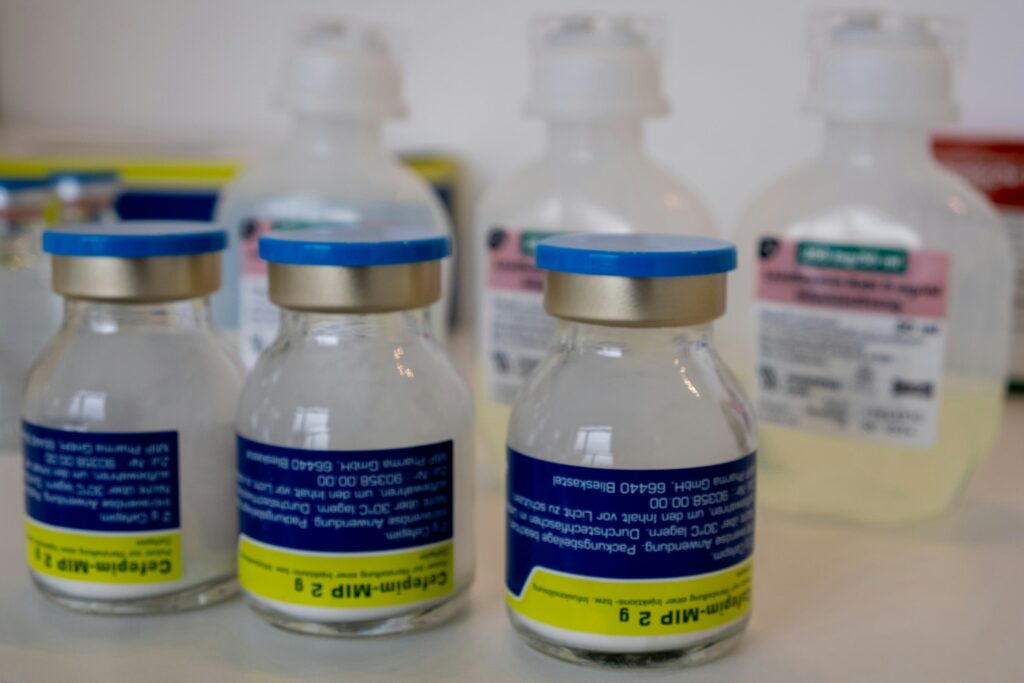
Bacteriostatic water for injection is one of those laboratory staples that rarely gets discussed outside of research circles, yet plays a foundational role in how many research protocols are carried out. For anyone working with lyophilized compounds, particularly peptides, understanding what it is, how it works, and why quality matters is a practical necessity rather than background knowledge.
This guide covers the essentials: what bacteriostatic water for injection is, how it differs from other sterile solutions, how it is used in research settings, and what to look for when sourcing it.
All products and procedures referenced in this article are intended for Research Use Only (RUO).
What Is Bacteriostatic Water for Injection
Bacteriostatic water for injection is sterile, non-pyrogenic water that contains 0.9% benzyl alcohol as a preservative. The benzyl alcohol is the defining characteristic of the product. It inhibits the growth of bacteria in the solution after the vial has been opened, which is what makes the product suitable for multi-dose research applications.
Suppliers like Herbilabs manufacture research-grade bacteriostatic water to verified purity standards and supply full batch-level Certificate of Analysis documentation, giving researchers a transparent and traceable source for this critical diluent.
The composition is straightforward: purified water for injection combined with benzyl alcohol at a carefully controlled concentration. That concentration matters. At 0.9%, the benzyl alcohol provides effective bacteriostatic protection without introducing a level of preservative that would interfere with most research compounds dissolved in the solution.
The term “bacteriostatic” is worth unpacking. It does not mean the water kills bacteria. It means the water inhibits bacterial growth, preventing microorganisms from multiplying in the solution between uses. This is a meaningful distinction for research settings where a reconstituted solution needs to remain stable and uncontaminated across multiple withdrawals over days or weeks.
How It Differs from Sterile Water
The most common point of confusion is the difference between bacteriostatic water for injection and sterile water for injection. Both are sterile at the point of manufacture. The critical difference is what happens after the vial is first opened.
Sterile water for injection contains no preservative. Once the stopper is punctured, the remaining solution has no ongoing protection against microbial contamination. It is a single-use product. Any solution remaining in the vial after the first withdrawal should be discarded.
Bacteriostatic water for injection, by contrast, maintains its protective properties across multiple withdrawals because the benzyl alcohol continues to inhibit bacterial growth throughout the usable life of the opened vial. This makes it the appropriate choice for any research protocol requiring repeated access to the same solution.
For researchers working with peptides and other lyophilized compounds, this distinction is not academic. Reconstituting a research compound in sterile water and then accessing the vial multiple times over several days is a contamination risk. Bacteriostatic water is the established solution to that risk.
How Bacteriostatic Water Is Used in Research
The primary use of bacteriostatic water in research settings is as a reconstitution diluent for lyophilized compounds. Most research peptides are supplied as freeze-dried powder, which must be dissolved in a sterile liquid before it can be used in a research protocol. Bacteriostatic water is the standard choice for this process.
The reconstitution procedure involves drawing up a calculated volume of bacteriostatic water and introducing it slowly into the vial containing the lyophilized compound, directing the liquid toward the inner wall of the vial rather than directly onto the powder. The vial is gently swirled, not shaken, until the powder is fully dissolved. The resulting solution is then stored and accessed as the research protocol requires.
The volume of bacteriostatic water used determines the final concentration of the reconstituted solution. A researcher working with 5mg of a lyophilized compound who adds 5ml of bacteriostatic water produces a solution with a concentration of 1mg per ml. Adjusting the volume adjusts the concentration, which is why precise measurement is an important part of the reconstitution process.
Research published in peer-reviewed pharmacological literature has demonstrated that the physical stability of peptide solutions after reconstitution varies considerably depending on concentration, storage conditions, and the reconstitution medium used, reinforcing the importance of sourcing verified, pharmaceutical-grade bacteriostatic water for research applications.
Quality Standards for Research-Grade Bacteriostatic Water
Not all bacteriostatic water products are equivalent, and in a research context the quality of the diluent has a direct bearing on the integrity of the reconstituted solution and the reliability of the research outcome.
The key quality indicators for research-grade bacteriostatic water for injection are purity, sterility, endotoxin status, confirmed benzyl alcohol concentration, and container integrity.
Purity should be 99% or higher. This reflects the absence of organic impurities, inorganic residues, and particulate matter in the water component before the benzyl alcohol is added.
Sterility must be confirmed through batch-level testing by an accredited analytical laboratory. The product must be sterile at the point of manufacture; the benzyl alcohol preservative does not compensate for a sterility failure during production.
Endotoxin testing confirms the product is non-pyrogenic. Endotoxins are bacterial byproducts that can survive standard sterilization and present a contamination risk in research-grade solutions if not specifically tested for and controlled.
Benzyl alcohol concentration should be confirmed analytically at 0.9% for each production batch. This is not a claim that should be taken on faith; it should be documented in a Certificate of Analysis from an independent laboratory.
Container integrity matters because the vial material must not leach compounds into the solution. Premium borosilicate glass vials are the appropriate container for research-grade bacteriostatic water for injection.
Sourcing Bacteriostatic Water for Research
The Certificate of Analysis is the primary quality verification tool available to researchers when evaluating a supplier. A COA from an independent, GMP-certified analytical laboratory documents the test results for a specific production batch and allows a researcher to verify the quality claims associated with the product they are purchasing.
When evaluating any supplier of bacteriostatic water for injection for research use, the presence of accessible, batch-specific COA documentation from a named independent laboratory is the clearest indicator that the product meets the quality standards research applications require. Products should be available in multiple vial sizes to match different reconstitution volume requirements, and same-day dispatch from a supplier with documented shipping standards reduces the window for handling-related quality issues in transit.
All products referenced in this article are intended for Research Use Only (RUO). They are not designed, tested, or approved for human or veterinary use.
FAQ
What is bacteriostatic water for injection used for in research? Bacteriostatic water for injection is used primarily as a reconstitution diluent for lyophilized research compounds, including peptides. Its 0.9% benzyl alcohol content preserves the sterility of the reconstituted solution across multiple withdrawals, making it suitable for research protocols requiring repeated access to the same solution.
How long does bacteriostatic water last after opening? Once opened and handled under appropriate aseptic conditions, bacteriostatic water for injection can be used for multiple withdrawals over an extended period due to the benzyl alcohol preservative. The specific usable period depends on handling conditions and storage. Any solution showing cloudiness or signs of contamination should be discarded immediately.
Can bacteriostatic water for injection be used instead of sterile water? In most research reconstitution protocols, bacteriostatic water is the preferred choice over sterile water because of its multi-dose stability. Sterile water is a single-use product and is not appropriate for protocols requiring repeated access to a reconstituted solution.
What does non-pyrogenic mean for bacteriostatic water? Non-pyrogenic means the product has been tested and confirmed to contain endotoxins below a defined threshold. Endotoxins are heat-stable bacterial byproducts that can survive standard sterilization processes. Non-pyrogenic status must be confirmed through batch-level analytical testing, not assumed from the manufacturing process.
What should researchers check before purchasing bacteriostatic water for injection? Researchers should verify that the supplier provides batch-level Certificate of Analysis documentation from an independent laboratory, confirms purity of 99% or higher, tests for sterility and endotoxins, specifies benzyl alcohol concentration at 0.9%, and supplies the product in premium glass vials. Accessible COA documentation is the most important indicator of a credible research-grade supplier.