
Key Highlights
- Early orthodontic assessments, ideally between ages 6 and 10, are crucial for identifying potential dental issues.
- A kids’ orthodontist can guide jaw growth and create space for permanent teeth, making future treatments simpler.
- Recognising signs like crooked teeth, bite problems, or speech difficulties can indicate the need for orthodontic care.
- For missing teeth later in life, dental implants offer a permanent, natural-looking solution fixed directly into the jaw.
- The transition from braces to considering dental implants requires careful timing, as implants are best for fully grown jaws.
Introduction
A child’s way to a perfect smile needs someone to help and plan. Every step counts, from the first visit to the pediatric dentist to later thinking about orthodontic care. This helps keep their oral health and overall health in good shape. When you understand how the dentist and orthodontic treatments work, and know about future solutions like dental implants, you get a full idea of what your child needs. This way, you can help your child look after their teeth as they grow up.
The Role of Kids Orthodontists in Children’s Dental Health
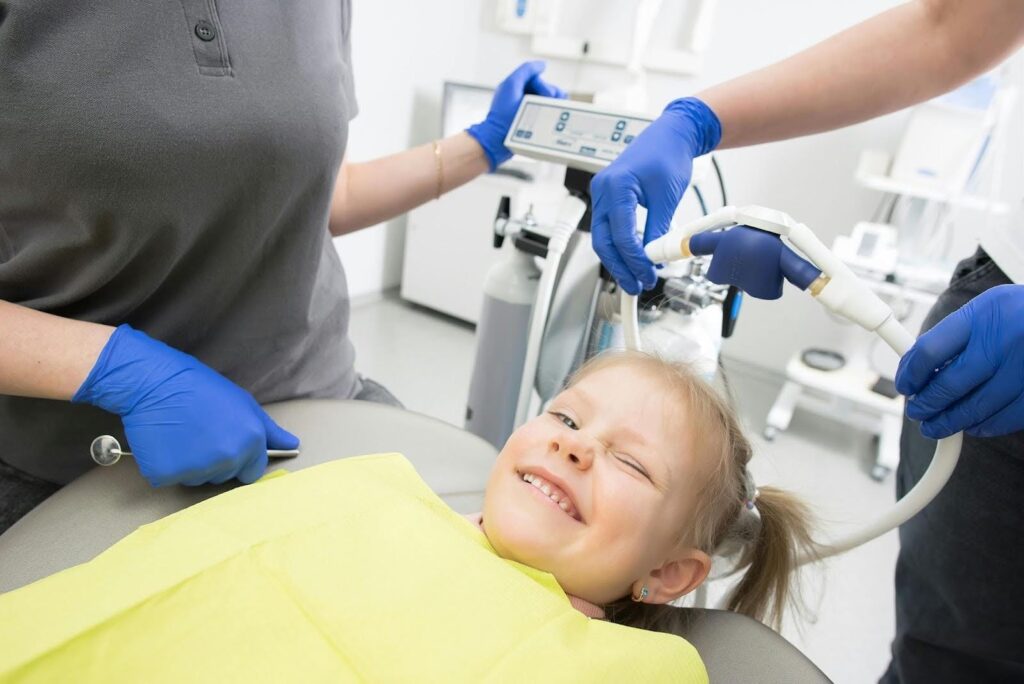
A kids orthodontist works in pediatric dentistry. They help move teeth and guide how the face grows in children. Their main job is to make sure teeth and jaws line up the right way. This is key to a healthy smile. With early orthodontic treatment, they fix problems like crowded teeth, crossbites, or thumb-sucking in kids before things get harder to treat.
This care is not done alone. Your family dentist or pediatric dentist works with the orthodontist. They share records and ideas to make one treatment plan for your child. By working together on your child’s oral health, everything from routine cleanings to tough alignment problems gets taken care of well. This teamwork helps to get the best result for your kid. Now, it is time to talk about early checks and finding these problems.
Understanding Early Orthodontic Assessments
The British Orthodontic Society says that a child should get their first orthodontic check-up by age 7. Many orthodontists also believe that the best time is between ages 6 and 10. At this age, kids still have some baby teeth and some adult teeth. This helps the orthodontist to find any small problems early with jaw growth or teeth coming in. Sometimes, a pediatric dentist may notice something and send your child to see the orthodontist.
What will happen during the first visit? The first orthodontic check is simple and easy. The orthodontist will gently look at your child’s teeth, mouth, and jaw. Most of the time, they take special X-rays, too. These X-rays help them see things that a dentist can’t find in a regular exam, like teeth that have not come in yet or jaw problems.
The main value of getting this orthodontic check early is planning. The specialist can tell when the right time might be to start treatment if your child needs it. Getting help early can guide jaw growth, lower the risk of front teeth sticking out and getting hurt, and give your child a nicer smile. This sets up a good start for their full orthodontic journey with their dentist, orthodontist, and pediatric dentist.
Recognising Signs That Your Child May Need Braces
Your dentist is a great person to talk to about your child’s teeth. Still, you can also watch for signs that show your child might need to see an orthodontist. Often, these signs show up when their permanent teeth start coming in. It can help to act early and fix problems before they get worse.
You need to know what to look for first. Do you notice any of these usual orthodontic problems?
- Teeth that look very crooked, crowded, or out of place.
- An overbite, where the top teeth go way past the bottom teeth, or an underbite, where the bottom teeth sit in front of the top teeth.
- Trouble with chewing, biting food, or speaking.
- Baby teeth that fall out too early or hang on for too long.

You should not only be focused on straight teeth for looks. Fixing these issues helps keep the mouth clean. Teeth that line up right are easier to clean, so there is a lower chance of having cavities and gum disease. This is good for your child’s overall health. If you see any of these signs, it is smart to book that first visit with an orthodontist.
Assessing the Cost of Dental Implants vs Other Orthodontic Treatments
When planning your child’s dental care, it’s helpful to understand the different treatments and their purposes. Orthodontic treatment, like braces and restorative solutions like dental implants, serve very different needs and are typically used at different stages of life. A board-certified orthodontist can provide various types of braces, from traditional metal to more discreet options, tailored to your child’s specific alignment needs. These treatments are focused on moving existing teeth into the correct position.
Dental implants, on the other hand, are a solution for replacing missing teeth and are generally considered only after the jaw has fully developed in late adolescence or adulthood. Many clinics offer transparent fee schedules and flexible payment options to make these essential treatments more accessible. Here’s a simple comparison to clarify their distinct roles:
| Feature | Orthodontic Treatment (Braces) | Dental Implants |
| Purpose | To straighten existing teeth and correct bite alignment. | To permanently replace one or more missing teeth. |
| Ideal Candidate | Children, teens, and adults with alignment issues. | Adults with fully developed jaws who have lost a tooth. |
| Treatment Focus | Moving natural teeth over time. | Surgically placing a titanium post to act as a tooth root. |
Understanding these distinctions will help you plan your child’s dental journey, from straightening their smile now to preparing for any restorative needs in the future. Now, let’s explore the types of dental implants available.
Understanding the Types of Dental Implants Available
When you lose a tooth, there are now many advanced options in dentistry to help you get it replaced. Dental implants are one way, but this option is not good for everyone. If you want one, your dentist will need to check if you are the right fit. The quality and amount of jawbone matter a lot. Your dentist will look at your mouth and may do a scan to see if you can have an implant.
One common choice is a single tooth replacement. Here, your dentist puts in one implant. Then, the dentist adds a crown to fill the space left by your missing tooth. It does not depend on your other teeth for support. So, it is easier to keep clean than a bridge. A single implant also looks and works like it should, much like your natural teeth.
If you lose a few teeth that are next to each other, you can go with an implant-supported bridge. This choice uses two or more implants to hold up a row of crowns. You get a fixed spot for these teeth, and they will not move like some dentures do. For people who need to replace all their top or bottom teeth, implant-retained dentures could help. These snap or clip onto the implants to keep them steady. This can help the person feel more sure and comfortable.
If you ever need advice or help, a dentist can tell you the best solution for your needs. Dentistry keeps improving to offer new choices like these.
The Importance of Timing: When to Transition from Braces
The journey from braces to a healthy smile takes some planning, especially if there is a permanent tooth missing because of genetics or an injury. Orthodontic treatment can be used to make room for a tooth replacement later. But the timing for putting in that new tooth is very important. Dental implants are usually for people whose jaws have stopped growing. This is often around the age of 18 or older.
If you put in an implant too early, while the jaw is still growing, it can cause problems. The implant cannot move with the bone and the teeth around it. This can lead to issues with how things look and how the teeth work together. This is why early orthodontic planning is good. The dentist can help make a plan. That plan will match the braces schedule with the right time to get a permanent tooth.

Taking these steps helps keep the good results you get from orthodontic work. It also helps make sure the dental implant works well and lasts for many years. By working together with your dentist and orthodontist, you can set up a plan. That plan will take a child from having braces to getting a healthy smile that can last through the years.
Conclusion
In the end, knowing how to help your child move from braces to dental implants is important for their teeth and health. Kids’ orthodontists know when your child should start treatment. They make sure the care your child gets is right for them. If you learn about early checks and see any signs that your child needs more orthodontic work, you will be able to make better choices. When you look at the cost and types of dental implants, it helps you pick what is best. Thinking about timing will also make things easier. If you want to start your child’s orthodontic care, book a visit for a consultation today!
Frequently Asked Questions
What is the best age for a child’s first orthodontist visit?
It’s good to visit an orthodontist when you are between 6 and 10 years old. The dentist or a pediatric dentist might send you earlier if needed. Going at this time helps the orthodontist check on jaw growth and see how the adult teeth start coming in. It helps the dentist find any problems with your baby teeth before they turn into bigger issues.
Is orthodontic treatment painful for children?
Getting orthodontic appliances put on is not painful. Some young patients might feel a bit of discomfort or soreness for a few days after the fitting. This is normal as their teeth start to move. The soreness usually goes away within a week. It can be managed easily and does not last long.
How long does braces treatment usually take for kids?
The time that a child spends with braces can change. It usually takes between 18 and 24 months. These numbers can be different for every child, depending on how hard the case is and if the patient follows care tips. Your pediatric dentistry specialist will give you an estimate made just for you.