
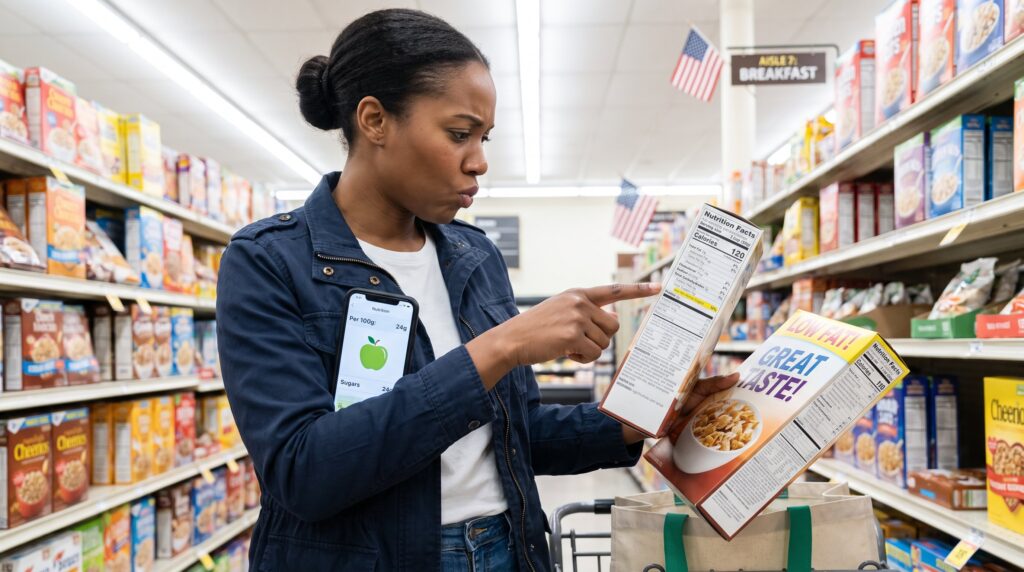
How to read nutrition claims with a critical eye starts with one clear fact: labels can mislead. Shoppers see “low,” “natural,” or “healthy” and assume better choices. This guide shows why those words matter, what they actually mean under regulation, and a hands-on process to verify claims using the Nutrition Facts panel, the ingredient list, and serving size. It prepares readers to spot tradeoffs, added sugar, sodium, or serving tricks, so they can buy food that fits real goals, not just clever marketing.
Key Takeaways
- Nutrition claims like “low,” “natural,” or “healthy” are regulated terms but can be misleading without reading the full Nutrition Facts panel and ingredient list.
- Always check the serving size and compare nutrient amounts to understand if a “low” or “reduced” claim truly means fewer calories, sugars, or fats for realistic portions.
- The term “natural” lacks a formal FDA definition and does not guarantee a product is free from added sugars or high calories.
- Verify “reduced” claims by identifying the reference product and comparing per-100 gram values to avoid serving size tricks or misleading comparisons.
- Critical reading of nutrition claims helps consumers avoid hidden sugars, excess sodium, and unnecessary calories, enabling smarter food choices aligned with real health goals.
Why Reading Nutrition Claims Critically Changes What You Eat
Labels highlight a single strength while hiding weaknesses. That is the core insight: a claim can be true yet irrelevant. For example, a cereal labeled “low fat” may still contain 14 grams of added sugar per serving. The positive term focuses attention and nudges purchase, but the Nutrition Facts tell the full story.
Why this matters now: packaged food formulations have shifted since the 2000s toward more added sugars and larger portion sizes. A shopper who relies on a front-of-pack claim alone can end up consuming extra calories, sodium, or saturated fat. In one typical comparison, a “reduced calorie” cookie still provided nearly the same sugar per 100 grams as the regular version because the serving size changed.
Practical consequence: people who read claims critically choose differently. Instead of swapping a familiar item for a product just because it says “light,” they compare the per-serving calories, grams of saturated fat, and added sugars. This habit often reduces daily added sugar by measurable amounts, several grams per purchase, and can cut 50–150 calories on snack occasions.
Tying this to trusted content, readers benefit from broader context about fitness and nutrition. The site’s pillar guide on content strategy for wellness clarifies how articles classify claims and evidence: it helps readers judge what articles mean when reporting label rules via a concise overview of editorial standards and topics like nutrition and diet content hub guide.
Common Claims Decoded: What Terms Like “Low,” “Reduced,” “Natural,” And “Healthy” Actually Mean
Low: Fact first, “low” is a regulated threshold. Low calorie means 40 calories or less per reference amount: low fat means 3 g or less per reference amount. This makes “low” useful for quick numeric checks, but only if the serving size matches how much one actually eats.
Reduced / Less / Lower: Fact first, these terms require at least 25% less of the specified nutrient than a reference product. But the comparison item matters. A reduced-sodium soup compared to an exceptionally salty original may still be high in sodium versus similar soups on the shelf.
Natural: Fact first, “natural” has no formal, enforceable definition from the FDA as a single protected term: agencies treat it as meaning no artificial or synthetic ingredients added. That gap lets marketers use the word even when processing or added sugars are present. A “natural” snack can still be high in calories.
Healthy: Fact first, the updated regulatory framework requires a product to provide a qualifying amount from certain food groups and stay below set limits for added sugars, saturated fat, and sodium. In practice, a product can call itself healthy only when it meets those thresholds. Still, reformulations can push borderline products just inside the rules while adding refined ingredients.
How to use these definitions in the store: read the claim, then read the numbers. If a product claims “low” or “reduced,” check grams and calories in the Nutrition Facts. If a package says “natural,” inspect the ingredient list for added sugars, syrups, or isolated ingredients. For deeper context on evidence-based diet claims and trends, TimesHealthMag’s article on evaluating diet information helps separate marketing from research evidence-based nutrition article.
Practical Steps To Verify A Nutrition Claim — Using The Nutrition Facts, Ingredient List, And Serving Size
Start with the clear action: compare the claim to the Nutrition Facts panel and the ingredient list. That single step reveals whether the claim changes the overall quality of the food.
Step 1, Check serving size and servings per container. All label values depend on that serving. A yogurt labeled “low sugar” may list 1 serving as 100 g while typical consumption is 200 g. Multiply numbers by realistic intake to avoid underestimating calories or sugar.
Step 2, Scan calories, saturated fat, sodium, and added sugars. These are the key shame-or-praise numbers. If a product is “low fat” but contains 12 g added sugar and 230 calories per serving, the overall health tradeoff may be negative.
Step 3, Read the ingredient list top to bottom. Ingredients are listed by weight. If sugar, high-fructose corn syrup, or refined grains appear near the top, the product likely relies on those components even though any nutrient claim.
Step 4, For “reduced” claims, look for the reference food. Labels or small-print footnotes sometimes name the comparator. If the comparison is against a different brand or an unusually high baseline, the reduction may not mean much.
Step 5, Use short comparisons to alternatives. Compare per-100 g values across two or three similar products to remove serving-size tricks. This simple math converts marketing claims into apples-to-apples numbers.
Real-world example: a granola bar labeled “reduced sugar” listed 7 g added sugar per serving versus 9 g in the original. But the bar’s serving was 32 g while competitors used 40 g. Per-100 g, the “reduced” bar had 21.9 g sugar: the competitor had 22.5 g, essentially the same. That tiny difference often isn’t worth paying extra for.
Helpful resources: official guides on reading labels explain the Nutrition Facts layout and common tricks: a concise external primer supports the technique of checking serving sizes and ingredient order How to read a food label. For editorial context about evaluating fitness advice online, readers can consult the site’s piece on judging digital health content editorial evaluation guide.
Conclusion
Nutrition claims are regulated words, not guarantees of a healthier product. The most reliable check is simple: match the claim to the Nutrition Facts, the ingredient list, and the realistic serving size. When shoppers do this, they uncover hidden sugars, excess sodium, or serving tricks and make smarter purchases. For practical shopping routines, combine label checks with movement and meal planning advice from related pieces like quick activity tips or diet therapy articles to make food choices that support real health goals movement tips and diet therapy.