
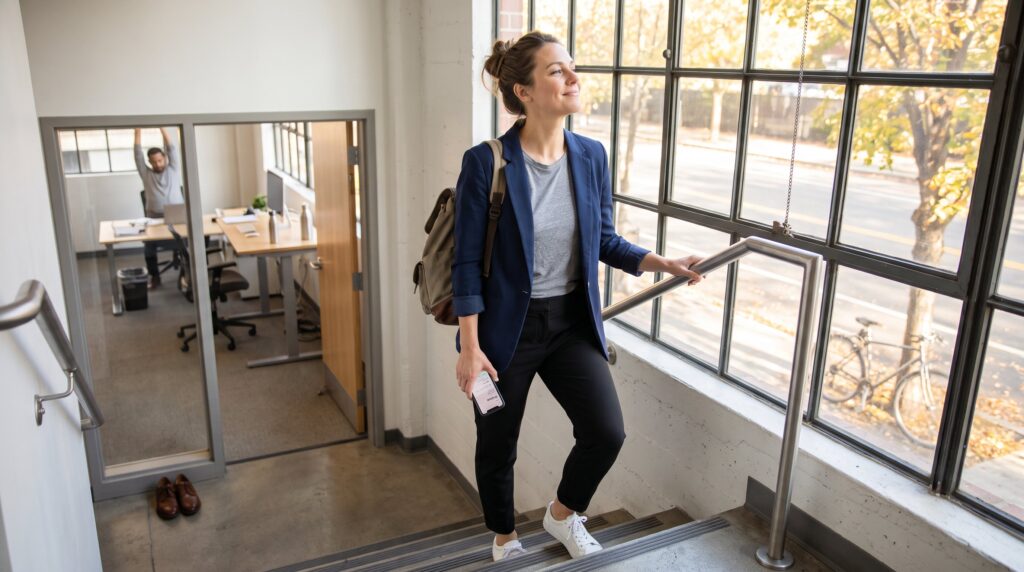
Simple Ways to Build More Movement Into Your Day starts with tiny choices that compound. Busy people often accept long sitting blocks as inevitable, but brief movement snacks, one to ten minutes, raise heart rate, sharpen focus, and lift mood. This article lists practical, evidence‑backed habits that fit into packed schedules. Each section gives clear steps, short examples, and realistic warnings so readers can try changes today and keep them for months.
重要ポイント
- 日常に短時間の運動を取り入れることで心臓病リスクが低減し、気分や集中力が向上する。
- 朝晩の5〜10分の簡単な運動ルーティンは姿勢とエネルギーを維持しやすく、継続しやすい。
- 職場で短い休憩を複数回設けて歩いたり立ったりすることが、疲労軽減と活動時間の増加に効果的である。
- 10分のマイクロブレイクで有酸素運動、筋トレ、ストレッチを組み合わせると、血行促進と神経の緊張緩和が期待できる。
- 徒歩や自転車での通勤や買い物を取り入れると、週間の活動時間が増え、心血管疾患リスクを下げられる。
- シンプルな目標設定やリマインダー、仲間との連携が運動習慣の継続を支援し、達成感を高める。
Why Small Bouts Of Movement Matter—Health, Mood, And Productivity Benefits
Short answer: tiny bouts of movement repeatedly throughout the day improve cardiovascular risk markers, mood, and output. Studies show multiple brief moderate to vigorous efforts under ten minutes lower major cardiac events and reduce all‑cause mortality risk. For people who sit long hours, breaking those blocks every 30–60 minutes with 1–3 minutes of brisk walking or stair climbing increases calorie burn and metabolic rate.
Context and detail: imagine a day with six three‑minute walks instead of one 30‑minute session. That pattern reduces prolonged sitting time and raises overall active minutes without scheduling a big time block. Short bursts also trigger endorphin and serotonin shifts that lift mood, which in turn helps concentration and creative problem solving. Practical warning: those new to activity should start with light intensity and progress slowly to avoid soreness or injury. For a quick primer on combining movement with broader wellness planning, the site’s overview on ways to stay fit offers at‑home adaptations and safe progressions.
Morning And Evening Movement Routines You Can Actually Stick To
Fact first: two short routines, one on waking and one before bed, can protect posture and energy without adding 20 extra minutes.
Morning routine (5–10 minutes): 1) Three minutes brisk walk around the block or up and down stairs. 2) Two minutes of light calisthenics, 10 squats, 8 wall push‑ups. 3) Two minutes mobility, hip circles and chest openers. This sequence elevates heart rate, wakes the nervous system, and primes joints for sitting.
Evening routine (5–8 minutes): start with a gentle 5‑minute walk to offload the day’s stress. Then do 2–3 minutes of targeted stretches for neck, shoulders, and hips to reverse forward‑leaning posture.
Practical tips: set a single recurring alarm labeled “move” to build habit. If time is tight, split the morning routine into two 3‑minute bursts, one before breakfast, one on the commute. For pairing movement with learning about diet and sleep, consult the article on why sleep, exercise, and diet work together for evidence on stacking healthy behaviors.
Movement At Work: Easy Changes That Add Up Over The Day
Key point: replacing long sedentary blocks with frequent microbreaks multiplies daily active minutes and reduces fatigue.
Practical shifts: take walking meetings for short one‑on‑one updates: stand or pace during phone calls: park farther from the entrance: choose stairs for two or three flights when feasible. The goal is accumulation: four or five two‑minute bursts every hour will add 20–30 active minutes across a workday with minimal disruption.
Behavioral warning: office culture matters. Start by asking a colleague to join a standing update to normalize change. Track results with simple counts rather than perfection, aim for progress, not guilt. For guidance on avoiding common exercise mistakes that make people quit, review the article about the right and wrong way to exercise.
Desk-Friendly Exercises And Microbreaks (10-Minute Examples)
Core idea: a single 10‑minute microbreak can reboot energy and posture. Below is a practical sequence to use twice daily.
10‑Minute microbreak example: 1) 3 minutes brisk walk or stairs, raise pace and breathe a little harder. 2) 3 minutes body‑weight moves, 20 chair squats, 15 calf raises, 10 standing hip hinges. 3) 4 minutes mobility, neck turns, shoulder rolls, hip flexor stretch and gentle hamstring reach.
Why it works: this mixes cardio, strength, and mobility so circulation increases and neural tension drops. Real‑world note: one reader reported moving from two naps a week to zero after adding two daily microbreaks, energy improved, and afternoon output rose. Safety tip: if someone has balance issues or recent surgery, substitute seated leg extensions and ankle pumps. For playful ways to turn chores into movement, the site’s exercise in disguise ideas often spark creative, sustainable habits.
Movement Outside Work: Smarter Commutes, Errands, And Active Breaks
Direct fact: choosing walking or cycling for part of a commute or errands lowers cardiovascular and cancer risks and increases weekly active minutes.
How to apply it: for a 30‑minute commute, walk or cycle for 10–15 minutes of that time. For errands, park a block away or make two‑stop walking loops rather than driving between close locations. Swap one weekly car trip for a 20‑minute brisk walk to add habits that stick.
Concrete scenario: a commuter replaced two metro stops with a 12‑minute walk each way and gained 48 active minutes weekly: within six weeks their resting energy improved and midday fatigue declined. Practical limits: weather, safety, and carrying loads can be barriers, use a backpack or folding cart for groceries, or choose a bus stop that shortens walking distance. For help combining at‑home strategies with outside movement, see the guide on simple steps to better everyday health.
Staying Motivated: Simple Tracking, Reminders, And Accountability Tricks
Main insight: simple, visible tracking and social prompts keep small habits alive.
Starting actions: use a step counter or a minutes‑moved metric and set modest daily goals, aim for incremental increases like +10% week over week. Place five visible cues in the day: alarm labels, a water bottle by the desk, shoes by the door, a calendar sticker, and one coworker who accepts 5‑minute walk invites.
Accountability formats that work: schedule a standing two‑minute stretch with a teammate at 11:00 a.m.: set a family post‑dinner walk ritual: log short wins in a habit app. Honest assessment: trackers can demotivate when goals jump too fast, reduce targets after missed weeks. For an editorial perspective on evaluating fitness information and avoiding bad advice, review the piece on evaluating fitness advice.
Evidence link: the health risks of prolonged sitting are documented in clinical resources that show how breaking sitting helps: for clinical context, consult a summary on sitting too much.
Conclusion
Integrating brief movement snacks, at home, at work, and during errands, yields measurable benefits for cardiovascular risk, mood, and daily energy. Small actions compound: stairs, paced calls, and microbreaks add minutes that become meaningful over weeks. To expand this approach into a broader lifestyle plan, readers can connect these habits with the site’s larger resources, including a practical content guide that links fitness and nutrition strategies across topics.