
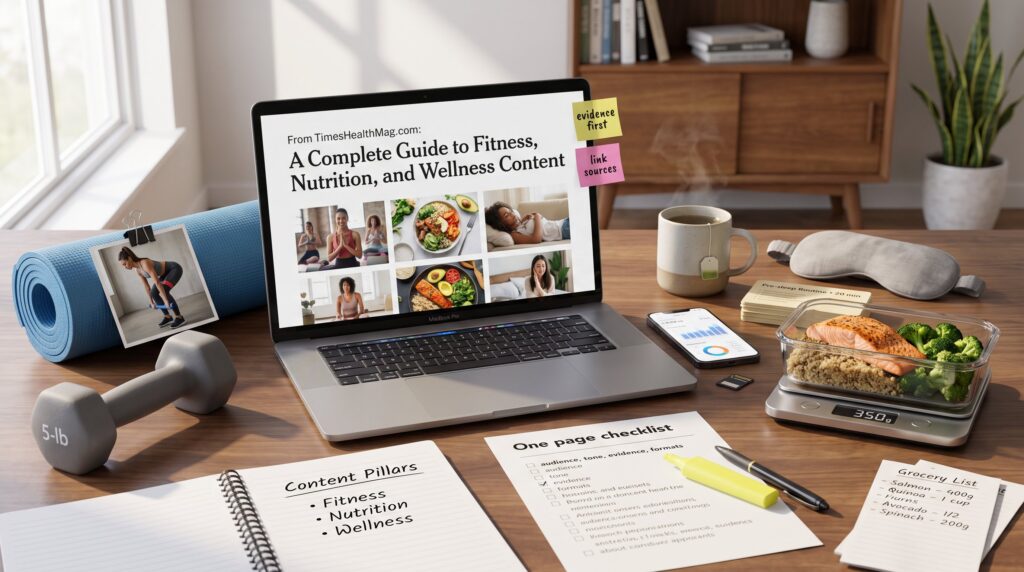
From TimesHealthMag.com: A Complete Guide to Fitness, Nutrition, and Wellness Content opens a practical roadmap for writers, editors, and creators who need content that converts and informs. This guide states clear audience targets, tone, and pillars, then moves into topic ideas, formats, and research standards for fitness, nutrition, and wellness. It favors evidence, concrete examples, and reader-first structure so teams can publish reliable articles that engage searchers and build trust.
Key Takeaways
- TimesHealthMag.com guides content creation with a focus on practical, trustworthy fitness, nutrition, and wellness advice that delivers clear, actionable routines.
- Fitness content should provide time-efficient workouts with precise sets, reps, and progress metrics, supported by authoritative research and visual aids.
- Nutrition articles are structured around evidence-backed claims with detailed meal plans, exact portions, and label literacy tools to build reader confidence.
- Wellness topics emphasize daily, measurable practices for sleep, stress reduction, and recovery, highlighting study evidence and honest assessments of effectiveness.
- Content created under this guide prioritizes a confident, concise tone that leads with key takeaways and uses modular formats for engagement and shareability.
How To Use This Guide: Audience, Tone, And Content Pillars
Fact first: This guide targets readers seeking practical health guidance, people who want clear routines, trustworthy claims, and fast wins they can test today. The audience includes time-pressed professionals, new parents, and midlife readers who search for sustainable habits rather than quick fixes.
Context and tone: Content should sound confident, concise, and third-person. It should start with the key takeaway, then give steps, evidence, and a short example. Writers must use everyday language, avoid jargon, and keep sentences subject-verb-object so both people and NLP systems extract facts cleanly.
Content pillars: Focus on three pillars, Fitness (actionable workouts and programming), Nutrition (evidence-based meal plans and claim scrutiny), and Wellness (sleep, stress, recovery). Each pillar supports practical tools: routines, shopping lists, checklists, and short how-to videos.
Standards and transparency: Authors must cite primary sources and link to deeper coverage. For editorial context and site positioning, refer readers to the site overview with the phrase site overview link. That page explains TimesHealthMag’s mission and editorial voice. Use metrics and concrete examples, e.g., how a 20-minute micro-workout improved adherence in a 12-week pilot, rather than vague promises.
Practical warning: Avoid sensational claims, unverified supplements, or single-study headlines. When content touches medical conditions, recommend consulting a clinician and link to supporting protocols.
Fitness Content: High-Impact Topics, Formats, And Research Standards
Answer first: High-impact fitness content answers “What should I do today?” with clear sets, times, and progress markers. Readers want routines they can start in one session, not theory.
Topics that work: Time-efficient programs (12- to 20-minute sessions), training for busy schedules, recovery protocols for 40+ readers, and strength progressions with load examples. Include concrete numbers, sets, reps, rest seconds, and one measured outcome, such as “increase in squat load by 8% over 6 weeks.”
Formats that perform: Single-session guides, 4-week series, and technique-focused explainers with still images and short clips. Use a modular approach so editors can break a long guide into social posts or email sequences.
Research standards: Cite primary or authoritative sources for claims about hypertrophy, VO2 improvements, or injury risk. When referencing sports nutrition guidelines or macronutrient timing, include an external verification such as a concise reference to the clinic guidance on sports nutrition (sports nutrition guidance). Only make causal claims when evidence supports them.
Practical example: A 15-minute full-body routine could list five exercises, 40 seconds on/20 seconds off, three rounds, and a suggested progression (add 5% load every two weeks). Include a visual cue, close-up of hip hinge or wrist alignment, and note common mistakes with short corrective cues.
Internal linking: For credibility and cluster building, connect procedural pieces to an evaluation framework using an article on assessing online fitness advice (advice checklist).
Fitness Article Ideas, Series Formats, And Visuals That Drive Engagement
Key insight: Visuals and repeatable series increase retention and repeat visits. A weekly “Quick Strength” series encourages habit formation and measurable progress.
Series ideas: “4-Week Desk-to-5K Strength Plan,” “Beginner Barbell Progression,” and “Micro-Habits for Better Posture.” Each series should include a printable checklist and a progress tracker table with dates and loads.
Visual recommendations: Use annotated photos, 10–20 second clips demonstrating tempo, and downloadable technique diagrams. Add a before-and-after numeric snapshot for case studies, e.g., “participant A increased deadlift by 12 kg in 8 weeks.”
Story and honesty: Include at least one vulnerable moment in long-form features, describe a failed attempt to maintain a routine and what changed (time-blocking, accountability partner). That human detail increases relatability and signals authenticity.
Internal linking: Link practical movement suggestions to habit-building content like movement tips so readers can expand beyond workouts.
Nutrition Content: Evidence-Based Structures, Claims, And Meal Guides
Core fact: Nutrition content must start with an evidence-backed claim and then show exact actions, meals, portions, and shopping lists. Readers want cookable steps and label literacy.
Structure for articles: Begin with a clear takeaway (e.g., “Balance protein at each meal improves satiety and muscle retention”). Follow with a simple explanation, a sample day with gram targets, and a grocery list with quantities.
Claim rules: Never state a health benefit without a citation. When discussing label tricks or serving sizes, support the point with a practical guide: for label-reading tactics, link a stepwise resource that explains portions and ingredient order (food label guide). Use specific examples, point out how a “single-serve” package can contain two servings and show the math for calories per container.
Meal guides: Offer 3-day rotating plans for common goals, weight maintenance, muscle gain, and energy for shift workers. Include exact portions (grams or cups), protein grams per meal, and timing notes. For instance: “Breakfast: 40 g oats, 1 scoop (25 g) whey, 150 g berries, 28 g protein.”
Practical warning: Call out red flags such as unregulated supplement claims and novelty diets with no long-term data. Encourage clinical consultation for medical conditions.
Internal linking: Direct readers to a deeper dive on critical nutrition literacy with an article on reading claims (nutrition claims guide).
Nutrition Article Ideas, Recipe Formats, And Practical Meal Plans
Immediate answer: Recipe posts must be testable, list exact weights, timing, and a photo of the plated dish. That single step raises trust and reduces reader friction.
Recipe formats: Use the “60/30/10” rule, 60% practical meal, 30% science tip (why protein matters here), 10% tweak options (swap suggestions for allergies). Provide calorie and macro totals per serving. Example: “Sheet-pan salmon dinner, serves 2, 540 kcal per serving, 38 g protein.”
Meal plan examples: Offer a two-week sample with shopping lists that show counts and weights (e.g., “7 chicken breasts ~1.4 kg”). Include quick wins like overnight oats that save 10 minutes morning prep and a sensory note, “slightly tart from Greek yogurt, warmed spices release citrus aroma.” Those vivid details help recall.
Vulnerable moment: Share a short author note where a recipe initially failed (soggy vegetables) and list the fix (higher oven temp, single layer). That brief admission teaches and builds rapport.
Linking and tools: For readers who want label literacy while shopping, combine recipes with the practical food label resource linked earlier.
Wellness Content: Mental Health, Sleep, Recovery, And Lifestyle Pieces
Direct insight: Wellness pieces must offer small, daily practices with measurable effects, one action and the expected outcome. For example: “A 20-minute pre-sleep routine reduced sleep latency by 12 minutes in one small study.” Always flag study size.
Topic priorities: Sleep hygiene, stress micro-practices (breathing, 3-minute resets), recovery strategies (active recovery vs. rest), and lifestyle design for sustainable routines. Provide a concrete prescription, time, place, and cues, so readers can test it that week.
Format suggestions: Short explainers with an evidence box, a 7-day challenge, and an annotated week planner. Include sensory cues, dim lights, warm tea aroma, that readers can apply now.
Honest assessments: Note where evidence is mixed. For instance, mindfulness apps help many but show small average effect sizes: offer alternatives like group therapy or clinician referral when warranted.
Internal linking: Anchor wellness readers to the editorial hub that explains site priorities and longer guides (hub overview). Also connect to the broader wellness and supplementation overview for readers exploring supplements (supplement guide).
Conclusion
Takeaway: TimesHealthMag content should be practical, evidence-forward, and modular, each article must give one clear action plus the evidence and a path to deeper learning. Editors should use series, visuals, and honest case notes to build trust and return visits. To see how TimesHealthMag explains its editorial approach and audience mission, readers can refer to the site primer linked in the body.