
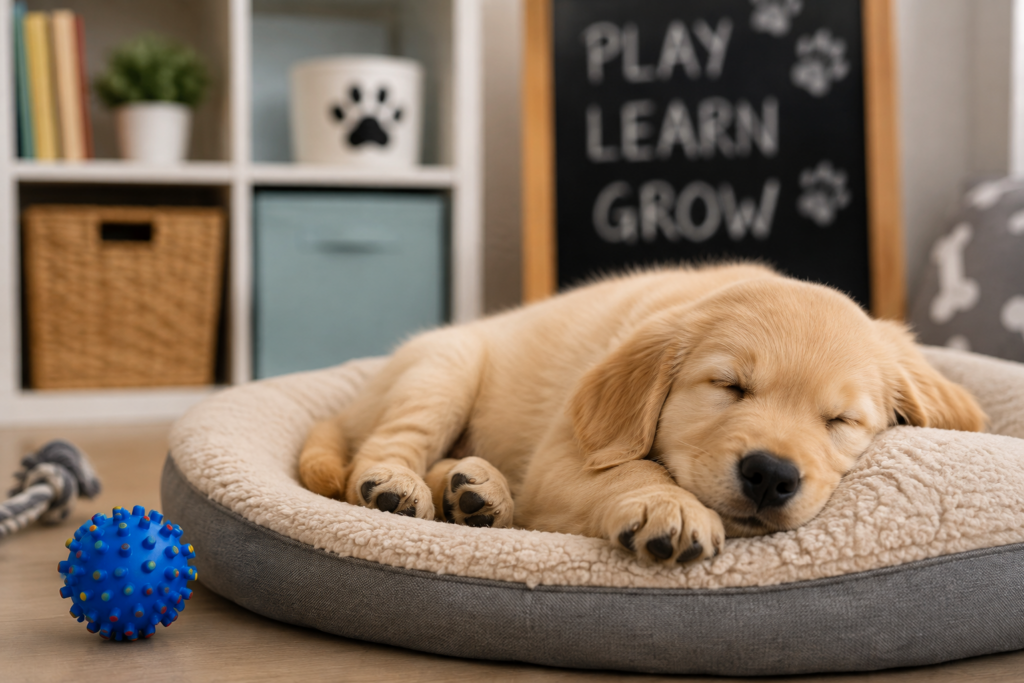
Sleep has a huge impact on a pup’s development besides recharging their energy for the next round of gameplay. When a puppy is at rest, their brain and body actively work to build neural connections. This process helps them process new experiences and build a physical routine for what they will learn over the coming months. Reducing or skipping this much-needed rest makes your pup cranky. It can also slow development, which sleep is meant to support.
These details also address a growing concern among most pet owners: Why do puppies sleep so much? So, understanding what’s really happening during those long naps makes it easier to safeguard them instead of treating them as wasted time or something to interrupt whenever it’s convenient.
How Sleep Shapes a Growing Puppy’s Mind
Sleep is often not the same. It includes different stages supporting different parts of their development. A puppy needs them all night after night to develop into a well-adjusted adult dog.
🐾 Sleep Consolidates New Learning
A pup that just started to learn to sit or know where the water bowl is doesn’t understand that when they remain awake. Much of this understanding happens later during sleep when their brain replays and strengthens new neural pathways that formed a couple of hours earlier.
What Gets Reinforced During Sleep
Why Naps Matter After Training
A short nap right after their training sessions can help them learn new commands. This sticks with them better than skipping into the next activity or a burst of play. This principle also applies to us, humans. They learn to sleep better with anxiety that safeguards consistent, uninterrupted rest.
🐾 Growth Hormone Release Happens During Deep Sleep
There’s a close connection between physical growth and brain development. A significant portion of a puppy’s growth hormone gets released during deep, uninterrupted sleep stages instead of being awake and active. This happens especially during extended stretches overnight or during longer midday naps.
What Deep Sleep Supports
Why Interruptions Matter
Disruptions during deep sleep often blend a couple of these benefits. This becomes a part of a quiet, consistent sleep space that matters the most. It’s especially important during the first couple of months, when growth happens faster.
🐾 Rest Supports Emotional Regulation
A pup who’s overtired behaves a lot like an overtired toddler who’s fussier, reactive, and quick to escalate over small things that generally wouldn’t bother it. Sufficient rest directly affects how well a pup can manage their emotions throughout the day.
Signs Rest Is Affecting Mood
The Simple Fix
A fixed nap schedule can reduce reactive moments more effectively than any single correction technique. This is mainly because it addresses the underlying fatigue instead of the behavior it shows.
🐾 REM Sleep Supports Brain Development
REM is the stage often associated with dreaming. It plays a huge role in how well a young pup’s brain develops and processes its rapidly expanding world, specifically during the initial couple of months of life when new experiences arrive consistently.
What Happens During REM
A recent study published in PLOS One implemented accelerometer tracking to scale sleep patterns in pups. It discovered that dogs spend around 95% of nighttime hours in a sleep or sleep-like state. Puppies rely on that time more heavily as their brains and bodies develop faster than an adult dog.
Why This Stage Deserves Protection
This stage can be reduced when you wake up a pup frequently during naps. This might reduce some of their developmental benefits associated with it.
🐾 Nap Cycles Support Longer Attention Spans
A pup that hasn’t slept well enough often struggles with focus. This is similar to how an exhausted child fails to sit still during a lesson at school. Routined naps directly support a pup’s ability to focus during training or play sessions later in the day.
How Naps Improve Focus
Timing Matters
Evenly spaced sleep routines throughout the day often support longer focus, followed by hours of nonstop activity. A puppy’s focus fades sooner once it crosses into its overly tired territory.
🐾 Consistent Schedules Build Better Trainability
A puppy that sleeps on a predictable schedule tends to be easier to train than one whose rest is constantly interrupted or inconsistent from day to day, since a well-rested puppy simply has more mental bandwidth available for new lessons.
What Consistency Builds
The Long-Term Payoff
A steady sleep routine, kept consistent for weeks rather than days, tends to show its benefits gradually rather than overnight, which is exactly why patience during the early weeks pays off later.
Rest as the Quiet Foundation of Growth
None of this requires anything elaborate: a quiet space, a predictable schedule, and enough uninterrupted time for a puppy to actually finish each sleep cycle without being disturbed halfway through.
What looks like an entire day spent napping is, underneath the surface, some of the most important developmental work a young dog will ever do, quietly shaping how it learns, behaves, and grows for months to come.