
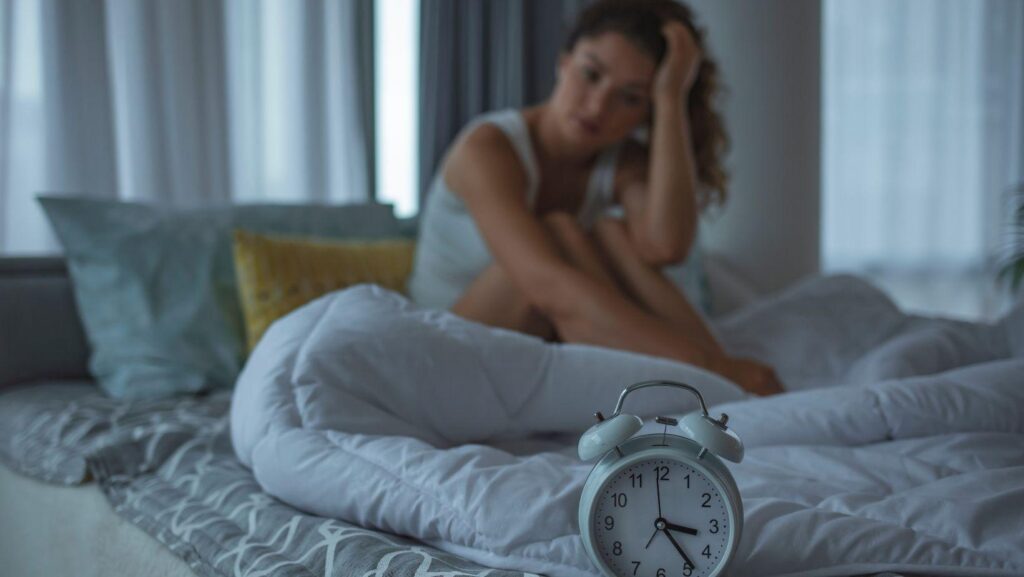
Anxiety and poor sleep are not separate problems. They are the same problem running in two directions at once. Anxiety keeps you awake, and being kept awake makes anxiety worse the next day, which makes the next night harder, which makes anxiety worse again. Breaking this cycle does not require willpower or simply trying harder to relax. It requires understanding what is actually happening physiologically and intervening at the right points. Learning how to sleep better with anxiety is less about finding one magic solution and more about building a set of habits and tools that systematically reduce the conditions that keep the cycle going.
Why Anxiety Disrupts Sleep
Anxiety activates the sympathetic nervous system, the fight-or-flight response, releasing cortisol and adrenaline, increasing heart rate, and suppressing the processes associated with rest. This is useful when the threat is immediate and real. It is counterproductive when the threat is a worry about tomorrow, because the nervous system cannot distinguish between the two.
At the moment you try to fall asleep, when the environment is quiet and distractions are gone, anxious thoughts have the most space to expand, and the physiological response they trigger is the opposite of what sleep requires. The relationship is bidirectional: research from Stanford found that people with insomnia are 17 times more likely to have an anxiety disorder than people who sleep well, and an American Academy of Sleep Medicine survey found that 68% of Americans report losing sleep due to anxiety.
Sleep deprivation impairs the prefrontal cortex, the part of the brain responsible for emotional regulation, meaning a sleep-deprived brain is less equipped to manage the anxiety that caused the deprivation in the first place. Addressing sleep and anxiety together produces better outcomes than treating either in isolation.
How to Sleep Better with Anxiety: What Actually Helps
Build a Consistent Wind-Down Routine
The nervous system does not switch from anxious alertness to sleep readiness on command. It needs a consistent transition period with reliable cues that signal the approach of sleep. Start a wind-down routine 60 to 90 minutes before bed: dim the lights, since bright light suppresses melatonin and signals the brain to stay alert; stop work and stimulating conversations; choose calming, low-demand activities such as reading fiction, gentle stretching, or a warm shower.
The specific activities matter less than the consistency. Doing the same sequence each night conditions the nervous system to associate those cues with sleep, which progressively reduces the time it takes to feel genuinely drowsy.
Breathing Techniques for Nighttime Anxiety
Controlled breathing is one of the most immediately effective tools for reducing nighttime anxiety because it directly activates the parasympathetic nervous system and lowers heart rate within minutes. The physiologically active part is the exhale: a slow, extended out-breath signals the vagus nerve to slow the heart and shift the body toward rest. Three techniques are worth knowing:
Interrupt the Worry Loop
The most common anxiety-sleep pattern is lying down and finding the mind immediately floods with worries. Scheduled worry time is one of the most effective cognitive strategies: set aside 15 to 20 minutes in the early evening to write down everything you are anxious about and what, if anything, you can do about it. When worries surface at bedtime, redirect them: you have already dealt with them, and now is not the time. This works because it gives the anxious brain a legitimate outlet rather than asking it to simply stop.
Progressive muscle relaxation, systematically tensing and releasing each muscle group from the feet upward, shifts attention away from anxious thoughts and toward the body, quieting mental tension through physical release. Brief journaling before bed, writing down what is on your mind without trying to solve anything, functions as a mental download that reduces the pressure to keep processing during the night.
Optimize Your Sleep Environment
The physical environment directly affects how easily the nervous system settles at night. Several adjustments make a consistent difference:
Manage Caffeine, Alcohol, and Exercise Timing
Caffeine has a half-life of five to seven hours, which means that a cup of coffee at three in the afternoon still has half its stimulant effect at ten at night. For people whose anxiety is already keeping them physiologically alert, that residual caffeine meaningfully worsens the ability to wind down. Cutting off caffeine by early afternoon is one of the most straightforward changes available to anyone struggling to sleep with anxiety. Alcohol is commonly used as a sleep aid but it reliably worsens sleep quality: it suppresses REM sleep, increases nighttime waking, and activates the stress response as the body processes it, typically producing a cortisol spike in the early morning hours that wakes people from sleep feeling anxious.
Moderate exercise earlier in the day consistently reduces both anxiety and time to sleep onset. Intense exercise within two to three hours of bedtime can have the opposite effect by elevating heart rate and core temperature at the wrong time.
Natural Sleep Support: Supplements and Patches
Several supplements have meaningful evidence for supporting sleep and reducing anxiety-driven arousal. Magnesium glycinate supports muscle relaxation and nervous system calming and is one of the most commonly depleted minerals under chronic stress. L-theanine increases GABA activity and reduces anxiety-related arousal without causing daytime grogginess, making it particularly useful for nighttime anxiety. Melatonin at low doses of 0.5 to 1 milligram taken 30 to 60 minutes before bed helps signal the brain to begin the sleep transition, particularly when circadian rhythm disruption is part of the problem. Ashwagandha and valerian root have the strongest evidence among herbal options for stress reduction and improvements in sleep quality over time.
For people whose nausea, digestive sensitivity, or simple inconvenience makes swallowing supplements before bed inconsistent, transdermal delivery offers a practical alternative. A sleep patch delivers supportive compounds through the skin over several hours while you sleep, bypassing the digestive system entirely and providing a consistent, slow release that matches the body’s overnight recovery window.
When Anxiety-Related Sleep Problems Need More Help
Cognitive Behavioral Therapy for Insomnia, known as CBT-I, is the most thoroughly evidenced treatment for chronic anxiety-related sleep problems and is more effective than sleep medication over the long term. It addresses the thought patterns and behaviors that perpetuate insomnia, including the anxiety about sleep itself that develops after several nights of poor rest.
Unlike medication, improvements persist after treatment ends. If anxiety and sleep disruption have been affecting your daily functioning for more than a few weeks, seeking professional support from a therapist trained in CBT-I is a more sustainable path than managing indefinitely with lifestyle strategies alone.
Building Long-Term Sleep Resilience
Improving sleep with anxiety is not measured night by night. Single bad nights are inevitable and should not be taken as evidence that nothing is working. The relevant measure is the trend across weeks: falling asleep more easily more often, waking less frequently, and feeling less anxious at bedtime than before. Consistency in the behaviors that support sleep compounds over time.
Paradoxical intention, deliberately not trying to fall asleep and instead simply resting without an agenda, is a counterintuitive but research-supported approach to reducing the performance anxiety that develops around sleep once it has been a recurring problem. The goal is not to control sleep but to create the conditions where it can happen on its own.
Final Thoughts
Sleeping better with anxiety is about systematically dismantling the conditions that maintain the cycle: reducing physiological arousal at bedtime, interrupting the worry loop before it takes hold, and supporting the body’s natural recovery processes through the night. No single strategy works for everyone, and most people benefit from combining several approaches rather than relying on one. For those looking to add passive overnight support to their routine, The Friendly Patch offers sleep-focused patches designed to work while you rest, without requiring anything extra from a mind that is already working too hard.