
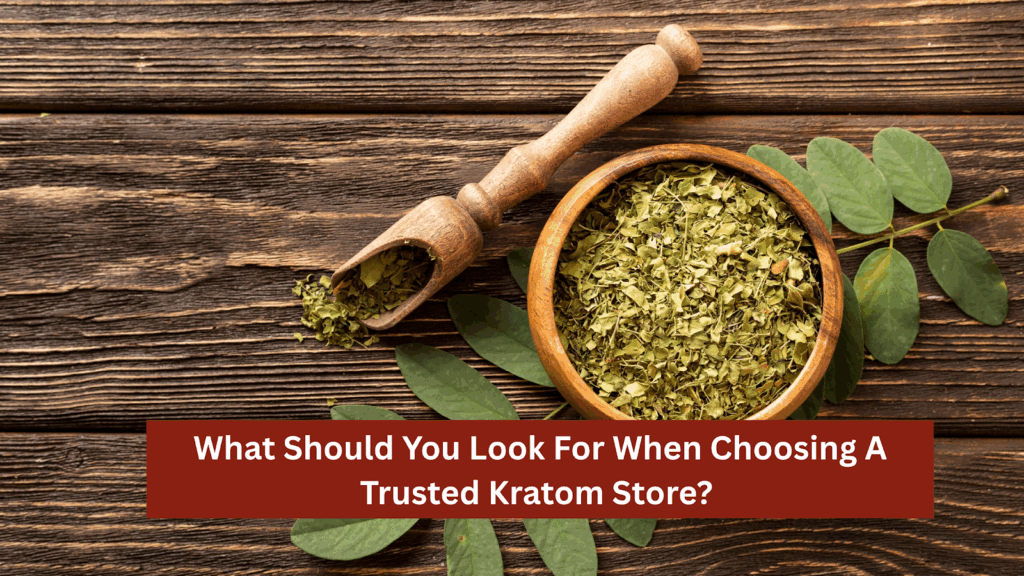
The dilemma for kratom users today is all too real: not every shop adheres to those strict safety standards. Some do actually sell products that have been lab-tested, with all of the clear details on sourcing included; others fall short in some areas or make unclear claims.
If you want the best kratom, you can’t guess quality by finding a strain and supplier that works for you through trial and error. You need a concrete checklist to help you differentiate between reputable sellers and those merely offloading pallets.
A reputable kratom store will be clear about the kratom origin, third-party testing results, and strain information. Understanding this criterion protects your health and prevents you from buying mislabeled or tainted products that don’t adhere to proper safety standards.
This blog lists various things you need to consider when choosing a kratom store.

1. Check How Kratom Stores Handle Testing and Transparency
Kratom has become more available in most parts of the world in recent years, and as new stores open, not all are abiding by the same quality guidelines. For instance, in Canada, Kratom is not banned. However, any products containing kratom cannot be aggressively advertised or even labeled for ingestion.
Even though commercials are heavily restricted, you’ll still find kratom stores online. Some sellers are more concerned with a fast retail turnover, while others place the safety of their products and responsible sourcing above all else.
Due to this variance in standards, it is essential to examine how a Canada kratom store evaluates product quality before selling it.
A reputable source shares third-party analysis certificates that verify alkaloid profiles and confirm the absence of contaminants, including Salmonella, mold, and heavy metals. Internal testing or verbal purity assertions can expose consumers to potential dangers.
Choosing independent lab reports demonstrates responsibility and reveals the truth regarding product safety. An honest seller releases this information publicly for every batch, allowing you to conduct your own due diligence instead of placing undue trust in advertising hype.
2. Consider the Identification of Strains and Source Regions
A good kratom vendor does not just put up strain names such as “Green Malay” or “Red Bali.” They will reveal the source, drying method, and processing of every breed. Kratom leaves obtained from different regions come with different alkaloid profiles, which affect how the product works with your body.
When a vendor fails to disclose where their kratom comes from or uses general terms in marketing, trusting them becomes hard for clients. Reputable vendors should be able to clearly state where their kratom comes from and guarantee quality consistency over time.
If a seller is evasive about sourcing or uses ambiguous phrases such as “premium sourced,” then the ability to trace that back is diminished, and trust is compromised.
3. Assess The Store’s Product Freshness
Storing kratom incorrectly can make the quality deteriorate. Alkaloids are decomposed into volatiles or formates by moisture, light, and air; moreover, there is a risk that bacteria proliferate. Look out for how the store you’re choosing to buy from packages its products.
Reputable vendors use airtight sealed bags, and many add packaging dates. Notice how they maintain bulk stock, and the period products remain on shelves before being shipped. A good vendor will be transparent about their storage methods, rather than just discussing strain names.
Freshness is crucial for efficacy, and a store that treats packaging as an afterthought does not prioritize product safety. Opting for a vendor focusing on freshness will ensure you get a consistent and effective kratom experience.
4. Analyze The Store’s Customer Education and Product Transparency
A reputable kratom shop doesn’t just sell — it educates. The elaborate product descriptions, alkaloid breakdowns, and usage instructions indicate that the vendor has a complete understanding of the plant and safety requirements.
When evaluating kratom stores, assess the quality of information provided by the vendor. Consider how well a brand conveys the purpose and strengths of its product. You want it to break down what you should expect from each strain and how it compares to others.
Kratom vendors who put their time into explaining things accurately are a lot more likely to be concerned with long-term consumer trust than quick sales. In most cases, a shop that relies heavily on marketing buzzwords sets the tone of expecting customers to purchase without understanding what they’re buying.
5. Assess Reputation through Real Reviews and Response Quality
A reliable store responds to its customer feedback, rather than ignoring it. Seek platforms with verified reviews, ones in which users are asked about their experience, not just how many stars they’d give.
A store that follows up with customers and offers a definite solution demonstrates a sense of responsibility. Be cautious of dealers with perfect ratings and no customer complaints. In truth, any real business receives all kinds of feedback, and how they handle negative feedback speaks to their level of care and concern.
Reputable shops keep in touch and don’t vanish after completing a sale. Their attitude toward client interaction reflects how they manage responsibility. If a shop accepts feedback and focuses on finding solutions, it builds credibility more effectively than any marketing claim.

Conclusion
Selecting the best kratom shop involves more than just liking a product description or comparing prices. Instead, consider how the store manages testing, how transparent it is about sourcing and strains, how well it maintains product freshness, and how openly it educates its customers.
Clear test results, source verification, good packaging, honest education, and genuine customer engagement are the foundation of a trustworthy supplier. Following these benchmarks keeps you safe from low-quality products and confident in your purchases.