
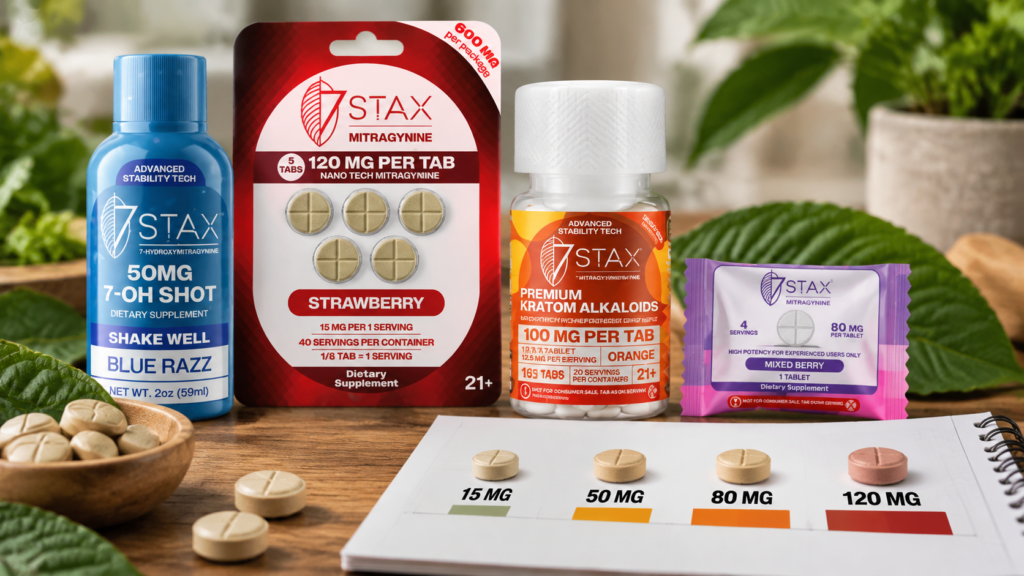
Browse any range of alkaloid tablets and you will see a series of numbers attached to them: 80mg, 100mg, and other figures printed prominently on the packaging. For a new buyer, these numbers can be confusing. What exactly is being measured? Is a bigger number always better? And how should the figure influence a purchasing decision? This article breaks down what tablet strength numbers actually mean and how to interpret them sensibly.
What the Milligram Number Represents
The milligram figure on a tablet refers to the amount of active alkaloid content in that tablet. For a 7-OH product, the number typically represents the quantity of 7-hydroxymitragynine per tablet, measured in milligrams. A figure of 100mg, for example, indicates that each tablet is formulated to contain that stated amount of the active compound.
This is the most important thing to understand: the number is a measure of alkaloid content, not the total weight of the tablet. A tablet always contains other materials as well, such as binders and fillers that hold it together and give it form. The milligram strength refers specifically to the active portion, which is why two tablets of similar physical size can carry very different strength figures.
Why Different Strengths Exist
Products come in a range of strengths for a practical reason: different buyers are looking for different things, and a market serves that range by offering options. A lineup that includes both a 7stax 80mg tablet and a higher option gives buyers the ability to choose a specification that suits their preferences rather than forcing everyone toward a single figure.
The existence of multiple strengths is a feature of a well organized product range, not a signal that one option is inherently correct. Each number simply describes a different specification, and the right choice depends on what the individual buyer is looking for.
Bigger Is Not Automatically Better
It is tempting to read strength numbers the way you might read horsepower or storage capacity, assuming that a higher figure is always the superior choice. In the context of alkaloid tablets, that assumption is misleading.
A higher milligram number means a higher concentration of the active alkaloid, nothing more. It does not indicate better quality, greater purity, or more accurate labeling. A carefully made, properly tested lower strength tablet can be a better product than a poorly made higher strength one. Quality is determined by manufacturing standards and independent testing, not by the size of the number on the front.
This is why experienced buyers treat the strength figure as one specification among several rather than as a ranking. The number tells you the concentration. It does not tell you whether the product is well made or honestly labeled.
Consistency Matters as Much as the Number
A strength figure is only meaningful if it is accurate and consistent. A label can state 100mg, but that claim is only as good as the manufacturing process and the testing behind it. Two things make a stated strength trustworthy.
The first is consistent manufacturing. A well controlled process ensures that each tablet in a batch actually contains close to the stated amount, rather than varying widely from one tablet to the next. Even dispersion of the active compound throughout the batch is what makes a label figure reliable.
The second is independent testing. A certificate of analysis from a third party laboratory verifies that the tested alkaloid content matches the number on the package. A 7 stax 100mg tablet is only genuinely a 100mg tablet if independent testing confirms it. Without that verification, the number is a claim rather than a fact.
Why Two Tablets Can Look the Same but Differ
Because the milligram figure measures only the active alkaloid, physical size is a poor guide to strength. A larger tablet may simply contain more filler, while a smaller one may be more concentrated. This is another reason to rely on the stated, verified figure rather than judging by appearance. What the tablet looks like tells you very little about what it contains. What the label states, confirmed by testing, is the part that actually carries meaning, and it is the only part worth basing a comparison on.
How to Compare Strengths Across Products
When you compare tablets from different sources, the milligram figure gives you a common reference point, but only if you use it carefully.
Start by confirming that each product measures the same thing. A strength number should refer to the same alkaloid across the products you are comparing, so that you are comparing like with like. Next, check that each stated strength is backed by testing, because an unverified number is not truly comparable to a verified one. Finally, consider the strength alongside price, testing quality, and labeling clarity rather than in isolation.
A number on its own is just a number. Its value comes from the evidence that supports it and the context around it.
Reading the Full Picture
Think of tablet strength as one line on a specification sheet. It is an important line, because it defines the concentration of the active compound, but it sits alongside other lines that matter just as much. The alkaloid the number refers to, the accuracy of the label, the presence of third party testing, and the consistency of manufacturing all shape what the product actually is.
A buyer who reads only the strength figure sees part of the picture. A buyer who reads the strength figure together with the testing and labeling sees the whole of it. The goal is not to chase the highest number but to understand what each number represents and to confirm that it is backed by evidence.
The Bottom Line
The milligram number on an alkaloid tablet represents the amount of active alkaloid content per tablet, not the total weight and not a measure of quality. Different strengths exist to serve different preferences, and a higher figure simply means a higher concentration. What makes any strength meaningful is consistency in manufacturing and verification through independent testing. Read the number as one specification among several, confirm it against a certificate of analysis, and you will understand tablet strengths for what they are: a useful piece of information that is only as reliable as the evidence behind it.