
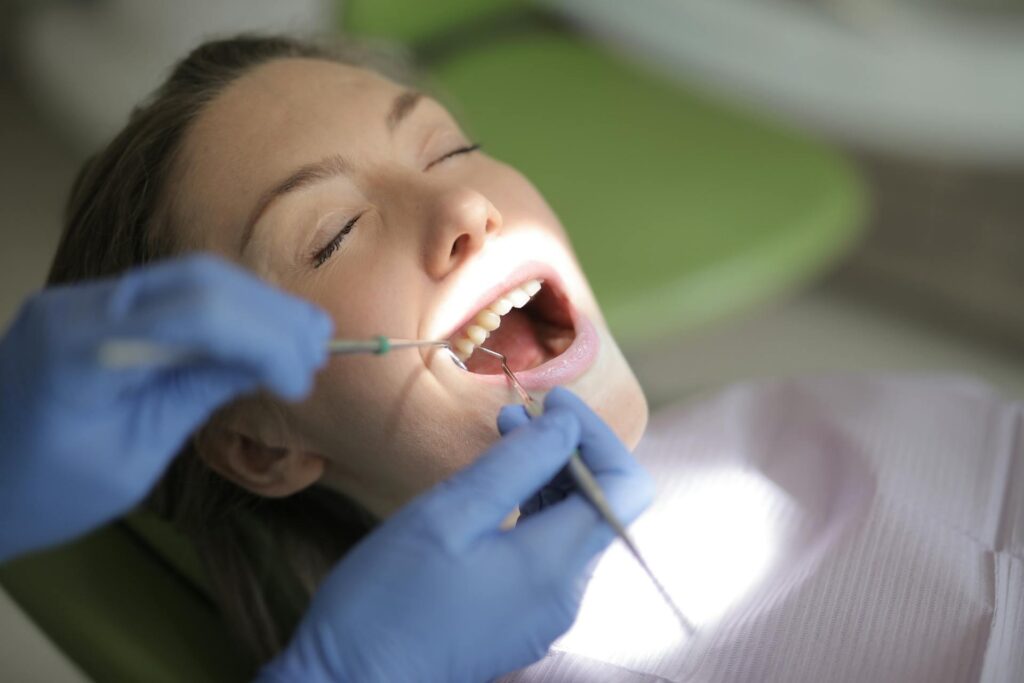
Most people who consider orthodontic treatment are thinking about how their smile looks. That is a valid motivation, but the case for correcting misaligned teeth goes considerably further than aesthetics, and for many patients, the health benefits end up being the more compelling reason to follow through.
Teeth that are crooked, crowded, or improperly aligned create a cascade of downstream effects on oral health, jaw function, digestion, sleep, and even mental well-being. Understanding those connections reframes alignment correction from a cosmetic upgrade into something closer to a health investment.
Why Alignment Affects More Than Appearance
The position of your teeth determines how well you can clean them, how your bite distributes force, how your jaw joints function, and how effectively you chew. None of those are cosmetic concerns. When teeth overlap or crowd together, they create surfaces that a toothbrush and floss cannot reliably reach. Plaque accumulates in those gaps, and where plaque persists, decay and gum disease follow.
This is one reason orthodontic treatment has genuine preventive value. San Ramon patients exploring Invisalign at Parthenon Dental are often surprised when their dentist connects alignment to concerns like gum recession, jaw pain, and uneven tooth wear. These are not coincidental findings. They are predictable consequences of teeth that are not positioned to function as they should.
The Oral Health Case for Straighter Teeth
The most direct health benefit of correcting alignment is improved oral hygiene. Straight teeth are dramatically easier to clean thoroughly. Interdental spaces that overlap or stack create microenvironments where bacteria thrive and where the mechanical action of flossing is ineffective or impossible.
The consequences of chronically uncleanable areas compound over time:
- Tooth decay develops preferentially in areas where plaque is undisturbed. Crowded lower front teeth and overlapping upper molars are among the most commonly affected sites.
- Gum disease begins where plaque meets gum tissue. Misaligned teeth create more of those contact points and make professional cleaning less thorough as well.
- Gum recession can develop when individual teeth are pushed outward from the arch, placing them outside the protective bone support structure. This is not just a cosmetic problem. Exposed roots are more sensitive, more decay-prone, and cannot regenerate once lost.
- Uneven wear occurs when the bite does not distribute force evenly across all teeth. Some teeth absorb disproportionate load with every chew, leading to enamel loss, fractures, and eventually the need for restorative treatment.
Each of these consequences is preventable, or at least significantly reducible, with proper alignment. That is a meaningful return on an orthodontic investment that most people frame entirely around aesthetics.
Bite, Jaw Function, and Chronic Pain
Malocclusion, the clinical term for a misaligned bite, affects how the upper and lower teeth meet during chewing, speaking, and resting. When the bite is off, the jaw muscles and temporomandibular joints compensate. Over the years, that compensation accumulates into dysfunction.
Temporomandibular joint disorder, commonly called TMJ or TMD, is associated with chronic jaw pain, clicking or popping in the jaw, headaches that concentrate around the temples and behind the eyes, neck tension, and earaches. Many people who live with these symptoms do not connect them to their bite, because the connection is not obvious, and the symptoms do not feel dental in origin.
Correcting alignment does not automatically resolve TMJ dysfunction, and not all TMJ problems are caused by malocclusion. But for patients whose jaw symptoms are rooted in bite imbalance, orthodontic treatment that addresses the underlying alignment can reduce or eliminate the source of the problem in a way that pain management alone cannot.
Digestion Starts in the Mouth
Chewing is the first step in digestion, and it is one that gets taken for granted until something interferes with it. Teeth that do not come together properly compromise chewing efficiency. Food that is not adequately broken down in the mouth arrives in the stomach in larger pieces, placing more demand on digestive enzymes and contributing to bloating, discomfort, and incomplete nutrient absorption.
This is not a theoretical concern. Research on mastication and digestion has found that chewing efficiency directly affects how well nutrients are extracted from food. For people with significant bite problems, the digestive downstream effects are real, even if they have never been connected to their teeth.
Properly aligned teeth that meet with full, even contact chew more efficiently. That efficiency supports the digestive process from its starting point rather than compromising it.
Sleep, Breathing, and the Airway Connection
The relationship between tooth and jaw alignment and airway function is an area of growing research interest. Certain bite patterns, particularly deep bites, retrognathic jaw positions, and narrow palates, are associated with a reduced airway space during sleep. This can contribute to mouth breathing, snoring, and, in more significant cases, obstructive sleep apnea.
Orthodontic treatment, especially when undertaken early enough to influence jaw development, can expand the dental arches and improve the spatial relationship between the jaw and the airway. For adults, the effect is more limited but still meaningful in some cases, particularly when treatment addresses a contributing structural factor rather than a structural deficit that would require more involved intervention.
The connection between sleep quality and overall health is well established. Chronic sleep disruption is associated with elevated cardiovascular risk, metabolic dysfunction, impaired immune response, and cognitive decline. Anything that meaningfully improves sleep quality carries outsized health returns.
Why Adults Are Choosing Invisalign Over Traditional Braces
For decades, orthodontic treatment was associated primarily with adolescence, and many adults who needed alignment correction never pursued it because the idea of metal brackets through adulthood was a barrier they were not willing to cross. Clear aligner technology changed that calculation.
Invisalign uses a series of custom-made clear plastic trays that gradually shift teeth into the correct position. The trays are removable for eating and cleaning, nearly invisible when worn, and do not create the same soft tissue irritation as metal brackets and wires. For adults managing professional lives, client-facing work, or simply the desire not to draw attention to their treatment, the difference is significant.
The clinical range of Invisalign has also expanded substantially. Earlier generations of clear aligners were limited to mild to moderate cases. Current technology handles a much broader range of alignment issues, including more complex cases that previously required fixed appliances.
Practical considerations for adults evaluating Invisalign:
- Treatment duration varies from several months for minor cases to two or more years for more complex ones. An initial evaluation establishes a realistic timeline before any commitment is made.
- Compliance matters. Aligners need to be worn 20 to 22 hours per day to stay on track. The flexibility of removal is also the system’s main source of user error.
- Retainer use after treatment is not optional. Teeth move toward their previous positions without retention, and the orthodontic investment is lost without consistent retainer wear.
- Cost and insurance coverage vary. Many dental insurance plans that cover orthodontics do not distinguish between braces and aligners, though it is worth verifying specific plan language.
Mental Health and the Confidence Factor
The psychological dimension of alignment correction deserves acknowledgment without overstating it. Research on the relationship between dental appearance, self-perception, and social behavior is consistent: people who are unhappy with their teeth smile less, engage less openly in social situations, and report higher background levels of self-consciousness.
For people who have lived with crooked or crowded teeth since adolescence, the habit of holding back is deeply ingrained. It affects professional interactions, photographs, first impressions, and the simple daily experience of laughing without thinking about it. Correcting alignment does not automatically resolve self-consciousness, but removing the source of it gives people the opportunity to rebuild habits that anxiety had replaced.
That is not a trivial outcome. Quality of life research consistently finds that people who complete orthodontic treatment report improvements in confidence, social comfort, and overall life satisfaction alongside the functional and health benefits. The psychological return is real and measurable, even if it tends to get dismissed as vanity when it is anything but.
The Preventive Argument, Restated
Orthodontic treatment is almost never framed as preventive care, but that framing is accurate. Correcting alignment before significant damage accumulates is less costly, less invasive, and more effective than treating the decay, gum disease, joint dysfunction, and wear patterns that misalignment produces over time.
The question is not whether to address alignment eventually. For most people with significant malocclusion, the question is whether to address it before or after those downstream consequences have arrived. The health case for doing it before is strong, and the technology available to do it discreetly has never been better.