
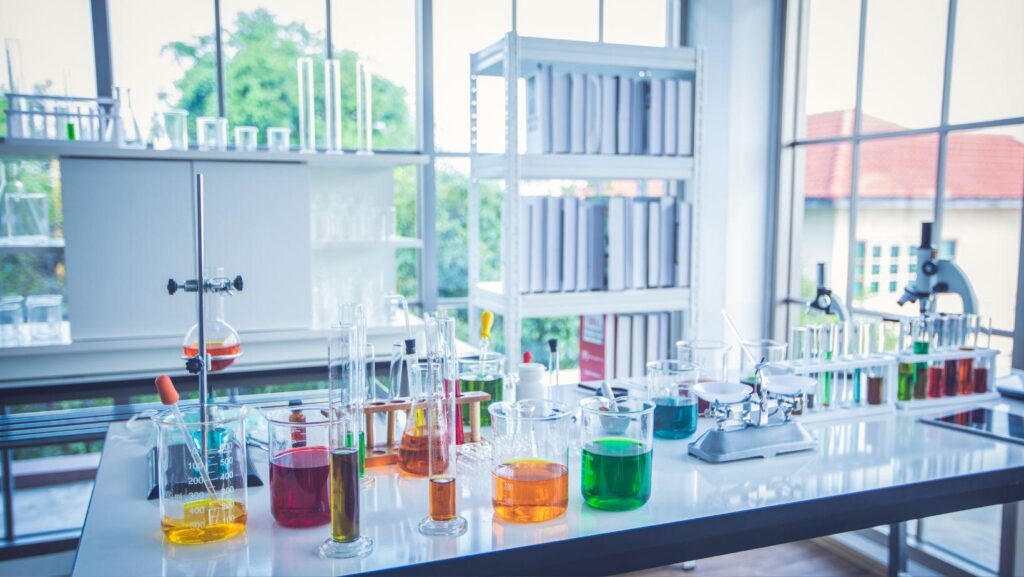
Laboratories are the quiet outlier in the sustainability conversation. Offices get retrofits and fleets get electrified, but the research facility down the road runs 24 hours a day, pushes conditioned air out of the roof by design, and keeps freezers at -80C for decades. Per square foot, labs can use five to 10 times more energy than a typical commercial office building, according to the Alliance to Save Energy.
The waste side is no smaller. A 2015 analysis in Nature put global life-science plastic waste at roughly 5.5 million tonnes for 2014, extrapolated from a single bioscience department at the University of Exeter where 280 bench scientists generated 267 tonnes in a year, then scaled across the 20,500 institutions doing biological, medical, or agricultural research worldwide.
None of this requires slowing down research. Most of the reductions available to a working lab come from equipment settings, purchasing decisions, and waste segregation, not from doing less science.
Where the Emissions Actually Sit
Lab energy demand concentrates in 4 places, and 3 of them run continuously.
|
Source |
Why it draws so much |
Typical scale |
|
Ventilation and air changes |
Lab air is single-pass: conditioned, used once, exhausted |
Commonly over 60% of building energy |
|
Fume hoods |
Each open sash pulls conditioned air straight outside |
1 hood can use the energy of 2 to 3 US homes |
|
Ultra-low temperature freezers |
Continuous operation, ageing gaskets, frost build-up |
Comparable to a small household, per unit |
|
Plug loads and small equipment |
Incubators, water baths, centrifuges left on overnight |
Cumulative, and largely invisible on a bill |
Almost all of it is idle; a fume hood with nothing under it costs the same as one in active use.
1. Start With Cold Storage
Raising an ultra-low temperature freezer set point from -80C to -70C reduces that unit’s energy consumption by roughly 30%, and Washington University in St. Louis reports 30 to 40% for the same change. For most sample types the stability data supports it, and the change takes 30 seconds.
The second step is emptying the freezer rather than buying another one. In the 2026 International Freezer Challenge, 18 labs at Washington University took 353 actions – defrosting, culling expired samples, consolidating, retiring old units – and cut 291.05 kWh per day, more than nine US households use.
Practical sequence:
- Inventory each freezer, then discard or consolidate anything past its useful life
- Defrost on a schedule; frost forces the compressor to work harder
- Replace failing door gaskets before replacing the unit
- Move archival samples to -70C or to room-temperature stabilised formats where validated
2. Treat an Open Fume Hood as an Open Window
A variable air volume hood left open at full sash height is a hole in the building envelope. Closing sashes when hoods are unattended is the cheapest reduction available in most labs. In one PowerSave Campus programme, outreach to about 40 lab staff using 22 fume hoods projected annual savings near 148,000 kWh and $19,000 after a single month. Sash stickers, occupancy sensors, and a monthly walk-through cover most of it. No capital budget required.
3. Treat Procurement as an Emissions Decision
This is the part most sustainability plans skip. Every compound arriving in a lab carries the emissions of its synthesis, purification, packaging, cold chain, and eventual disposal. Buying badly means paying that cost twice.
Right-size the order
Over-ordering is common because bulk pricing looks efficient on a purchase order. It stops being efficient when the surplus degrades on a shelf and leaves as hazardous waste, which carries its own transport and incineration emissions. Order against a written experimental plan and a realistic shelf life, not against a price break.
For reference-standard work this usually means smaller, well-documented units rather than drums. A 50 gram unit of research-grade phenibut HCl powder (CAS 3060-41-1) supplied for analytical identification and method development covers a validation campaign without leaving years of surplus to dispose of later. The same logic applies to any reference material: match the quantity to the protocol, not to the discount.
Ask for the documentation before you buy
Repeated experiments are an emissions problem as much as a budget problem. Every repeat run consumes the same ventilation, consumables, and instrument hours as the original.
A 2015 PLOS Biology study estimated the United States alone spends about $28 billion a year on preclinical research that is not reproducible. In the authors’ breakdown, biological reagents and reference materials accounted for 26% of that, second only to study design at 28%. An unverified compound is a carbon risk. Before purchase, ask for:
- A batch-specific certificate of analysis, not a generic specimen document
- The analytical method used for purity, with the chromatogram
- Third-party confirmation where the work will be published or audited
- Storage and stability guidance matching your actual conditions
Look for third-party environmental labels
My Green Lab’s ACT Ecolabel scores lab products against a 100-point weighted assessment covering energy use, materials, chemical hazards, end-of-life options, manufacturing facility performance, and corporate emissions commitments. It applies to chemicals and consumables, not only instruments, and it is the closest thing the sector has to a nutrition label for procurement.
4. Cut Single-Use Plastic Where It Is Safe To
Contamination control sets a hard floor here, and no sustainability target should override sterility requirements. Above that floor there is room:
- Return pipette tip boxes and reagent bottles through manufacturer take-back schemes
- Switch to washable glassware for non-sterile steps
- Buy consumables in bulk packaging rather than individually wrapped units
- Separate clean plastic from the hazardous waste stream so it can be recycled rather than incinerated
The last point matters more than it sounds. Plastic that never touched a hazard but leaves with the hazardous stream is treated as hazardous waste, and burns.
5. Get Chemical Waste Out of the Water
Conventional wastewater treatment does not reliably remove research compounds, and pharmaceutical residues turn up in surface water across Europe and North America. The controls are unglamorous and effective:
- Never dispose of research compounds down a drain, regardless of quantity
- Segregate waste at the point of generation and label it the same day
- Use licensed hazardous waste contractors and keep the disposal manifests
- Neutralise or deactivate where a validated procedure exists
6. Measure It, Then Certify It
Reductions that are not measured tend to reverse within a year. Two frameworks handle this without a consultancy budget. LEAF, developed at University College London, gives labs a bronze-to-gold pathway with built-in energy and waste calculators. My Green Lab Certification benchmarks a lab’s practices and re-scores over time. Both produce evidence that funders and institutional ESG reports can use.
|
Action |
Cost |
Time to payback |
|
Close fume hood sashes |
None |
Immediate |
|
Raise ULT set point to -70C |
None |
Under one month |
|
Freezer inventory and consolidation |
Staff time only |
One to three months |
|
Shut down idle plug loads overnight |
None |
Immediate |
|
Right-sized chemical procurement |
Neutral or lower |
One purchasing cycle |
|
Certification through LEAF or My Green Lab |
Low to moderate |
Six to 12 months |
Conclusion
The laboratory carbon problem is largely an idle-load and purchasing problem. A freezer set 10 degrees warmer, a sash closed at 6pm, an order sized to a protocol instead of a price break, and waste segregated at the bench together remove a meaningful share of a facility’s footprint without touching a single experimental result. The equipment that produces the science is rarely the equipment that produces the emissions.
For organisations already reporting under ISO 14001 or preparing Scope 1 and 2 disclosures, these are also the easiest line items to evidence. They are metered, dated, and attributable, which is more than can be said for most offset schemes.
Frequently Asked Questions
Is -70C safe for sample storage?
For many sample types, yes, and the published stability data supports it. Validate against your own material first. Some clinical and enzymatic samples have documented requirements at -80C and should stay there.
How much of a lab’s energy is actually ventilation?
HVAC is the largest single share in a typical laboratory building, commonly over 60%, because lab air is exhausted rather than recirculated.
Does buying smaller quantities of research chemicals reduce emissions?
It reduces the volume that expires unused and leaves as hazardous waste, which carries transport and incineration emissions. The saving is modest per order and adds up across a purchasing programme.
Why does reagent quality belong in a carbon discussion?
Repeat experiments consume the same energy and consumables as the original. With 26% of irreproducible preclinical spend attributed to reagents and reference materials, verified purity is a waste-prevention control.
What is the fastest starting point for a lab with no budget?
Fume hood sashes and freezer set points. Both are free, both take minutes, and both are measurable on the next utility bill.
Disclaimer: Research compounds referenced in this article are supplied strictly for laboratory research and analytical purposes and are not intended for human or animal consumption. Always comply with applicable local, national, and institutional regulations when procuring, handling, and disposing of research chemicals.