

When it comes to quenching thirst without the guilt of calories, Diet Mountain Dew often finds itself at the top of the list. With its vibrant citrus flavor and zero calories, this fizzy drink promises a refreshing escape from the ordinary. But is it really the guilt-free soda it claims to be, or just a clever marketing ploy?
As consumers become more health-conscious, understanding the nutrition behind their favorite beverages is crucial. Diet Mountain Dew offers more than just a burst of flavor; it’s packed with caffeine to give that much-needed energy boost. But what about the ingredients lurking behind the fizz? Let’s dive into the nutrition facts and uncover what makes Diet Mountain Dew a beloved choice—and whether it deserves a spot in your fridge or a one-way ticket to the recycling bin.
diet mountain dew nutrition
Diet Mountain Dew is a low-calorie beverage that combines refreshing citrus flavors with a caffeine boost. Understanding its nutritional components helps in assessing its overall value.
Key Ingredients
Diet Mountain Dew contains several key ingredients. Carbonated water serves as the main base. Citric acid provides the signature tartness, while natural and artificial flavors enhance the taste. Aspartame functions as the primary sweetener, ensuring a low-calorie count. Caffeine, a notable stimulant, contributes to the drink’s energizing effect. The addition of sodium benzoate acts as a preservative. These components create a unique flavor profile while maintaining low caloric values.
Caloric Content
The caloric content of Diet Mountain Dew stands at zero calories per 12-ounce serving. This feature appeals to health-conscious consumers seeking to reduce calorie intake. Unlike regular soda, which typically contains 140 calories or more per serving, Diet Mountain Dew offers an alternative. The absence of sugar further emphasizes its low-calorie status. With no carbohydrates present, it suits various dietary preferences, including low-carb diets. This caloric efficiency supports its reputation as a guilt-free beverage choice.
Sugar and Sweeteners
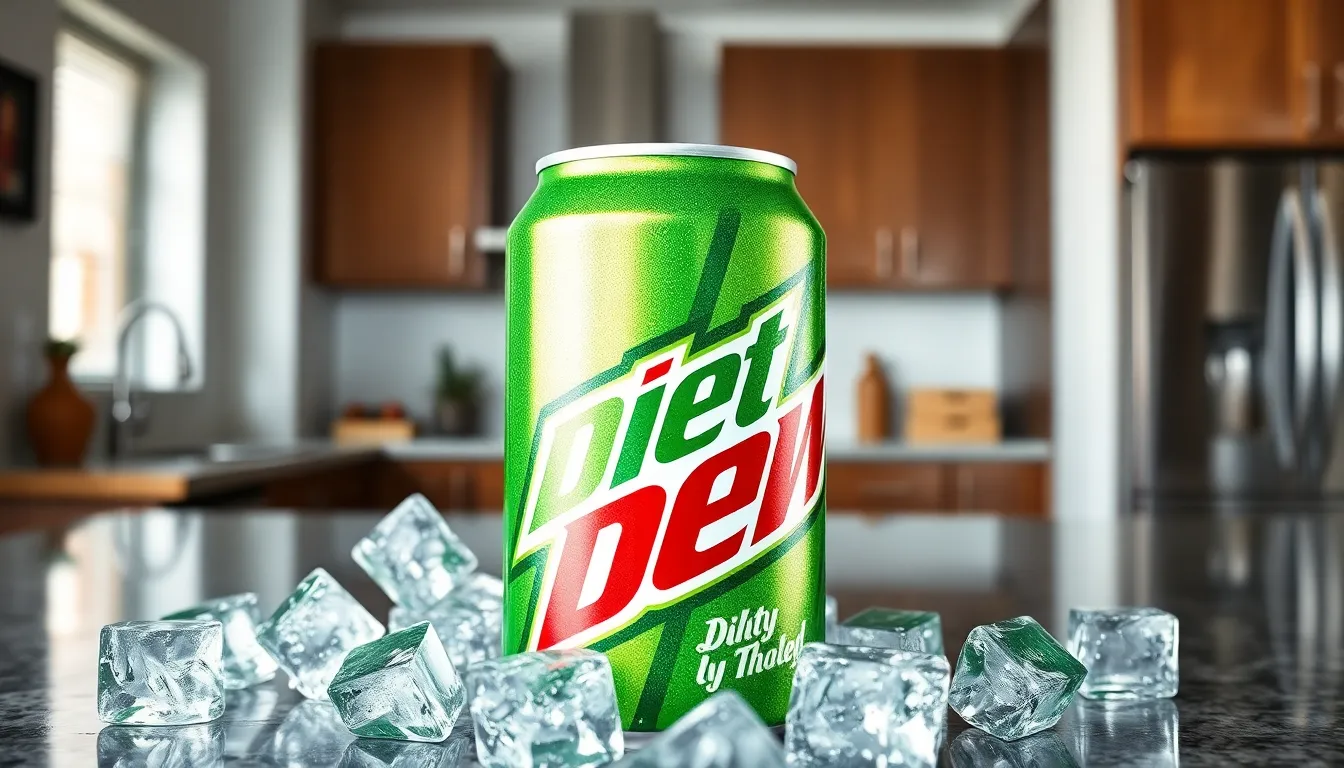
Diet Mountain Dew contains no sugar, relying instead on artificial sweeteners to achieve its sweet taste.
Artificial Sweeteners Used
Aspartame serves as the primary artificial sweetener in Diet Mountain Dew. This ingredient offers about 200 times the sweetness of sugar without the associated calories. Other sweeteners like acesulfame potassium may contribute to the drink’s flavor profile. These ingredients enable the beverage to maintain a sweet taste while keeping caloric content at zero, appealing to consumers focused on calorie reduction and maintaining a guilt-free choice.
Impact on Health
Health implications of consuming artificial sweeteners generate significant discussion. Some studies suggest that aspartame and similar sweeteners may have potential links to health concerns, including metabolic changes and impacts on gut health. Consuming these sweeteners in moderation remains essential, as excessive intake could contribute to adverse effects. While these ingredients make Diet Mountain Dew an attractive option for those avoiding sugar, individual responses may vary, warranting a balanced approach to its consumption.
Vitamins and Minerals
Diet Mountain Dew contains minimal vitamins and minerals. It lacks significant nutritional value, as its primary purpose is to serve as a low-calorie refreshment rather than a source of essential nutrients.
Nutritional Additives
Diet Mountain Dew includes artificial flavorings and preservatives, like sodium benzoate. These additives help maintain the drink’s flavor and extend its shelf life. Aspartame and acesulfame potassium serve as sweeteners, providing the beverage’s sweetness without calories. While these sweeteners offer a calorie-free option, they don’t contribute any vitamins or minerals. Considering the drink’s formulation, it primarily serves to quench thirst rather than fulfill nutritional requirements.
Comparison with Other Soft Drinks
When compared to traditional soft drinks, Diet Mountain Dew stands out for its zero-calorie content. Regular sodas contain significant sugar and calories, often exceeding 140 calories per 12-ounce serving. Diet Mountain Dew, on the other hand, provides a guilt-free alternative for those watching their caloric intake. Nonetheless, it offers similar flavor profiles, making it appealing to those seeking a sweet taste without the caloric burden. This comparison highlights its attractiveness for health-conscious consumers.
Caffeine Content
Diet Mountain Dew contains caffeine, a key ingredient that can enhance alertness and provide a boost of energy.
Benefits of Caffeine
Caffeine is known for improving mental focus and concentration. Studies indicate that moderate consumption can enhance physical performance, making it appealing for active individuals. It stimulates the central nervous system, which may help reduce feelings of fatigue. The presence of caffeine can also elevate mood, offering a temporary lift in energy levels. Consuming beverages like Diet Mountain Dew provides a convenient way to incorporate caffeine into a daily routine for those seeking increased alertness.
Potential Risks
Excessive caffeine consumption can lead to several health issues. It might cause jitters, anxiety, and sleep disturbances, especially for individuals sensitive to stimulants. Research suggests that high caffeine intake may elevate heart rate or blood pressure, impacting cardiovascular health. Over time, relying heavily on caffeine can result in dependency, making it harder to function without it. Monitoring intake remains crucial, as moderation balances the benefits and potential downsides of caffeine consumption.
Conclusion
Diet Mountain Dew offers a refreshing zero-calorie alternative for those seeking a flavorful beverage without the guilt of added sugars. Its unique blend of artificial sweeteners and caffeine provides a boost in energy and alertness, making it a popular choice among health-conscious consumers.
While it lacks significant nutritional value and raises questions about the health implications of artificial sweeteners, moderation remains key. For individuals aiming to reduce calorie intake while enjoying a fizzy drink, Diet Mountain Dew stands out as a viable option. Ultimately, understanding its ingredients and potential effects can help consumers make informed choices that align with their dietary preferences and lifestyle.