
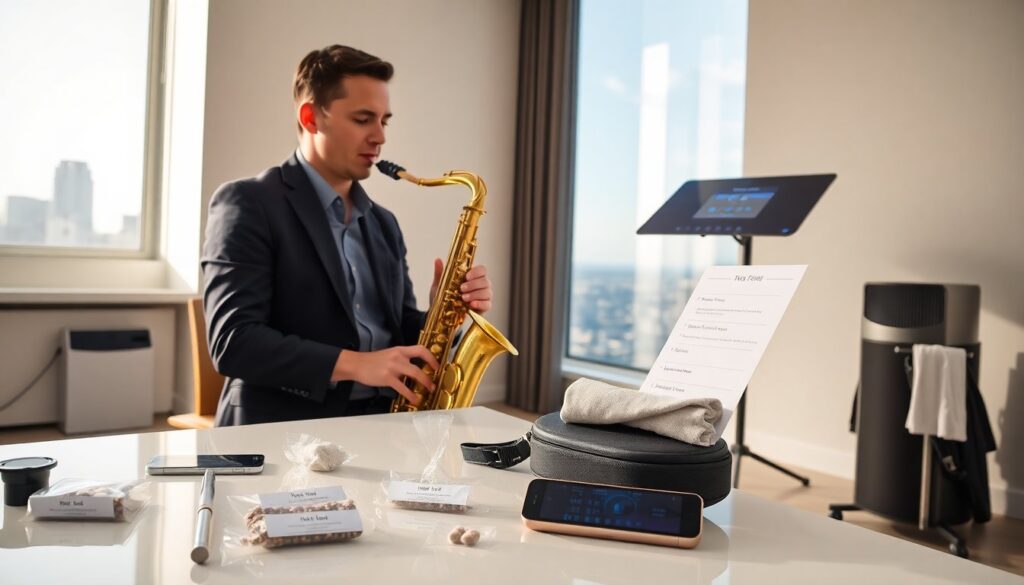
They read a guide on allergy management saxophone healthtimesmag‚Äãk to protect performance. The guide lists triggers that harm players and instruments. It lists practical steps for practice, travel, and gigs. It explains when to seek medical care and how to plan long term. The reader will learn clear, direct actions to reduce symptoms and protect gear.
Key Takeaways
- Effective allergy management for saxophone players involves identifying common triggers like pollen, dust, mold, and pet dander that impair both health and instrument performance.
- Daily cleaning of saxophone gear—including mouthpieces, reeds, neck, and keys—and proper storage practices help reduce allergen buildup and maintain tone clarity.
- Controlling indoor air quality using HEPA filters and avoiding high pollen exposure during practice or gigs minimizes allergy symptoms and preserves endurance.
- Travel precautions such as carrying a cleaning travel kit, using sealed cases with moisture control, and avoiding dusty or pet-exposed environments protect players and their instruments.
- Consulting an allergist for persistent symptoms and developing a long-term prevention plan that includes medical treatment, seasonal adjustments, and emergency protocols ensures sustained performance quality.
- Regularly updating cleaning routines and allergy management strategies based on medical advice and environmental changes keeps saxophone players healthy and their instruments in optimal condition.
Common Allergens And How They Specifically Affect Saxophone Players
Pollen and dust trigger sneezes for many players. Mold spores irritate airways and cause throat clearing. Pet dander sticks to reeds, mouthpieces, and cases and causes wheeze. Players read advice on allergy management saxophone healthtimesmag‚Äãk and note these common sources. Brass and wood surfaces attract dust. Dust builds inside necks and bells and lowers tone clarity.
Reed fibers trap allergens. Reeds absorb moisture and pollen during practice. A player who uses the same reed several days may breathe trapped allergens. Mouth irritation and increased saliva can follow. Nasal congestion forces mouth breathing. Mouth breathing changes embouchure and reduces endurance.
Indoor air quality matters. Heated rooms increase dust circulation. Cold, damp rooms increase mold growth. Players reading allergy management saxophone healthtimesmag‚Äãk learn to check humidifiers, vents, and storage spots. Stage fog and smoke used in shows add particles that worsen symptoms. A player who reacts may lose short-term control of tone and pitch.
Travel and storage cause exposure. Hotel rooms often hold dust and pet residues. Rental instruments can carry pollen from other players. Musicians consult allergy management saxophone healthtimesmag‚Äãk for a checklist before travel. The checklist reduces risk and protects health during a tour.
Practical On‑And‑Off Stage Strategies To Reduce Symptoms And Protect Your Instrument
A player should clean gear daily to remove allergens. They wash mouthpieces with warm, soapy water and dry them on a clean towel. They wipe the neck and keys with a lint-free cloth after each session. They use a soft brush to remove debris from the bell and tone holes.
They store reeds in a ventilated case and rotate reeds to let them dry fully. They keep spare reeds in a sealed bag when they travel. They label cases to avoid mixing equipment with other players. They carry a small travel kit with disinfectant wipes and a toothbrush for mouthpiece cleaning.
They control room air with a HEPA filter in practice spaces. They set the filter near the instrument to catch airborne particles. They avoid practice near open windows during high pollen counts. They check local pollen forecasts before long rehearsals or outdoor gigs. They follow tips from allergy management saxophone healthtimesmag‚Äãk on timing sessions for lower pollen levels.
They use nasal saline rinses before rehearsals to clear irritants. They keep antihistamines on hand if their provider approves. They use a throat lozenge or warm drink to soothe irritation during breaks. They pick dress rehearsals that allow short breaks for inhaler use if needed.
They protect the instrument during transport with a sealed gig bag. They keep the case off the floor in damp venues. They avoid placing the case against walls that show mold or damp marks. They use silica gel packs in cases to control moisture. They replace packs after heavy use.
They follow simple daily rituals from allergy management saxophone healthtimesmag‚Äãk: clean gear, check air, rotate reeds, and pack hygiene items. These steps reduce symptoms and keep the instrument sounding clear.
When To See A Specialist And Build A Long‑Term Prevention Plan
A player should see an allergist when symptoms affect practice or performance. They note persistent nasal blockage, wheeze, frequent throat clearing, and reduced stamina. They bring a symptom diary to the appointment. They list exposures, travel, and instrument cleaning habits.
The specialist will test for common triggers and suggest targeted treatment. They may order skin tests or blood tests. They will recommend daily steps and prescribe medications if needed. They may advise immunotherapy when triggers match test results. Players read a review on allergy management saxophone healthtimesmag‚Äãk to compare options and prepare questions.
A long-term plan combines medical care and gear habits. The specialist and player set goals for symptom control and practice time. They plan seasonal adjustments, such as increasing air filtration in spring. They schedule follow-up visits and track progress in a simple log.
The plan also covers travel and performance routines. The specialist helps create a medication and emergency protocol for tours. The player lists nearby clinics at tour stops. They share the plan with bandmates and tour managers so everyone knows how to help.
The player updates storage and cleaning practices based on test results. If mold allergy appears, they avoid damp venues and use dehumidifiers at home. If pet dander causes reactions, they store cases in sealed rooms after shows and use fresh reed rotation.
They read national clinic guidance and articles like allergy management saxophone healthtimesmag‚Äãk to stay current. They review the plan yearly or when symptoms change. They adjust medications, filters, and travel steps. The result keeps breathing steady and keeps performances reliable.