
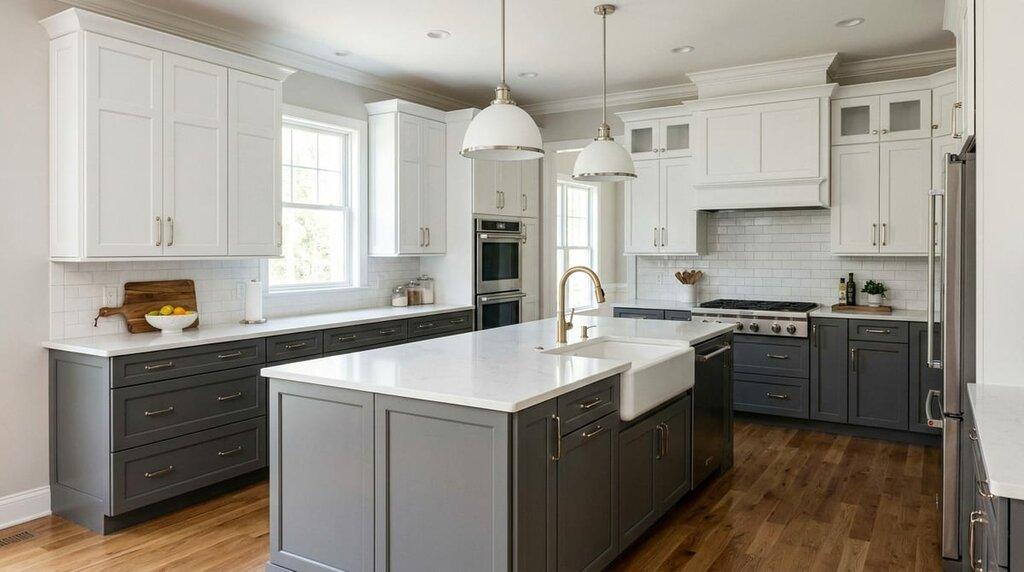
Most Canadians spend more time in their kitchen than in any other room in the house. It is where the day begins, where meals are prepared, where children do homework, and where the family gathers before bed. It is also, according to a growing body of neurological and psychological research, one of the most powerful environmental stressors inside the average home.
The problem is rarely visible in the obvious sense. A cluttered kitchen does not feel like a threat. But the human brain processes it as one — and the physiological consequences accumulate every single day. Kitchen designers and cabinet manufacturers like Morsun Kitchen Cabinets in Richmond Hill have observed this pattern directly: homeowners who come in for a cabinet upgrade often describe chronic fatigue and low-grade anxiety that they trace back, after the fact, to years of operating in a disorganized kitchen environment.
This article examines the specific mechanisms through which kitchen disorder affects cortisol levels, decision-making capacity, eating behavior, and overall mental energy. Understanding these mechanisms is the first step toward reversing the damage.
The Kitchen Is the Highest-Traffic Stress Zone in the Average Canadian Home
Research conducted by UCLA’s Center on Everyday Lives of Families identified the kitchen as a critical hub of daily household operations, describing it as a site of frequent congregation, information exchange, and logistical organization for modern families. Of all rooms in the home, the kitchen receives the highest foot traffic throughout the day.
This matters because environmental stress is cumulative. A person who enters a visually chaotic room once experiences a brief cortisol spike that naturally resolves. A person who enters the same room twelve times per day sustains an elevated cortisol baseline that does not fully resolve between exposures. The kitchen, precisely because it is visited so frequently, becomes the primary environmental stressor in many households — not because it is the most disordered room, but because it is the most visited one.
Why the Brain Processes Kitchen Clutter Differently Than Other Rooms
The kitchen carries a specific cognitive weight that other rooms do not. It is a functional space — one associated with active tasks, preparation, and output. When the brain enters a functional space in a state of disorder, it does not simply register visual discomfort. It registers an incomplete task. The neurological response to an incomplete task is a sustained low-level activation of the stress response system, keeping the body in a mild fight-or-flight state for as long as the disorder remains unresolved.
A cluttered bedroom produces a similar effect, but the bedroom is visited far less often. The kitchen’s combination of high visit frequency and strong task association makes it uniquely capable of sustaining chronic low-grade stress throughout the day.

Visual Density and Cortisol: What Happens in Your Brain When Counters Are Covered
The human visual system operates continuously, even when a person is not actively looking at anything. The brain’s visual cortex scans the surrounding environment at all times, processing every object in its field of view. This process requires neurological energy — a phenomenon psychologists refer to as cognitive load.
When horizontal surfaces like kitchen counters are covered with appliances, mail, dishes, food packaging, and miscellaneous items, the visual cortex must process each object individually. The brain cannot selectively ignore objects that are physically present. Every item on a cluttered counter demands a fraction of the brain’s processing capacity, continuously, for as long as the person remains in the room.
A 2009 study published in the journal Personality and Social Psychology Bulletin found that women who described their homes as cluttered showed measurably elevated cortisol levels throughout the day — levels that did not decrease at the rate expected in low-stress environments. Research on clutter and anxiety has since found that cluttered environments produce cortisol elevations ranging from 18 to 25 percent compared to organized spaces.
Why Open Shelving Increases Daily Mental Fatigue
Open shelving has become a popular kitchen design trend in recent years. Aesthetically, it can appear clean and curated in photographs. In daily lived experience, it functions as a permanent source of cognitive load. Every dish, glass, and container stored on open shelving is visible at all times, requiring continuous background processing by the visual cortex.
Unlike a closed cabinet, open shelving provides no visual boundary. There is no moment in the kitchen when the brain can stop processing what is stored there. Over the course of a day, this sustained visual processing accumulates into measurable mental fatigue — fatigue that most people attribute to work stress, insufficient sleep, or other factors, without recognizing the kitchen as a contributing source.
How Closed Cabinet Storage Physically Lowers Cortisol Levels
The solution to visual density is physical concealment. When objects are stored behind closed cabinet doors, the visual cortex stops processing them entirely. The brain cannot register what it cannot see. This simple physical boundary — a cabinet door — removes dozens to hundreds of individual objects from the brain’s continuous processing loop.
Research supports this mechanism directly. Studies have consistently found that reducing the number of visible objects in a living environment produces measurable decreases in self-reported stress and in physiological markers of cortisol activity. The intervention does not require removing possessions — only concealing them behind solid doors.
The Unfinished Task Signal: Why a Disorganized Kitchen Keeps Your Nervous System on Alert
The brain maintains an active internal list of incomplete tasks. Psychologists call this the Zeigarnik effect — the neurological tendency to devote more cognitive attention to unfinished actions than to completed ones. A disorganized kitchen communicates to the brain, continuously, that something needs to be done.
This signal does not require conscious recognition. A person can walk through a cluttered kitchen without consciously thinking about the mess and still experience a stress response, because the brain registers the environmental data independent of deliberate attention. The nervous system responds to what the eyes see, not to what the conscious mind decides to think about.
How the Brain Interprets Clutter as an Incomplete Action
Every object out of its designated place represents, to the brain’s organizational systems, an unresolved action. A dish left on the counter is not just a dish. It is a task — “put this away” — that has not been completed. When dozens of such objects accumulate across a kitchen, the brain registers dozens of simultaneous incomplete tasks. This state produces a persistent background anxiety that most people experience as general restlessness, low concentration, or a vague sense of being overwhelmed — without connecting the feeling to its environmental source.
The Link Between Kitchen Disorder and Poor Sleep Quality
Cortisol and sleep operate in direct opposition. Cortisol is the hormone that promotes alertness and physical readiness. Melatonin is the hormone that promotes sleep. When cortisol levels remain elevated throughout the day — as they do in individuals whose primary home environment sustains ongoing visual stress — melatonin production is suppressed or delayed in the evening.
For many Canadians, the kitchen is the last room visited before bed. Preparing a evening snack, making tea, cleaning up after dinner — all of these activities take place in the kitchen. If the kitchen environment maintains an elevated cortisol response during this final visit of the day, the body enters the sleep window in a physiologically aroused state, extending the time required to fall asleep and reducing the quality of early sleep cycles.
Kitchen Disorder and Eating Behavior: The Research Is Striking
The connection between kitchen clutter and eating behavior is one of the most well-documented findings in environmental psychology.
Researchers at Cornell University’s Food and Brand Lab divided 98 participants into two kitchen environments — one clean and organized, one chaotic and cluttered — and observed their food consumption. Participants in the chaotic kitchen consumed approximately twice the cookie calories as those in the organized environment. The researchers concluded that a disordered environment activates a stress response that directly increases the likelihood of reaching for high-calorie, high-sugar foods.
The lead researcher summarized the finding plainly: when people feel that their environment is out of control, they become more likely to behave in ways that reflect that feeling. The kitchen, as the food environment, translates environmental disorder directly into dietary behavior.
Decision Fatigue Before the First Meal of the Day
Decision fatigue is the documented decline in decision quality that occurs after a person has made a high volume of decisions in a short time period. In a disorganized kitchen, the morning routine generates an unusually high number of micro-decisions before breakfast is even prepared: where is the coffee, which surface is usable, where should this be moved, what needs to be washed first.
Each of these micro-decisions draws from the same finite cognitive resource pool. By the time breakfast is ready, a person operating in a cluttered kitchen has already made dozens of small decisions that would not exist in an organized space. This pre-breakfast depletion of decision-making capacity carries forward into the rest of the day, contributing to lower concentration, poorer judgment, and increased reliance on habitual rather than intentional behavior.
Air Quality in the Kitchen and Its Direct Effect on Cognitive Function
Kitchen clutter affects more than visual processing. In a physically crowded kitchen, functional ventilation becomes harder to maintain. Range hoods are blocked by items stored nearby. Windows cannot be opened fully if counters extend beneath them. Cross-ventilation pathways are disrupted by objects placed in movement paths.
The kitchen generates more indoor air pollutants than any other room in the house during active use. Cooking produces carbon monoxide, nitrogen dioxide, and particulate matter. Gas appliances add additional chemical compounds. When kitchen layout and clutter inhibit proper ventilation, these compounds accumulate at levels that measurably reduce cognitive function — producing fatigue, headache, and reduced concentration that most people attribute to other causes.
Cabinet Materials, VOCs, and What to Look for When Upgrading
Not all kitchen cabinets contribute equally to indoor air quality. Cabinets manufactured from low-grade particleboard or MDF using high-VOC adhesives release formaldehyde and other volatile organic compounds into the kitchen air for months or years after installation. In an enclosed kitchen with limited ventilation, these emissions accumulate.
Solid wood cabinet construction and plywood box construction with low-VOC finishes significantly reduce ongoing off-gassing. For Ontario homeowners undertaking a kitchen upgrade, the construction materials of new cabinets carry direct implications for the air quality and cognitive environment of the kitchen on a daily basis.
The Physical Fix: What Kitchen Changes Produce Measurable Stress Reduction
The research on kitchen clutter and stress converges on a consistent set of structural solutions. These are not organizational habits — they are physical changes to the kitchen environment that remove the conditions producing stress, rather than requiring ongoing behavioral maintenance to manage symptoms.
Replacing Open Clutter Zones With Enclosed Cabinet Systems
The single most effective structural change in a kitchen is the replacement of open surfaces and open storage with enclosed cabinet systems that provide dedicated, concealed space for every category of item currently occupying counter and shelf space. This change does not require reducing the number of possessions in the kitchen — it requires providing a closed location for each of them.
The neurological benefit is immediate. When every item in the kitchen has a designated enclosed location, the visual cortex encounters a kitchen of dramatically reduced object density. The cognitive load drops. The cortisol response diminishes. The kitchen begins to function as a restorative environment rather than a stressful one.
Why the Quality of Cabinet Construction Determines Long-Term Results
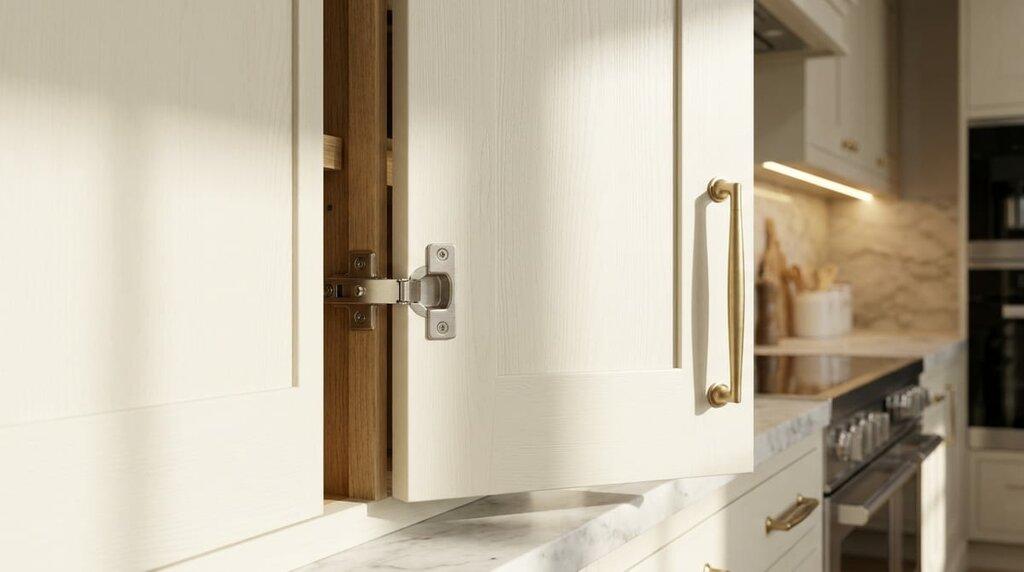
The stress-reduction benefit of enclosed cabinet storage depends on the durability of the cabinets over time. Cabinets that warp, swell, develop misaligned doors, or show visible deterioration within a few years become sources of new visual disorder — and new cortisol triggers — rather than solutions to the original problem.
For Ontario homeowners looking to make a kitchen change that genuinely holds its stress-reduction benefit over time, construction quality is the critical factor. Factory-direct manufacturers that build using solid wood doors and plywood box construction produce cabinets that maintain structural integrity and visual consistency over years of daily use — without the warping or swelling that particleboard alternatives develop in Ontario’s humid summers and dry winters.
The Storage Features That Make the Biggest Psychological Difference
Not all enclosed storage produces equal cognitive benefit. The following cabinet features directly address the mechanisms identified in stress and clutter research:
A Practical Reset: How to Address Kitchen Stress Without a Full Renovation
A complete kitchen renovation is not always immediately feasible. The following steps address the primary neurological stress mechanisms through incremental changes that do not require construction.
Step 1: Clear all horizontal surfaces. Remove every item from counters and place them in temporary storage. Evaluate which items genuinely need to remain accessible versus which items are stored on counters by default rather than necessity. Return only items used daily.
Step 2: Identify open storage zones that can be temporarily concealed. Open shelves can be fitted with simple curtain panels or temporary door panels to immediately remove their contents from the brain’s visual processing loop while a permanent solution is evaluated.
Step 3: Address the highest-clutter zone first. Rather than attempting to reorganize the entire kitchen simultaneously, identify the single zone that generates the most visual disorder and resolve it completely before moving to the next. Completing one zone fully produces a more significant stress reduction than partially addressing many zones.
Step 4: Evaluate cabinet storage capacity relative to kitchen inventory. If counters are cluttered because cabinet space is insufficient for the kitchen’s actual contents, the underlying problem is storage capacity, not organization discipline. Adding storage capacity — through a cabinet upgrade, pantry addition, or reconfigured cabinet interior — resolves the structural cause rather than requiring ongoing behavioral effort to manage a symptom.
Conclusion: Your Kitchen Should Restore You, Not Drain You
The kitchen is the most visited room in the Canadian home. It is where nutritional decisions are made, where family routines are anchored, and where the nervous system either gets a chance to reset or receives another dose of low-grade environmental stress.
The research is consistent: visual clutter elevates cortisol, increases decision fatigue, disrupts sleep, and directly influences eating behavior. These are not minor inconveniences. They are physiological processes that operate continuously, independently of the homeowner’s awareness, producing cumulative health consequences that extend well beyond the kitchen itself.
The structural solution — enclosed storage, organized cabinet systems, and a kitchen designed to minimize cognitive load rather than maximize display — is not an aesthetic preference. It is a health intervention. And unlike most health interventions, it requires no ongoing effort once the environment itself has been changed.
A kitchen that is designed to support the brain — visually calm, functionally organized, and structurally sound — does not just look better. It produces measurably better days.