

Tooth sensitivity is common and can make whitening your teeth feel a bit nerve-wracking. If you’re searching for advice on whitening sensitive teeth, you’re probably balancing concerns about sensitivity with your desire for a brighter smile. Speaking with dentists in Miami can help you understand your options.
We’re going to discuss safe whitening for sensitive teeth and top options to consider. It’s possible to whiten sensitive teeth using gentle methods and dentist-guided options, but it’s also important to set realistic expectations.
Teeth whitening for sensitive teeth
When whitening sensitive teeth, it’s important to take a gentler approach to minimize discomfort and irritation. To protect enamel and reduce nerve irritation, dentists might use:
- Milder active agents, such as ones with lower peroxide levels
- Added desensitizers that calm tooth nerves during and after treatment
- Customized application and shorter wear times
- Enamel-focused care to protect weakened enamel1
Why choosing the right whitening method for sensitive teeth matters
Choosing the right teeth whitening method for those with sensitivity issues provides benefits ranging from enhanced comfort to customized guidance.
Reduces discomfort
Sensitivity-safe whitening methods reduce discomfort by using desensitizing agents that calm tooth nerve responses.
Protect enamel
Low-abrasion whiteners with lower levels of peroxide help protect your enamel while providing effective results.
Even results
Get even whitening results by working with a dental professional. They will use a tailored approach to avoid over-whitening thin enamel.
Customized guidance
Your dentist will consider your sensitivity, gum health, and existing restorations for a custom whitening process.
Tooth whitening options
So, what are the options for whitening sensitive teeth?
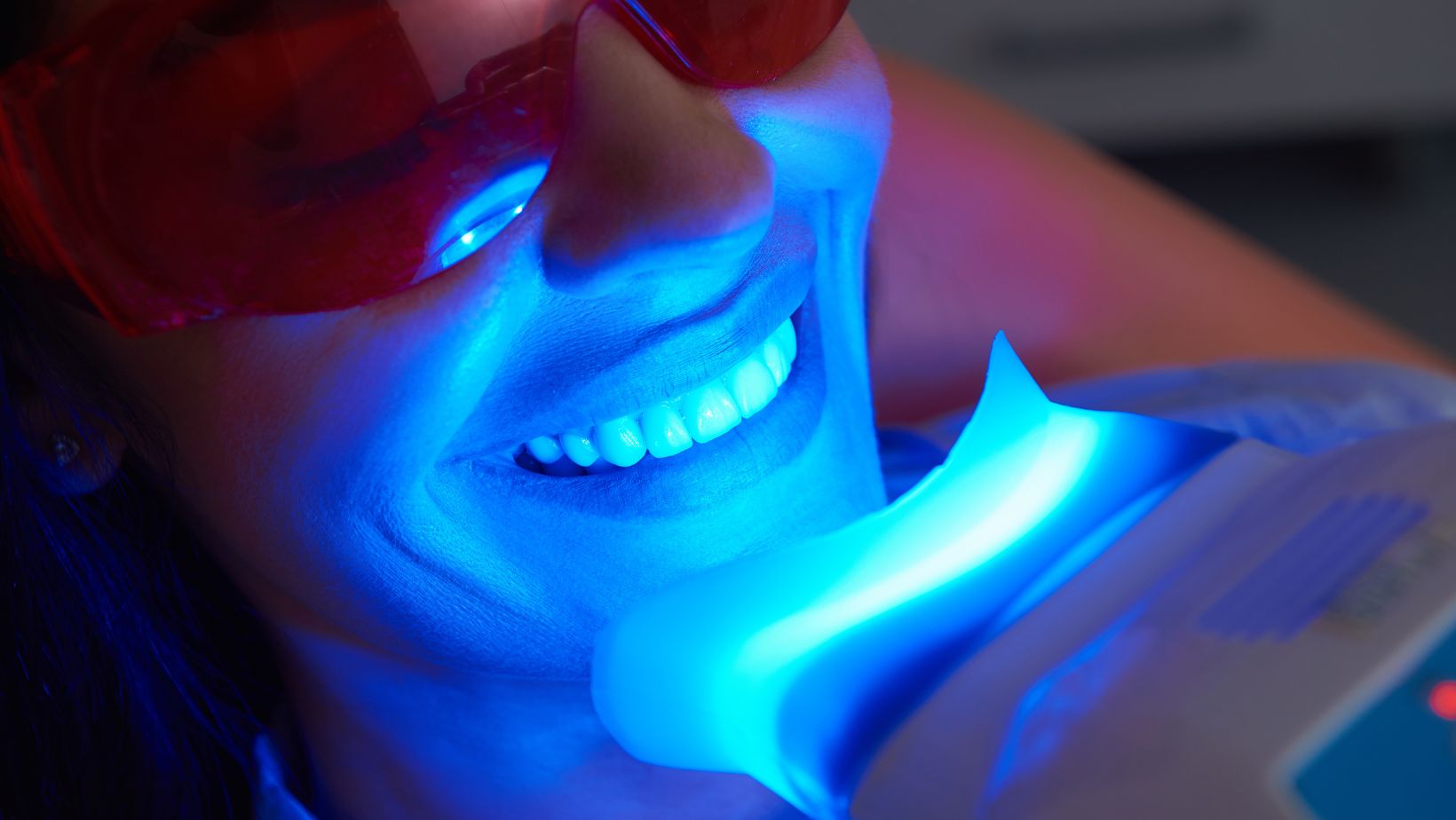
There are several types of teeth whitening available, including:
Whitening toothpaste
Whitening toothpaste is one common at-home method of brightening your smile. However, whitening toothpastes typically cause discomfort, especially for those dealing with sensitivity issues.2
Whitening strips
Whitening strips are another popular method of whitening your teeth at home. They use a peroxide-based bleaching gel to remove stains from your teeth. These also often cause sensitivity among users.
Whitening pens
Whitening pens are an on-the-go solution for people looking to brighten their smiles. They use portable brush-on applicators containing hydrogen peroxide or carbamide peroxide gel. Whitening pens can brighten your smile after a couple of weeks of use.
At-home LED kits
Some people prefer at-home LED whitening kits. These kits use whitening strips or gel and a one-size-fits-all mouthpiece with an LED light to remove surface stains and brighten teeth. The results are less dramatic than professional whitening treatments.
Professional teeth whitening
Professional teeth whitening is an in-office cosmetic treatment that brightens the appearance of your natural smile. This treatment provides long-lasting results after just one visit.
Why professional whitening is the best option for sensitive teeth
When wanting to brighten your natural smile, here’s why in-office professional teeth whitening is the best option.
Comprehensive evaluation
Working with a professional dental office ensures you get a comprehensive evaluation. Your dentist will assess your teeth and gums and check your enamel and for any dental issues, such as cavities or gum recession. This step will help the dentist determine if whitening is safe for your teeth and which method is best.
Set realistic goals
The dentist will use a visual shade guide to help you set realistic goals for the treatment. They can also show you the results you can expect based on the whitening strength and exposure time.
Protective measures
The dentist will apply a protective barrier or gel to your gums and might use desensitizing agents on your teeth to prevent discomfort. This process can significantly reduce discomfort when compared to standard over-the-counter whitening products.
Controlled application
The whitening agent will be applied carefully by your dentist. They will monitor your comfort throughout the entire process and make adjustments if needed.
Post-treatment guidance
After the professional teeth whitening treatment, your dentist may apply a soothing agent. They will provide post-treatment guidance on how to maintain your results for as long as possible without sensitivity.
How much does professional teeth whitening cost?
The average in-office professional teeth whitening cost ranges from $359 to $485 per treatment.3 Although professional teeth whitening is more expensive than at-home treatments, it can be worth it, especially for those with sensitive teeth. A “dentist near me” can guide you through the treatment to ensure comfort and results. Schedule an appointment today to talk to your dentist.