
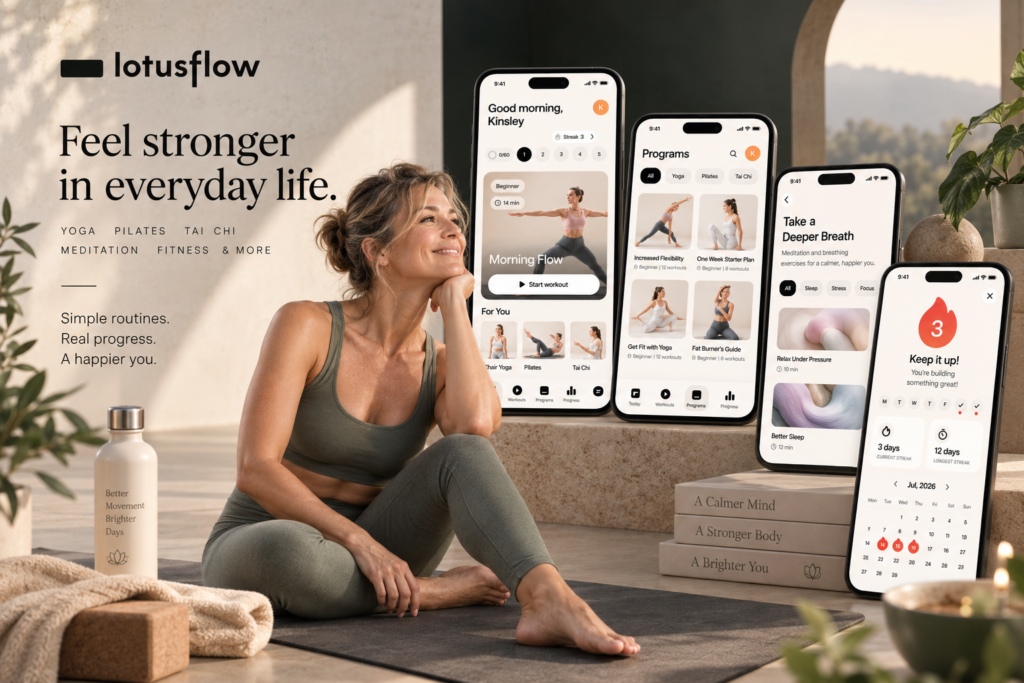
These days, staying healthy isn’t limited to a gym membership or a weekly pilates class. Our phones can double as a personal trainer, a yoga instructor, or a meditation guide, ready whenever we are. Home workouts became a lasting habit after the pandemic, and yoga and pilates apps have settled comfortably into that shift. This piece takes a closer look at where that category stands today, and at Lotus Flow, one of the apps leading the way.
Why fitness apps are so appealing
The biggest draw of an app is convenience. There’s no gym to drive to, no class to book in advance. All it takes is a phone and fifteen minutes, and you can be mid-flow in a yoga sequence or settling into a breathing exercise. That matters most for people with packed schedules, frequent travelers, or anyone who struggles to stick to a fixed routine. Features like personalized plans and progress tracking also help keep motivation alive along the way.
What is Lotus Flow?
Lotus Flow is a yoga and wellness app developed by HUBX, listed under the Health & Fitness category on the App Store. Rather than focusing on a single discipline, it brings yoga, pilates, tai chi, stretching, mobility work, and mindfulness together under one roof. The goal is for anyone, whether brand new to movement or a seasoned practitioner, to find a routine that actually fits.
The app is free to download, with monthly, quarterly, and yearly subscription options unlocking the premium content. As of now, it holds a 4.6 rating from over 3,600 ratings on the App Store.
Standout features
A few things stand out in what Lotus Flow offers:
- A personalized onboarding flow that recommends a plan based on the user’s goals
- A wide catalog of yoga, pilates, tai chi, stretching, and workout classes
- Progress tracking, streaks, and reminders to help keep habits on track
- Offline downloads, so classes can be followed without an internet connection
- Lesser known but accessible formats like chair yoga, face yoga, and wall pilates
- Apple Health integration and support across iPhone, iPad, and Apple TV
That range is what pushes the app past a single focus like flexibility or strength alone, toward a more holistic take on wellness.
Who it’s for
The way the content is structured leans toward beginners. Options like chair yoga and gentle tai chi movements give older users, or anyone working around a physical limitation, an accessible entry point. At the same time, structured programs aimed at more advanced goals, like handstands or the splits, leave room to grow for practitioners who already have experience under their belt.
Apps and realistic expectations
The guidance an app provides has real value, but it’s worth keeping in perspective. Following along with yoga or pilates videos is a solid way to build a regular movement habit. That said, if there’s a chronic condition, a history of injury, or any specific concern involved, an app’s suggestions are no substitute for input from a professional, whether that’s a doctor, physical therapist, or certified instructor. The most useful way to think about an app like Lotus Flow is as a tool that adds movement and awareness to daily life, not a miracle fix.
Final thought
The health and fitness app category shows no signs of slowing down, and Lotus Flow is one example of what it looks like to bring yoga, pilates, and mindfulness together in a single experience. It holds its own on accessibility, personalization, and the sheer range of content on offer. What tools are you reaching for as you build your own movement routine, and are app based options actually working for you?