
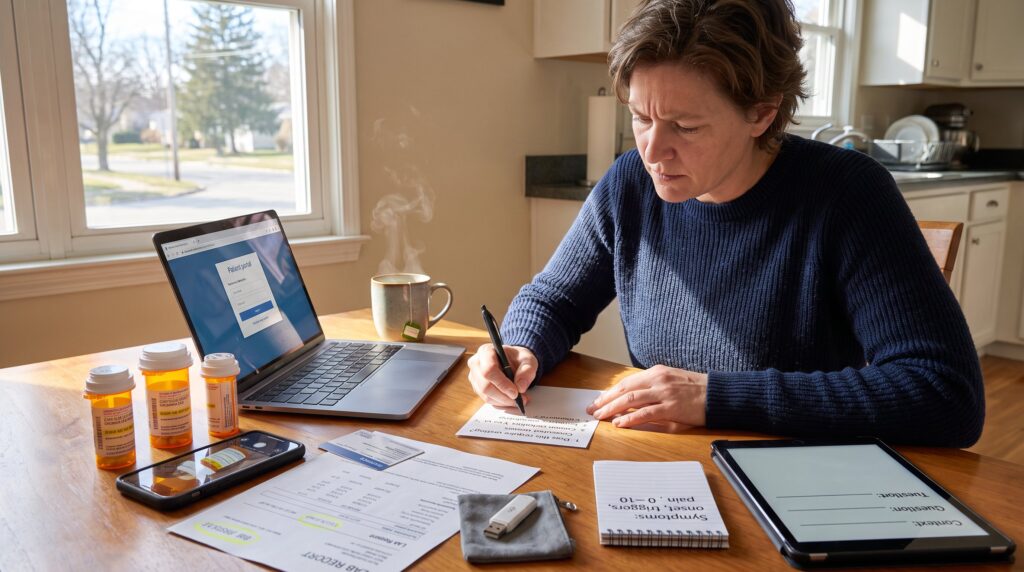
How To Prepare Questions For A Healthcare Professional helps people turn anxious visits into clear, productive conversations. Preparing questions ahead of time improves understanding, saves appointment time, and reduces errors. This guide shows what to gather, how to write concise questions, and how to organize them by visit type so readers leave with a plan, not more confusion.
Key Takeaways
- Preparing questions ahead of a healthcare professional visit improves understanding, saves time, and reduces errors during short appointments.
- Gather essential documents like medication lists, test reports, and symptom details before the visit to answer clinician questions promptly and accurately.
- Write concise, specific questions starting with direct verbs and rank them to focus on the most important issues during the appointment.
- Organize questions by appointment type—such as new problems, chronic conditions, tests, or medication reviews—to ensure relevant and efficient discussions.
- During the visit, confirm key points aloud, request summaries or written instructions, and do not hesitate to ask practical questions about logistics and costs.
- Creating a ranked question list with context helps patients leave the visit with clear plans, fewer regrets, and supports safer, informed decisions.
Why Preparing Questions Matters
Preparing questions matters: it increases clarity, improves safety, and supports informed decisions. Patients who arrive with written questions remember more, ask about risks and alternatives, and follow care plans more closely. For example, a clinic audit found that patients who prioritized three concerns left the visit with 42% better recall of instructions.
Prepare because appointments are short. A typical primary care visit may last 15–20 minutes: specialists often allot even less. When time is limited, unprepared conversations skip important topics, like medication interactions or follow-up timing, which can lead to wasted tests or avoidable side effects. Writing questions in advance forces priority thinking: what problem matters most today, what must be decided now, and what can wait.
There is also a safety advantage. Clear questions prompt clinicians to explain risks, alternatives, and monitoring plans, which supports valid consent for tests or treatments. People who bring a brief symptom timeline, medication list, and specific goals reduce misunderstandings and lower the chance of repeat visits for the same unresolved issue.
A vulnerable moment: many people confess they left a visit with one lingering worry they forgot to ask. Making a short, ranked question list prevents that exact regret.
What To Gather Before Your Appointment
First fact: gathering key documents and facts before the visit shortens decision time and answers many clinician questions immediately.
Collect these items: a current medication list with doses and timing, recent test or imaging reports, allergy details, past surgeries or hospital stays, and a one-sentence summary of major chronic conditions. Add insurance and pharmacy contact info. If the person sees other clinicians, list their names and specialties.
Concrete tip: take a photo of medication bottles and upload them to the clinic portal or bring the bottles in a small clear bag. This prevents dose-errors, one clinic reported correcting 17 medication discrepancies in 100 reconciliations thanks to photos.
Record symptom specifics: exact onset date, what makes symptoms better or worse, how many times symptoms occur per day or week, and any triggers. For pain, note intensity on a 0–10 scale and what activities it prevents. For sleep problems, count actual hours slept on an average night over the past week.
If a test or procedure is planned, bring previous result printouts or a USB copy. Clinics sometimes request that imaging be uploaded in advance to save time during the visit. For general preparation strategies, readers may find practical steps in an established guide on how to prepare for visits on WebMD.
Also gather personal goals: short, specific outcomes such as “run 30 minutes without knee pain” or “reduce nightly awakenings to one.” Goals help clinicians recommend priorities and realistic next steps.
How To Write And Communicate Questions Effectively
Clear answer first: write simple, specific questions and rank them: focus on the top three to five when time is limited.
Start each question with a direct verb: “Explain,” “Compare,” “Describe,” or “Recommend.” For example: “Explain why this test is needed,” or “Compare these two medication options and their side effects.” Specific wording yields specific answers. Avoid broad prompts like “What should I do?” Instead ask, “What are the pros and cons of starting medication X now versus waiting three months?”
Use short context lines above questions. A useful format: one-line context + one question. Example: “Had chest tightness during exercise twice in two weeks. Should I stop activity now?” That single line tells the clinician symptom frequency, and the question asks for action. This format saves time and reduces back-and-forth.
Rank questions numerically. Put the highest-impact decision as #1. If a patient can only ask one thing, it should be the question that changes management today (e.g., “Does this require urgent testing?”).
Ask about logistics and costs. Practical questions often get missed: “How long will follow-up take?”, “What tests require preparation?”, and “What will this medication cost monthly?” These affect adherence and planning.
Communication tips during the visit: repeat key points aloud for confirmation, ask the clinician to summarize the plan in two sentences, and request written instructions or an after-visit summary. If language or hearing is a barrier, arrange an interpreter in advance.
A frank moment: many people feel guilty interrupting a provider. Remind readers that clinicians expect questions and that a concise, ranked list actually respects the clinician’s time while protecting the patient.
Organizing Questions For Different Appointment Types
Core insight first: different visits need distinct question sets. Organize questions by visit type to avoid wasting time on irrelevant topics.
New problem visits, primary aims: cause, seriousness, and next steps. Key questions: 1) “What are the likely causes?” 2) “Which tests are needed and why?” 3) “What immediate steps reduce risk?” Include timeline details (onset, severity) so the clinician can triage correctly.
Chronic condition follow-up, primary aims: control, monitoring, and medication fit. Ask: “Is current control meeting our goals?” “Should we change the medication dose or class?” and “What specific signs mean I should call sooner?” Add a concrete metric: if diabetes, ask about target A1c value and how often to test it.
Test or procedure visits, primary aims: purpose, preparation, and results. Questions: “Why is this test recommended now?” “How should I prepare (fasting, meds withheld)?” and “When and how will results be delivered?” These reduce no-shows and test errors.
Medication-focused visits, primary aims: rationale, interactions, and costs. Ask: “Why is this drug best for my condition?” “What are the common side effects and when do they require stopping the drug?” and “Are there cheaper alternatives or generics?” Record exact ingestion timing to check for interactions with current meds.
Practical organization: create three columns on paper or a note app: “Question,” “Why it matters,” and “Acceptable answer.” The last column helps assess whether the clinician’s response meets the patient’s needs. For digital support and broader wellness context, readers can consult a related fitness content guide that explains integrating health goals across visits.
For younger people or caregivers, a short checklist with one-line symptom history and the ranked question list reduces the chance of forgetting critical details during stressful visits. Clinics appreciate concise, structured input: it speeds decision-making and often leads to fewer follow-up calls.
Conclusion
A direct practice: listing and ranking focused questions, backed by precise medical details, leads to clearer appointments and safer decisions. When people prepare symptom timelines, medication photos, and three prioritized questions, they leave visits with specific plans and fewer regrets. Small preparation yields measurable benefits: better recall, faster decisions, and fewer repeat visits.