
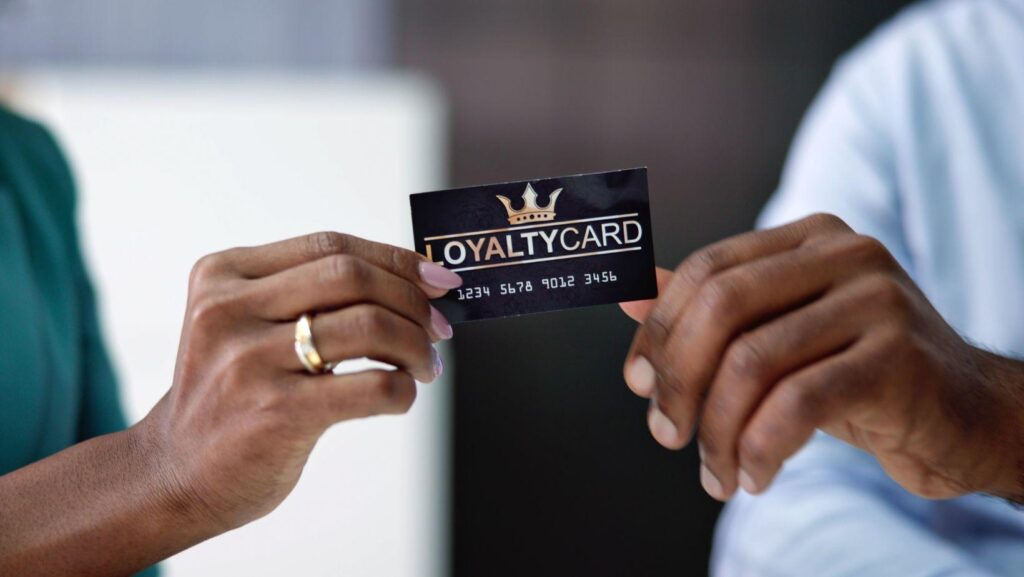
Status-seeking isn’t vanity — it’s wired into the brain. Researchers in behavioural economics, including work cited by the Journal of Consumer Psychology, consistently show that visible progress markers trigger the same dopamine pathways as actual financial gain. That’s why VIP reward programs work so well. And also why most members squeeze maybe 40% of the value they could actually be pulling out of them.
Most people join a loyalty program, collect a few points, and then just… forget to actually use the thing strategically. They’re reacting to tier notifications and time-limited offers instead of driving the direction themselves. If you’re chasing the next badge without a spending pattern to back it up, you’re basically doing someone else’s marketing for free.
Why Your Brain Fights You on This
Loss aversion — not ambition — is the real engine behind tier chasing. Behavioural researcher Richard Thaler’s foundational work on prospect theory makes this painfully clear: losing a benefit feels roughly twice as bad as gaining an equivalent one feels good. So when a VIP program tells you that you’re 200 points from the next tier, you don’t see an opportunity. You see a threat. You’re not upgrading. You’re defending.
Habit loops form quietly. A member places consistent activity through one platform — say, Roobet Casino — earns visible progress, and then the behaviour locks in not because of conscious decision-making but because stopping feels like throwing away momentum. Psychologist B.F. Skinner called it variable reward scheduling. Casino loyalty designers call it Tuesday night retention. Same mechanism, different vocabulary.
The scarcity perception is another one that gets people every time. “Offer expires in 48 hours” isn’t informational — it’s a lever. Members redeem earlier than optimal, upgrade faster than their actual spending patterns justify, and concentrate activity in a single program when splitting across two would objectively serve them better. Emotional triggers override math. Almost every time.
The Actual Mechanics Worth Understanding
Here’s what separates members who extract real value from those who just feel like they do. Tier thresholds are designed with a gap between what’s psychologically compelling and what’s financially rational — and the gap is rarely in your favour. Time-limited offers are structured to pull forward spending that would have happened anyway, at a discount to the program, not to you.
The smarter move is mapping your natural spending pattern first, then choosing which tier is actually reachable without forcing behaviour. These are the questions that actually matter before you commit to any program structure:
- Does the tier you’re chasing unlock perks that match what you’d actually use — or just perks that sound impressive?
- What’s the realistic monthly activity level to maintain status, not just reach it?
- Are the bonus points in this program redeemable at a flat rate or subject to redemption caps that quietly kill the value?
- Does concentrating all activity in one platform — like Roobet — outperform splitting across two mid-tier programs?
- Is personalization actually present, or does “exclusive member offer” just mean a generic email with your first name?
What Perceived Fairness Actually Does to Loyalty
Researchers studying customer loyalty consistently find that perceived fairness — not reward size — is the dominant factor in whether members stay long-term. A program offering smaller rewards that feel earned and predictable outperforms a flashier program that feels arbitrary. Reciprocity is the mechanism: when members feel the program responds to their specific behaviour rather than just their category, they concentrate spending without being nudged.
This is why personalization in VIP tiers is worth evaluating hard before committing. A platform like Roobet that tracks individual redemption behaviour and adjusts offers accordingly will generate stronger habit loops than one broadcasting the same bonus to 200,000 users simultaneously. The difference in perceived value is significant even when the actual reward value is identical.
Here’s a rough comparison of how tier structures typically differ across program types — and what that actually means for a member trying to maximize benefit:
|
Program Feature |
Standard Tier Structure |
What it Really Means for You |
|
Point expiry |
12-month rolling window |
Rewarding consistency — punishing gaps, even short ones |
|
Tier maintenance requirement |
Monthly activity threshold |
Easy to miss in quiet months; status drops faster than you expect |
|
Bonus redemption cap |
Often buried in T&Cs |
The “unlimited” cashback that is very much limited |
|
Personalized offers |
Varies wildly by platform |
At Roobet, individual activity history often drives this — elsewhere it’s just batch emails |
|
Tier upgrade speed |
Faster with concentrated activity |
Splitting across programs almost always slows progression at both |
The table above isn’t theoretical. These are the exact friction points where most members bleed value without noticing — because the program is designed to be opaque at precisely those moments.
Short-Term Perks Versus Long-Term Value
Here’s the uncomfortable part. Most VIP members — and research from the Loyalty Research Center puts this somewhere above 60% of program participants — systematically overvalue short-term perks while underestimating compounding long-term costs. A bonus spin, an upgraded cashback rate for this weekend only, a “flash tier boost” — these feel like wins. They are, sometimes. But only if they align with spending you were already planning.
The irrational decision pattern that wrecks long-term value looks like this:
- Forcing extra activity this week specifically to avoid tier demotion — activity you wouldn’t have done otherwise
- Redeeming bonus points at a lower-value option just because it “expires soon”
- Upgrading membership level at a program like Roobet before reaching the natural activity threshold that would make it self-funding
- Ignoring a better reward structure elsewhere because switching means losing accumulated status — loss aversion in its purest form
Recognizing the pattern is genuinely half the work. The other half is building a simple personal framework — what tier is sustainable, which perks are actually usable, and where the redemption value is real rather than manufactured urgency.
The members pulling maximum value from VIP programs aren’t grinding harder. They’re just not letting the program’s architecture make decisions for them.