
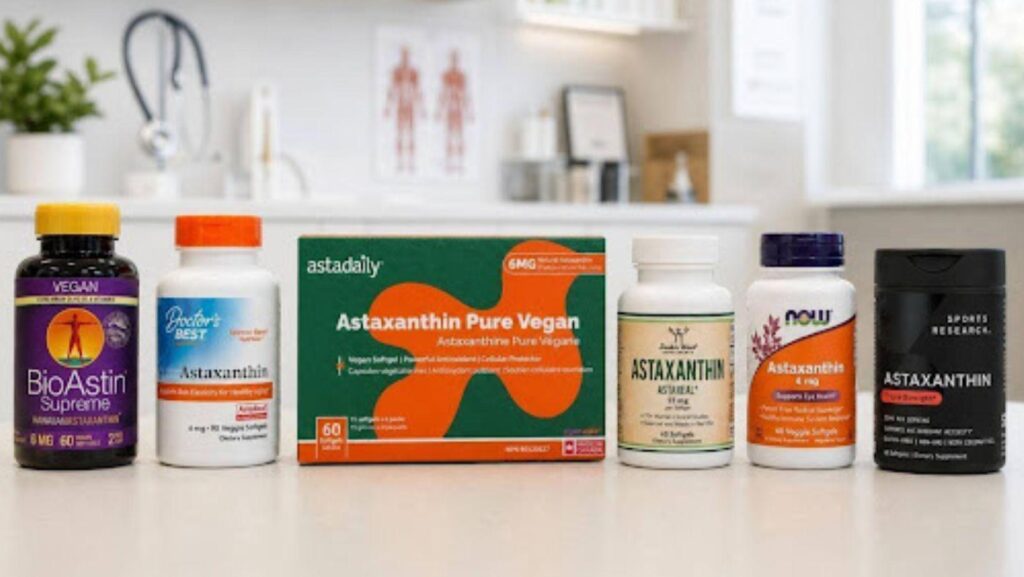
Astaxanthin has gone from a relatively obscure carotenoid to one of the more interesting antioxidant supplements on the market. Derived naturally from microalgae and responsible for the reddish color seen in salmon and certain seafood, astaxanthin has been studied for potential roles in skin health, eye health, exercise recovery, cardiovascular health, and healthy aging.
But choosing the best astaxanthin supplement isn’t as simple as finding the bottle with the highest number of milligrams.
The source of the astaxanthin, how the microalgae are cultivated, the extraction process, carrier oil, independent testing, manufacturing standards, and even packaging can all help distinguish one product from another.
For this 2026 review, I compared six popular astaxanthin supplements using a 100-point Astaxanthin Quality Score designed to look beyond the front of the label.
The Best Astaxanthin Supplements of 2026
| Product | Best For | Astaxanthin | Regular Price | Best Price* | Quality Score |
| Astadaily | Best Overall | 6 mg | $22.00 | $16.95 | 94/100 |
| BioAstin | Best Established Astaxanthin Brand | 6 mg | $26.49 | $23.84 | 91/100 |
| Double Wood | Best for Ingredient Recognition | 12 mg | $25.95 | $22.46 | 90/100 |
| Sports Research | Best High-Potency Formula | 12 mg | $25.95 | $22.06 | 87/100 |
| NOW Foods | Best Lower-Dose Option | 4 mg | $19.99 | $19.99 | 86/100 |
| Doctor’s Best | Best Established Supplement Brand | 6 mg | $31.99 | $30.39 | 84/100 |
*Prices are shown in USD and based on direct brand pricing at the time of review. “Best Price” reflects the lowest available price per box or bottle using applicable bundle and/or Subscribe & Save offers. Prices, discounts, and availability may change.
Scores are based on the methodology below and are intended as a comparative editorial framework, not a measure of clinical effectiveness. Astaxanthin amounts shown are per softgel, not per suggested daily serving.
How I Evaluated Astaxanthin Supplements
A quality astaxanthin supplement should provide more information than the number of milligrams per capsule.
My Astaxanthin Quality Score evaluates ten areas:
- Source and traceability — 15%
- Cultivation method — 10%
- Extraction method — 10%
- Formulation and bioavailability — 10%
- Dosage — 10%
- Independent testing and transparency — 20%
- Scientific evidence — 10%
- Manufacturing quality — 5%
- Packaging and stability — 5%
- Value — 5%
Particular weight was given to independent testing because supplement quality cannot be determined from marketing claims alone.
This matters for astaxanthin. In a market survey in 2023, 22 astaxanthin products purchased online were analyzed using HPLC and other methods. Fourteen of the 22 samples failed potency testing, and 13 of those failures contained less than 1 mg of astaxanthin. That makes identity, potency testing, and manufacturer transparency especially relevant when comparing products.
1. Astadaily Astaxanthin Pure
Astaxanthin Quality Score: 94/100
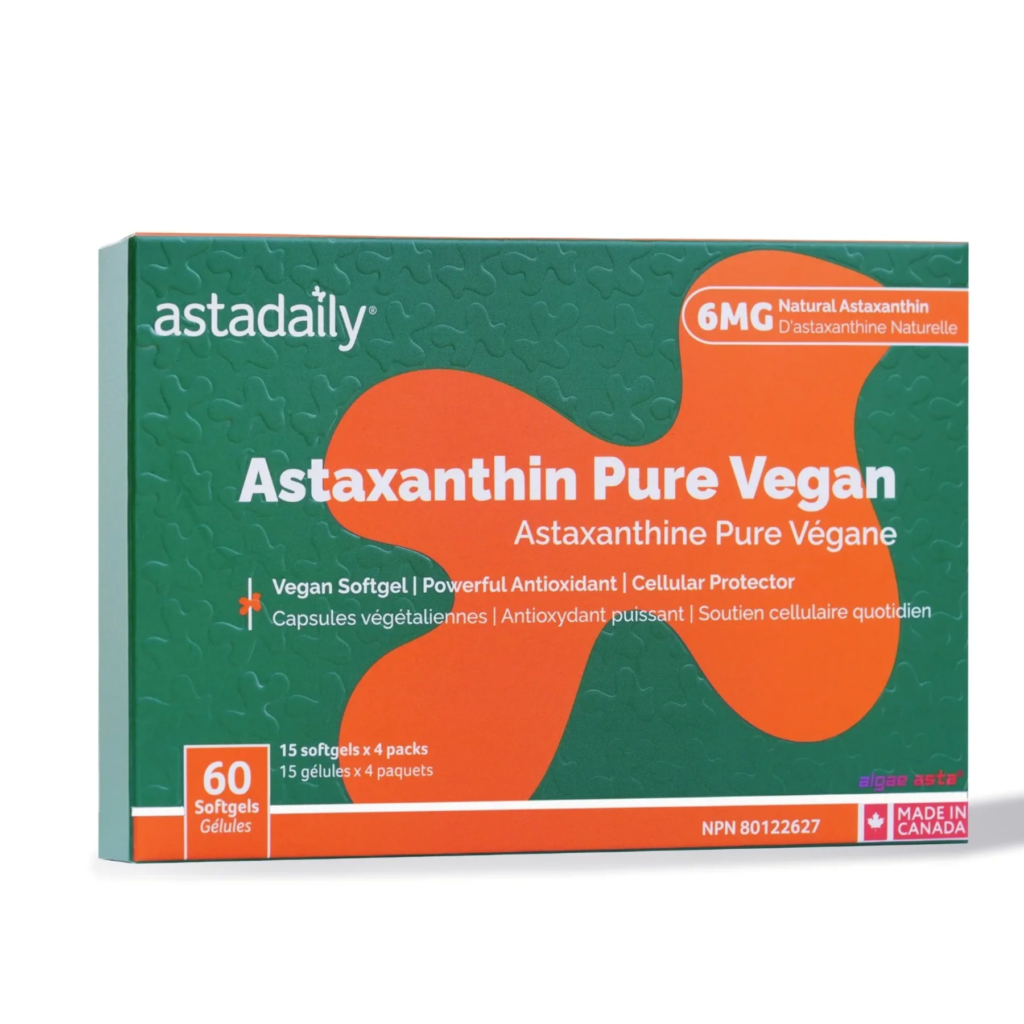
Dose: 6 mg per softgel; 12 mg per suggested daily serving
Source: AlgaeAsta® natural astaxanthin from Haematococcus pluvialis
Format: Vegan softgel
Notable features: Closed bioreactor cultivation, supercritical CO₂ extraction, third-party testing, individual blister packaging
Price: $22.00 (or $16.95 with bundle and Subscribe & Save)
Astadaily ranks as the best overall astaxanthin supplement in our review because it performs strongly across the full range of evaluation criteria, delivering a well-balanced combination of quality, transparency, formulation, testing, and value.
A key strength is transparency in production. The microalgae are grown in closed bioreactors for environmental control, and the astaxanthin is extracted using supercritical CO₂ rather than chemical solvents, creating a fully traceable production process from cultivation to finished product.
Astadaily also has a strong scientific foundation. The company was founded by a Canadian doctor with research experience in microalgae since 2013, including work on cultivation and astaxanthin that has contributed to peer-reviewed publications and books. This gives the brand direct scientific involvement in the ingredient’s development rather than relying solely on external suppliers.
Quality assurance is another advantage. The product is manufactured in Canada in a GMP-certified facility and independently tested for potency and contaminants, with results made available to consumers. It is also licensed by Health Canada and carries a Natural Product Number (NPN).
Packaging is also distinctive, with each softgel individually sealed in blister packs instead of a shared bottle, helping protect freshness and reduce exposure after opening.
At $22 per box, or as low as $16.95 with discounts, Astadaily is competitively priced among premium natural astaxanthin supplements.
What I like: Exceptional production transparency; branded AlgaeAsta® source; controlled cultivation; CO₂ extraction; vegan softgel; independent testing; protective packaging.
What could be better: Two softgels are required to reach the full 12 mg serving
Best for: Consumers who prioritize traceability, production quality, vegan ingredients, and testing transparency.
Verdict: The most complete astaxanthin product in this comparison.
2. BioAstin Hawaiian Astaxanthin
Astaxanthin Quality Score: 91/100
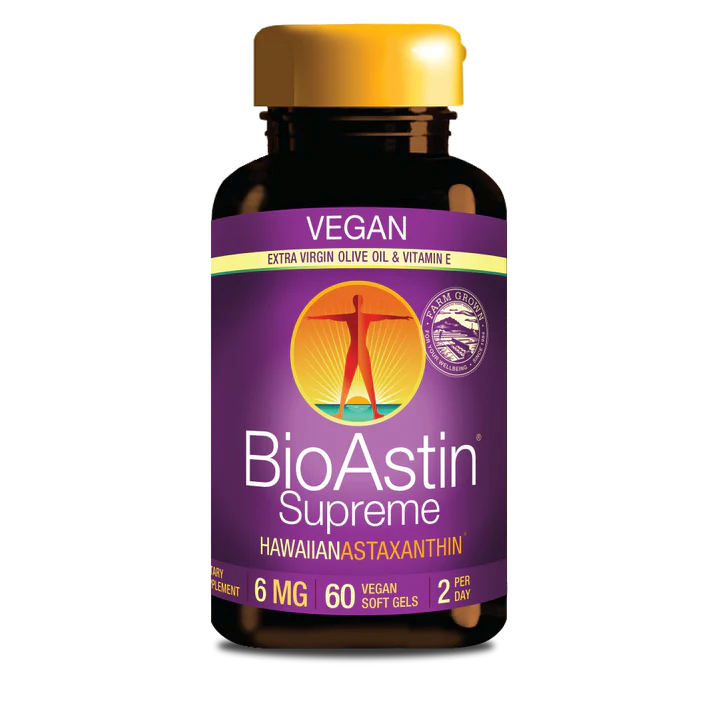
Dose: 6 mg per softgel; 12 mg per suggested daily serving
Source: Natural astaxanthin from Haematococcus pluvialis
Format: Vegan softgel
Notable features: Hawaiian-grown microalgae, vertically integrated production, CO₂ extraction, extra virgin olive oil carrier
Price: $26.49 (or $23.84 with Subscribe & Save)
BioAstin is one of the most established astaxanthin brands and a strong #2 pick in this comparison. Each softgel provides 6 mg of natural astaxanthin, with a two-softgel serving delivering 12 mg.
The astaxanthin is sourced from Haematococcus pluvialis grown at Cyanotech’s farm in Hawaii. BioAstin stands out for its vertically integrated production, with cultivation and CO₂ extraction handled in-house rather than outsourced.
The formula is well designed for absorption, combining astaxanthin with extra virgin olive oil. It is also vegan, non-GMO, and free from common allergens and unnecessary additives.
A key strength is flexibility: users can take 6 mg or scale up to 12 mg depending on preference.
The company’s longevity and specialization are major advantages. While many supplement companies purchase astaxanthin from external ingredient suppliers, Nutrex Hawaii has built much of its identity around microalgae.
Compared to Astadaily, it is slightly less transparent on finished-product batch testing and uses standard bottle packaging rather than individually sealed doses.
What I like: Established astaxanthin specialist; Hawaiian-grown H. pluvialis; vertical integration; CO₂ extraction; olive oil carrier; vegan; flexible dosing.
What could be better: More accessible batch-specific testing and improved packaging format.
Best for: Consumers who want a trusted, long-established vegan astaxanthin brand.
Verdict: A high-quality, vertically integrated astaxanthin supplement with exceptional production heritage.
3. Double Wood Astaxanthin
Astaxanthin Quality Score: 90/100
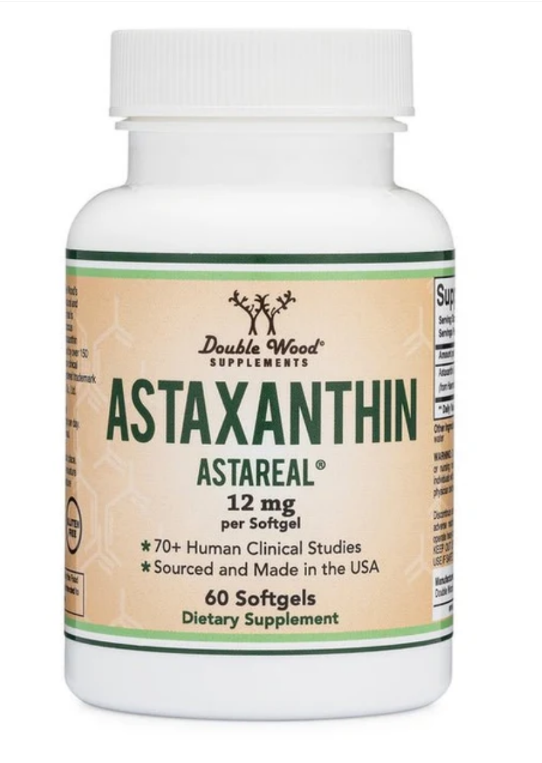
Dose: 12 mg per softgel
Source: AstaReal® natural astaxanthin
Carrier: Extra-virgin olive oil
Notable features: Recognized branded ingredient, batch testing, 12 mg one-capsule dose
Price: $25.95 (or $22.46 with Bundle)
Double Wood takes a different route to credibility: it uses AstaReal®, one of the best-established branded astaxanthin ingredients in the world.
AstaReal has been used extensively in human astaxanthin research, which gives consumers a clearer connection between the ingredient identified on the supplement label and a substantial body of published research.
Double Wood combines 12 mg of AstaReal astaxanthin with extra-virgin olive oil. Since astaxanthin is fat-soluble, an oil-based formulation is a logical delivery format.
Transparency is another strength. Double Wood publishes certificates and states that batches are third-party tested for identity, potency, and contaminants including heavy metals.
That kind of external evidence is worth noting in a category where potency can vary substantially.
What I like: AstaReal® ingredient; strong research pedigree; 12 mg per capsule; olive-oil carrier; accessible testing information.
What could be better: Production details such as cultivation and extraction are more dependent on the ingredient supplier than on Double Wood itself, so the farm-to-finished-product story is less integrated.
Best for: Consumers who place a high priority on a clinically established branded ingredient.
Verdict: An excellent evidence-focused choice with unusually strong potency transparency.
4. Sports Research Astaxanthin
Astaxanthin Quality Score: 87/100
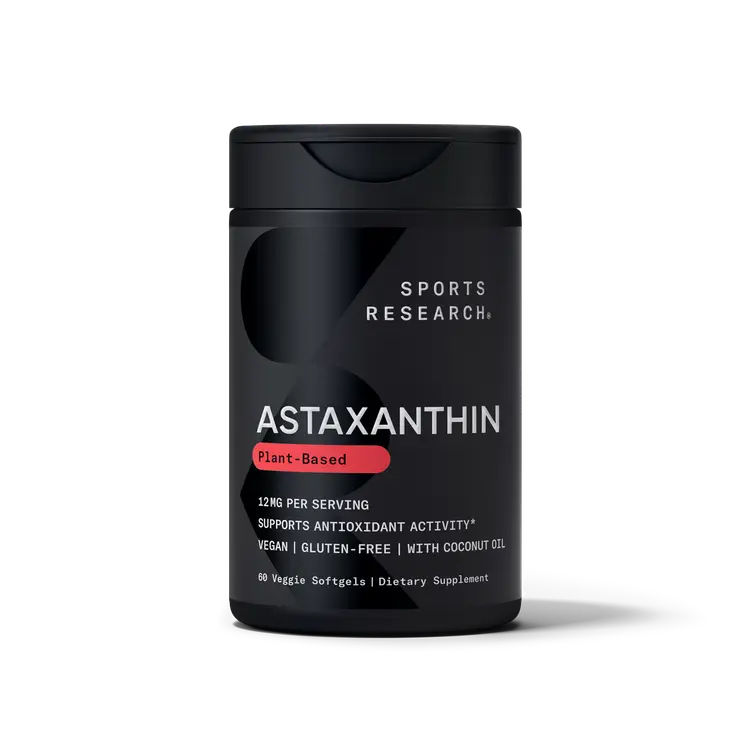
Dose: 12 mg per softgel; 12 mg per suggested daily serving
Source: Natural astaxanthin from Haematococcus pluvialis
Format: Vegan softgel
Notable features: 12 mg one-softgel dose, organic virgin coconut oil carrier, non-GMO, simple once-daily formula
Price: $25.95 (or $22.06 with Subscribe & Save)
Sports Research has built a strong reputation around straightforward, consumer-friendly supplements, and its astaxanthin follows that philosophy.
The formula provides a high-potency serving of natural astaxanthin in an oil-based softgel, making it an attractive option for people who want an uncomplicated daily antioxidant supplement without a long list of additional active ingredients.
Its biggest advantage is simplicity.
You get a meaningful amount of astaxanthin in an easy daily format from a widely recognized supplement company. Sports Research also has broad retail and online availability, which may matter to consumers who don’t want to purchase from a specialized astaxanthin company.
Where it loses points compared with the top three is upstream transparency. Information about the cultivation environment, extraction technology, and complete production chain is not as central to the product’s consumer-facing story.
That doesn’t make it a poor-quality product; it simply means there is less information available for consumers who want to evaluate the entire process from algae cultivation through finished softgel.
What I like: Straightforward formulation; convenient dosing; established supplement company; easy availability.
What could be better: More detailed disclosure around cultivation, extraction, and source-level traceability would strengthen the product.
Best for: Consumers looking for a straightforward, high-potency astaxanthin supplement.
Verdict: A practical mainstream choice that keeps the formulation simple.
5. NOW Foods Astaxanthin
Astaxanthin Quality Score: 86/100
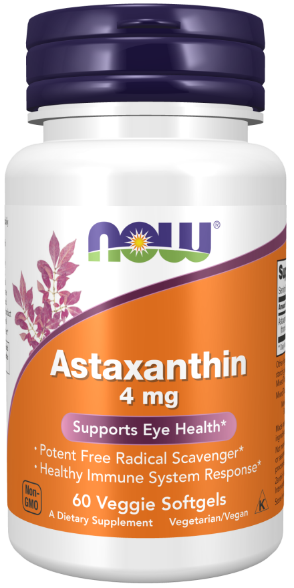
Dose: 4 mg per softgel; 4 mg per suggested daily serving
Source: Natural astaxanthin from Haematococcus pluvialis
Format: Vegan softgel
Notable features: Established supplement manufacturer, olive oil carrier, extensive in-house quality testing, vegan formulation
Price: $19.99
NOW Foods is one of the most established supplement manufacturers in this comparison, and its 4 mg Astaxanthin provides a lower-dose option for consumers who value a recognizable brand and extensive quality-control infrastructure.
Each vegan softgel provides 4 mg of natural astaxanthin derived from Haematococcus pluvialis. The astaxanthin is formulated with extra virgin olive oil, providing an oil-based delivery system appropriate for this fat-soluble carotenoid.
One of NOW Foods’ biggest strengths is its approach to quality control. The company operates extensive in-house analytical laboratories and tests raw materials and finished products as part of its broader manufacturing and quality-assurance program.
Its 2023 astaxanthin market investigation is also informative for consumers. Using HPLC to quantify astaxanthin content, NOW reported substantial potency problems among a number of products purchased through major online marketplaces.
That doesn’t automatically make NOW the best astaxanthin supplement, but it demonstrates an unusually strong emphasis on analytical quality control.
The 4 mg dosage is the lowest in this comparison. This may appeal to consumers who prefer a more moderate daily amount, but consumers specifically seeking 12 mg would need three softgels to reach that level. As a result, the apparently lower $19.99 bottle price should be considered alongside its lower astaxanthin content per softgel.
Where NOW Foods falls behind the highest-ranked products is upstream transparency. While the company has strong testing and manufacturing credentials, detailed consumer-facing information about the specific cultivation system, extraction method, and farm-to-finished-product traceability of the astaxanthin is more limited.
What I like: Strong analytical-testing culture; reputable manufacturer; natural microalgae source; oil-based formulation; excellent availability.
What could be better: Less emphasis on cultivation and extraction transparency than specialist producers; standard softgel contains gelatin.
Best for: Consumers who prioritize a large, established supplement manufacturer with substantial testing capabilities.
Verdict: A dependable option from one of the industry’s strongest quality-control brands.
6. Doctor’s Best Astaxanthin
Astaxanthin Quality Score: 84/100
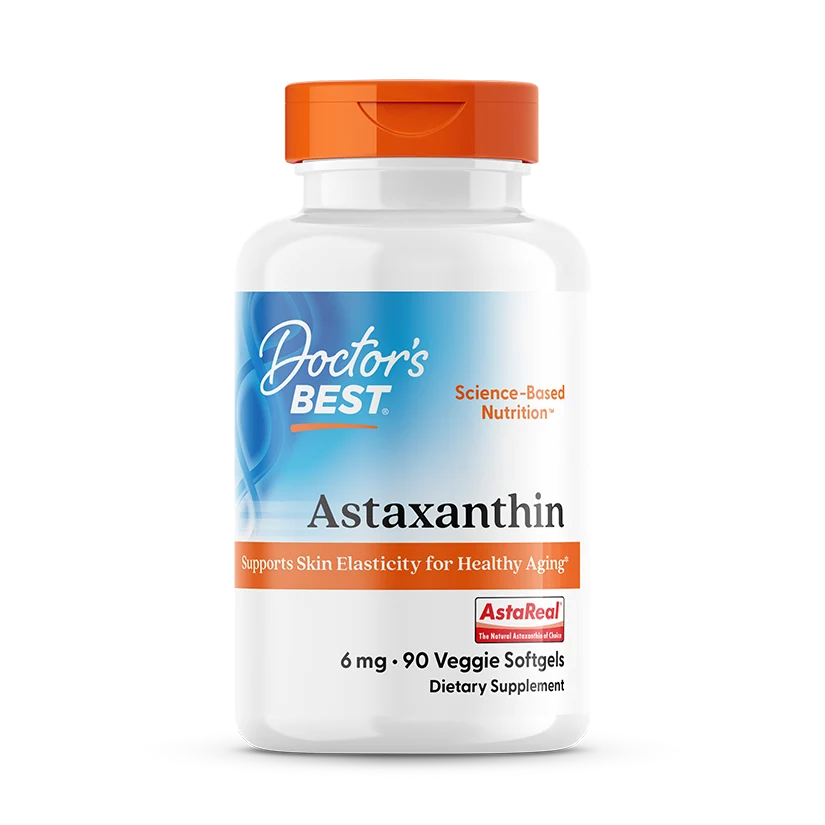
Dose: 6 mg per softgel; 6 mg per suggested daily serving
Source: AstaReal® natural astaxanthin from Haematococcus pluvialis
Format: Vegan softgel
Notable features: AstaReal® branded ingredient, solvent-free extraction, extra virgin olive oil carrier, 90-day supply
Price: $31.99 (or $30.39 with Subscribe & Save)
Doctor’s Best uses the same AstaReal® astaxanthin source as Double Wood, but in a larger 90-count vegan format. Each softgel delivers 6 mg of astaxanthin in a simple oil-based formula designed for daily use.
The key advantage here is scale and accessibility: a full 90-day supply in a vegan softgel, making it one of the more convenient long-term options in this category. The formula remains straightforward, pairing AstaReal® astaxanthin with extra virgin olive oil and a clean vegetarian capsule.
However, compared to higher-ranked products, Doctor’s Best provides less publicly available detail on finished-product testing and quality verification. There is limited transparency around batch-specific testing results or deeper quality assurance metrics, which makes it harder to evaluate against brands that more clearly publish or emphasize third-party testing standards.
It is also slightly more expensive on a per-serving basis than some competing AstaReal-based or similarly dosed products, especially when factoring in subscription pricing versus bulk or higher-potency alternatives. This places it more in the mid-tier value range rather than the most cost-efficient option.
Compared to similar AstaReal-based products, Doctor’s Best stands out mainly for its larger bottle size and vegan delivery format rather than formulation complexity or added actives.
What I like: AstaReal® ingredient; vegan softgels; 90-day supply; simple oil-based formula; solvent-free extraction.
What could be better: Limited transparency on third-party testing and batch verification; slightly higher price per serving compared to some competitors.
Best for: Users who want a straightforward, vegan, 6 mg daily astaxanthin with a longer supply per bottle and a trusted branded ingredient.
Verdict: A simple, large-format vegan AstaReal option focused on convenience and consistency, though with less testing transparency and slightly higher cost than some alternatives.
How to Choose a High-Quality Astaxanthin Supplement
After reviewing the category, I wouldn’t choose an astaxanthin supplement based on dosage alone.
Here are the factors I consider most important.
Look for natural astaxanthin from Haematococcus pluvialis
For human supplementation, Haematococcus pluvialis is the most established natural microalgae source. Ideally, the manufacturer should clearly disclose the source rather than simply listing “astaxanthin.”
A recognizable branded ingredient can provide another layer of traceability.
Look beyond “third-party tested”
This phrase has become so common that it isn’t particularly informative on its own.
Ask:
What is tested? Is potency verified? Are heavy metals and microbial contaminants evaluated? Who performs the testing? Can consumers access the results?
Those questions tell you considerably more about a supplement than a third-party-tested logo.
Consider how the algae are cultivated
Cultivation is an overlooked part of astaxanthin quality.
Closed or highly controlled cultivation systems can provide tighter control over environmental conditions, while open systems have their own production advantages and long commercial histories.
The important factor from a consumer perspective is transparency: reputable manufacturers should be able to explain where and how their microalgae are produced.
Pay attention to extraction
Astaxanthin has to be recovered from the microalgae before it reaches a softgel.
Supercritical CO₂ extraction is particularly attractive because it can extract oil-soluble compounds without relying on conventional organic solvents in the final extraction process.
When a company doesn’t disclose its extraction method, consumers have less information with which to evaluate the product.
Oil-based formulations make sense
Astaxanthin is fat-soluble.
For that reason, many of the strongest products pair astaxanthin with oils such as olive or safflower oil. Taking astaxanthin with a meal containing dietary fat is also commonly recommended.
Don’t ignore packaging
Packaging receives surprisingly little attention in supplement reviews.
Astaxanthin is a carotenoid, and carotenoids can be sensitive to environmental conditions. Bottles remain the industry standard and can work perfectly well when products are properly formulated and stored.
Individually sealed blister packaging, however, offers an additional practical advantage: unopened doses remain individually protected until they are consumed.
Astaxanthin Supplement FAQs
How much astaxanthin should I take per day?
There is no universally established daily requirement for astaxanthin. Human studies have used a range of doses, and commercial supplements commonly provide approximately 4–12 mg per day.
More isn’t automatically better. The appropriate amount depends on the individual, formulation, intended use, and advice from a qualified healthcare professional.
Is 12 mg of astaxanthin too much?
Twelve milligrams is commonly available in commercial supplements and has been used in human research. However, individual needs vary. People taking medications, managing health conditions, or who are pregnant or breastfeeding should discuss supplementation with their healthcare provider.
Should astaxanthin be taken with food?
Generally, yes.
Astaxanthin is fat-soluble, so taking it with a meal—particularly one containing some dietary fat—is a practical approach. Oil-based softgels also provide astaxanthin in a lipid-containing formulation.
Is natural astaxanthin better than synthetic astaxanthin?
Most consumer supplements in this review use natural astaxanthin derived from Haematococcus pluvialis. Natural algae-derived astaxanthin has a different stereoisomer profile from synthetic astaxanthin and is the form most commonly marketed and studied for human supplementation.
What is the best astaxanthin supplement in 2026?
For this review, Astadaily Astaxanthin Pure earns our Best Overall designation, with a Quality Score of 94/100.
Its advantage isn’t simply its 12 mg daily serving. It combines a traceable branded ingredient, closed bioreactor cultivation, supercritical CO₂ extraction, oil-based delivery, vegan softgels, independent testing, Canadian GMP manufacturing, and individual blister packaging.
BioAstin is particularly compelling for consumers who value a long-established vertically integrated astaxanthin producer, while Double Wood stands out for its use of the extensively researched AstaReal® ingredient.
Final Verdict
The astaxanthin market has matured.
A few years ago, consumers might reasonably have compared products primarily by milligrams per capsule and price per bottle. In 2026, there is enough information available to ask much better questions.
Where did the astaxanthin come from?
How were the microalgae cultivated?
How was the astaxanthin extracted?
Is the finished product independently tested?
Can consumers see meaningful quality information?
And how is the product protected between manufacturing and consumption?
Based on those criteria, my top six astaxanthin supplements for 2026 are:
Best Overall — Astadaily Astaxanthin Pure
Best Established Astaxanthin Brand — BioAstin Hawaiian Astaxanthin
Best for Ingredient Recognition — Double Wood Astaxanthin
Best High-Potency Formula — Sports Research Astaxanthin
Best Lower-Dose Option — NOW Foods Extra Strength Astaxanthin
Best Established Supplement Brand — Doctor’s Best Astaxanthin
The most important lesson is that the highest dose isn’t necessarily the highest-quality supplement.
The best products increasingly distinguish themselves through something more difficult to replicate: traceability from the microalgae source all the way to the finished softgel.
About the Author
Kailey Hoffman, RDN, is a New York–based Registered Dietitian Nutritionist with a Master’s degree in Clinical Nutrition from New York University. She also serves as an Education Specialist at Mount Sinai, focusing on chronic disease prevention, weight management, and employee wellness coaching. Her approach emphasizes evidence-based nutrition and individualized action plans designed to support sustainable, long-term health changes.
Nutritionist’s note: Dietary supplements are not a substitute for a balanced diet or medical care. Research on astaxanthin is promising in several areas, but evidence varies by outcome and many studies remain relatively small. If you take prescription medications, are pregnant or breastfeeding, or have a medical condition, consult a qualified healthcare professional before starting a new supplement.