
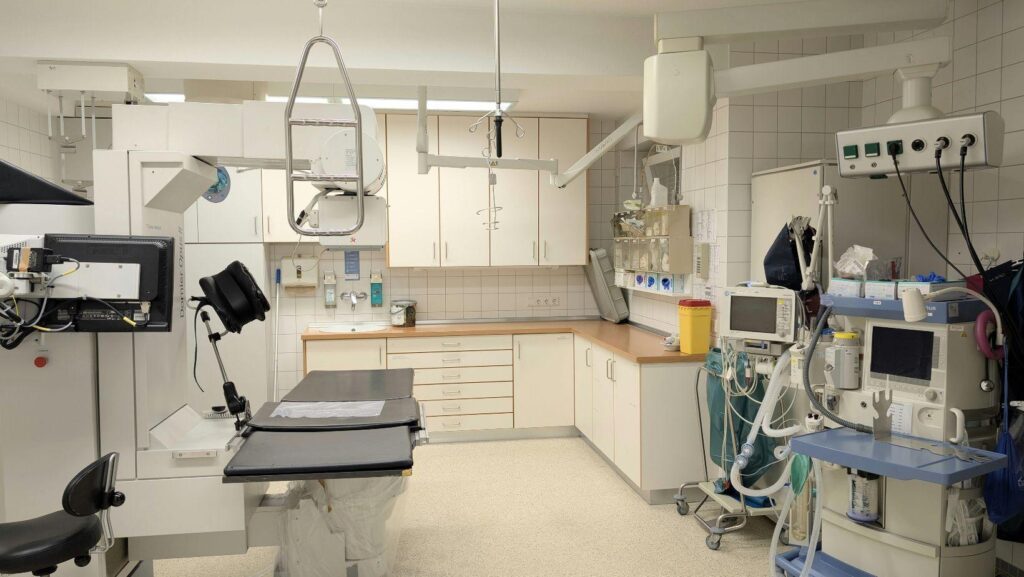
Walk into any hospital storage closet and ask the staff where their portable monitors are right now. Chances are, nobody knows for certain. Medical equipment doesn’t just wear out or break down—it wanders off, gets buried in the wrong supply room, or leaves the building entirely on a discharge bed it was never meant to travel with. That uncertainty costs hospitals real money and, worse, real time during emergencies when a missing defibrillator or pump can’t be found.
This is the problem RFID tagging was built to solve. By attaching small radio-frequency tags to mobile equipment, facilities can track exactly where each item is at any given moment instead of relying on staff memory or outdated paper logs.
Why Equipment Goes Missing in the First Place
Most hospitals run thousands of mobile assets across dozens of departments, and very few have a reliable way to track them once they leave a storage area. Nurses borrow a wheelchair from one floor and leave it on another. Equipment gets shuffled between units during shift changes and never makes its way back. Add in high patient turnover, and it’s no surprise that pumps, monitors, and diagnostic tools quietly disappear into the wrong corners of a building.
The financial impact adds up faster than most administrators expect. Replacing lost or stolen devices isn’t cheap, and many hospitals end up over-purchasing equipment simply to compensate for items they can never locate. A few of the more common scenarios include:
Each of these situations seems minor in isolation, but multiplied across a large facility, they represent a significant drain on operating budgets.
How RFID Tracking Actually Works in a Hospital Setting
RFID tags attach directly to equipment and communicate with fixed readers positioned throughout the building—doorways, hallways, storage rooms, and elevators are common spots. As a tagged item passes a reader, the system logs its location automatically, no manual scanning required. This creates a constantly updated map of where everything sits within the facility, without anyone having to walk the halls checking serial numbers.
The technology comes in two main varieties. Passive tags don’t carry their own power source and only respond when a nearby reader activates them, which makes them inexpensive and long-lasting for general inventory purposes. Active tags include a small battery and broadcast their location continuously, giving administrators near real-time visibility for higher-value or higher-risk items like ventilators or surgical equipment.
Security Benefits Beyond Simple Location Tracking
Tracking location is useful, but the security layer is where RFID really earns its place in a hospital’s loss-prevention strategy. Many systems can trigger alerts the moment a tagged device crosses a boundary it shouldn’t, such as an exterior door or a restricted wing. That kind of automated flag turns a slow, after-the-fact investigation into something administrators can act on immediately.
This matters because equipment theft in hospitals rarely looks dramatic. It’s not someone breaking in at night—it’s a piece of equipment that leaves through a loading dock or gets left in a vehicle and never makes it back inside. Facilities that have implemented RFID Tags for Hospital Equipment often find that the visibility alone changes staff behavior, since people are simply more careful with equipment they know is being monitored.
Getting the Rollout Right
A successful RFID deployment starts with prioritizing which assets actually need tagging. Not every supply cart needs the same level of tracking as a $40,000 ultrasound machine, so most facilities begin with high-value, high-mobility equipment before expanding coverage. Reader placement matters just as much as tag selection—gaps in coverage create blind spots where equipment can slip through unnoticed.
Staff training tends to get overlooked, but it’s just as important as the hardware itself. If nurses and technicians don’t understand how the system works or why it’s there, they may inadvertently work around it, removing tags or ignoring alerts. The most successful rollouts treat RFID as part of a broader asset management routine, not a standalone gadget bolted onto existing workflows.
Making the Investment Pay Off
The upfront cost of RFID infrastructure tends to worry administrators more than it should, given how quickly the savings from reduced loss and theft offset the initial spend. Hospitals that track their numbers before and after deployment routinely report fewer missing-equipment incidents and faster recovery when something does go astray. Combined with better compliance documentation and smoother audits, the technology pays for itself in ways that go well beyond simply finding a missing pump. For facilities still relying on manual logs and hopeful guessing, it’s a fairly straightforward upgrade with an outsized return.