

The numbers are hard to sit with. According to the National Council of State Boards of Nursing (2023), 100,000 nurses left the profession during the pandemic, and another 610,000 plan to follow by 2027. That’s not an abstract workforce statistic. It’s a slow-motion change to the healthcare system you rely on every time you get sick, injured, or need a routine checkup.
The nursing shortage shows up in waiting rooms that feel more crowded than they used to. It shows up in tired faces behind nurses’ stations and in rural towns where the nearest hospital is now an hour away. Most patients don’t know this is happening until they’re already in the middle of it.
Here are 8 ways the shortage is shaping the care you receive right now – and what the healthcare system is doing to respond.
1. Healthcare Facilities Are Rushing to Fill the Gaps With On-Demand Staffing
The shortage isn’t some future scenario facilities are bracing for. It’s already here, and hospitals and clinics are scrambling to keep floors staffed right now. Traditional agency staffing takes weeks. A facility that loses three nurses in one month can’t wait that long.
That’s why platform-based staffing has grown so quickly. Facilities can now tap into nursing talent on-demand, posting open shifts and connecting with credentialed nurses ready to cover within hours. Platforms like Nursa operate as direct marketplaces between facilities and nurses, cutting out slow intermediary steps and giving facilities real-time access to available staff.
The results are measurable. A 2025 survey of healthcare staffing executives found that more than 90% expect to adopt platform-based solutions within five years. Mercy Health reduced its total cost to deliver care by 16% and cut RN turnover by 7.5% after switching to a flexible workforce model, according to Trusted Health’s Handoff platform research. This doesn’t solve the underlying shortage. But it’s helping facilities stay operational during a period when the traditional hiring pipeline can’t keep up.
2. You’re Waiting Longer for Care
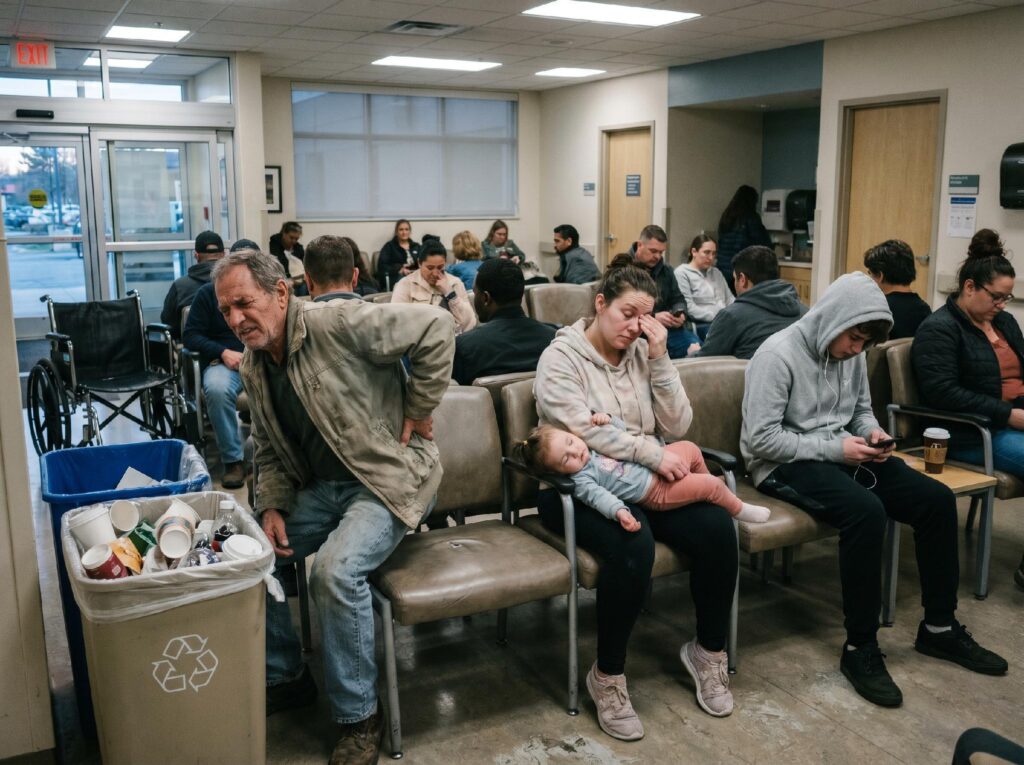
Wait times in emergency departments were already climbing before the pandemic. The shortage has made them worse. When an ER runs short-staffed, each nurse absorbs more patients, and the pace of intake slows. Simple math, painful consequences.
For anyone who has sat in a hospital waiting room with chest pain or a child running a 104-degree fever, “longer” isn’t just an inconvenience. It can change outcomes. Delayed triage means delayed assessment, and delayed assessment means conditions that are easy to treat early become harder to treat later.
Rural facilities often have it worst. When a small hospital can’t fill three overnight nursing shifts, the ER may divert ambulances to the next town. That extra 20 minutes in a cardiac event or stroke can be the difference between full recovery and permanent impairment.
3. Your Nurse May Be Caring for Too Many Patients at Once
The standard recommended nurse-to-patient ratio for acute care is 4:1, according to the Agency for Healthcare Research and Quality. During normal staffing, that ratio is already a challenge. During a shortage, it climbs to 6:1 or 7:1 in many facilities.
That’s not just a strain on nurses. It’s a documented risk to patients. A landmark study published in The Lancet found that every additional patient added to a nurse’s caseload increases the odds of patient death by 7%. At a ratio of 8:1, that compounds quickly. The NCBI/NIH review of acute care nursing staff shortages confirms that inadequate nurse-to-patient ratios are directly tied to preventable adverse events, including surgical complications and hospital-acquired infections.
The shortage doesn’t just mean there are fewer nurses. It means the nurses who are there are stretched across more beds, more medications, more decisions per shift than any ratio guideline ever intended.
4. Small Errors Become More Likely
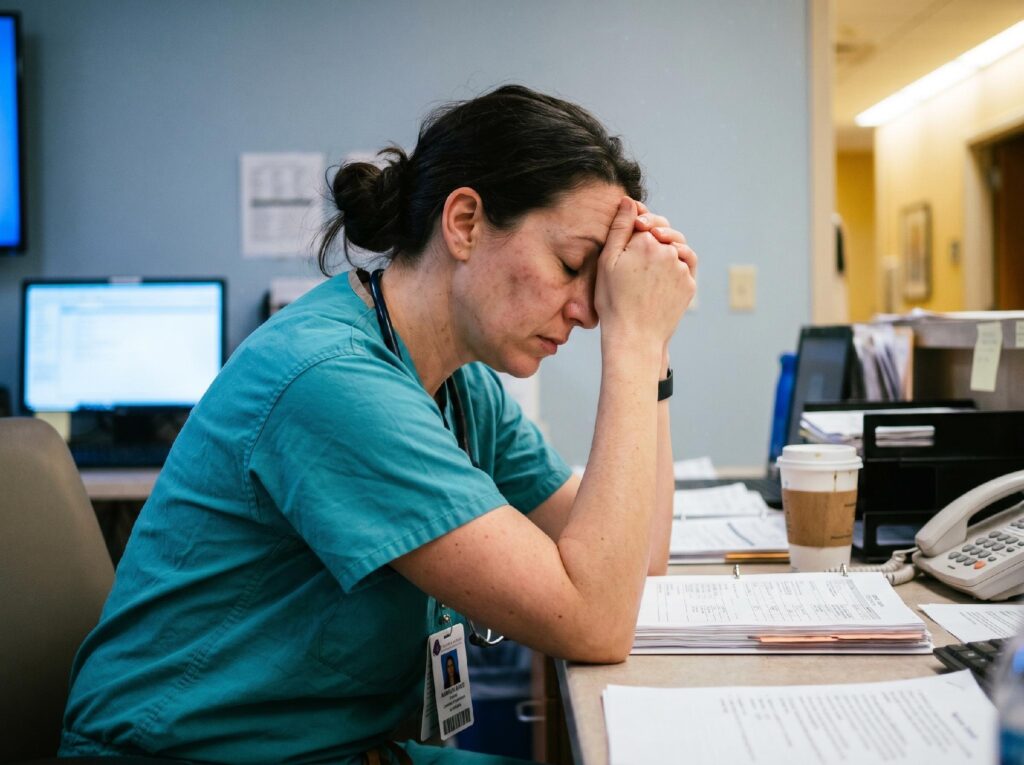
Nursing is a cognitively demanding job under normal conditions. Add fatigue from a 12-hour shift, three extra patients, and a colleague who called in sick, and the margin for error shrinks fast.
A 2025 survey by the Massachusetts Nurses Association found that 36% of nurses say unsafe staffing conditions occur “on most shifts” in ways that could jeopardize patient safety. That includes missed medication windows, delayed responses to call lights, and failure-to-rescue situations where early warning signs go unnoticed long enough to become emergencies.
None of this means nurses are careless. It means human beings have limits, and the healthcare system is currently pushing past them. The burnout loop is self-reinforcing: short staffing creates overwork, overwork causes errors and exhaustion, and exhaustion drives more nurses out of the profession – tightening the shortage further.
5. Rural and Underserved Communities Are Hit Hardest
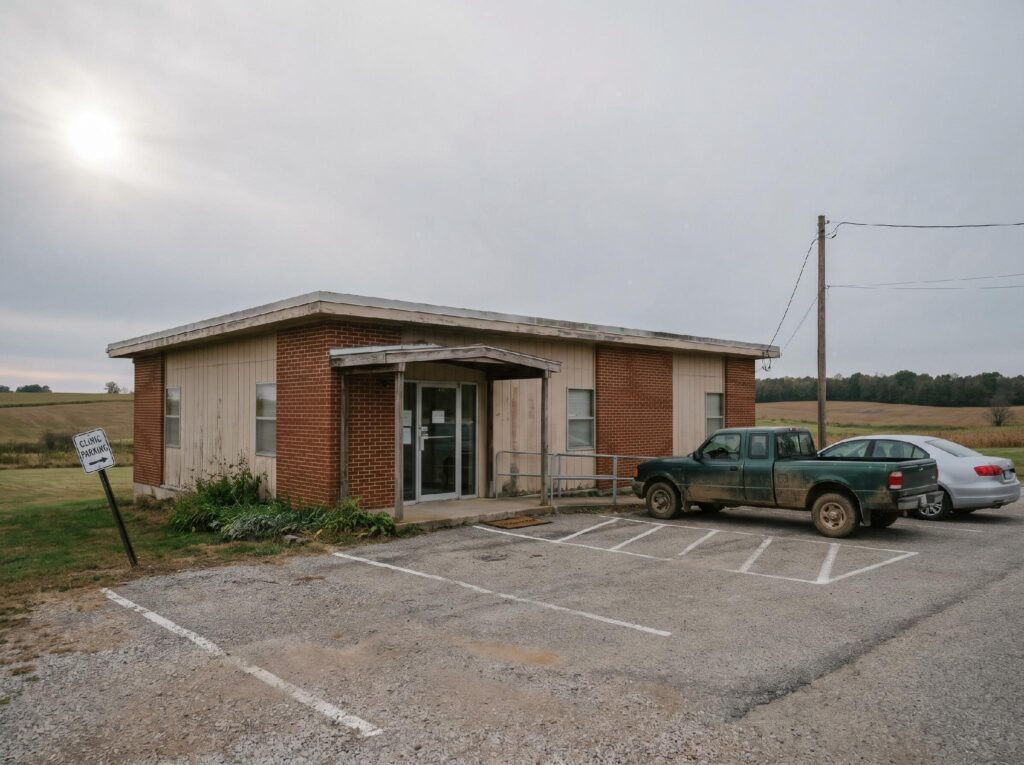
Geography makes the shortage worse. Urban hospitals compete aggressively for nurses and can typically offer higher pay. Rural facilities often can’t match those offers, which means they’re consistently last in line when the pool of available nurses is already small.
Texas projected a nursing deficit of 36,881 RNs in 2026, according to state workforce data. But that shortage isn’t evenly distributed. Rural counties in the Texas Panhandle or East Texas face far deeper deficits than Houston or Austin. Nightingale College’s 2026 state-by-state nursing shortage breakdown shows similar patterns across Appalachia, the rural Midwest, and the Mountain West, where some counties have just one hospital for thousands of square miles.
For patients in these communities, the stakes are different. It’s not just slower care. It’s no care, or a two-hour drive to a facility that can actually handle what’s wrong. Our article on how AI is helping assisted living facilities manage staffing shortages explores how technology is starting to close some of these access gaps, particularly in long-term care settings.
6. Nurse Burnout Has a Direct Effect on Your Care
Burnout isn’t just a nurses’ problem. It’s a patient safety problem.
California RNs reported 48.3% experiencing emotional exhaustion in 2024, according to state workforce data. Emotional exhaustion affects attention, decision-making speed, and the quality of patient interaction. A 2021 study found that hospitals with low nursing experience scores – meaning more burnout and turnover – consistently received lower overall patient ratings.
The burnout cycle is particularly vicious because it’s self-perpetuating. A burned-out nurse takes a leave of absence. The remaining nurses absorb that caseload. They burn out faster. More leave. The cycle accelerates. Workplace wellbeing for nurses isn’t just a human resources concern. It directly affects how well facilities can staff their floors. Our coverage on choosing a corporate health coaching provider touches on how organizations are starting to invest in structured wellbeing support – healthcare employers are increasingly among them.
7. The Pipeline of New Nurses Is Bottlenecked
Fixing the shortage takes time, and the education pipeline isn’t keeping up. In 2023, 65,766 qualified nursing school applicants were turned away – not because they weren’t capable, but because there weren’t enough faculty or clinical placement slots to admit them, per the AACN Faculty Vacancy Survey (October 2023).
The faculty shortage is its own crisis within the crisis. The national nursing faculty vacancy rate sits at 7.8%. A significant part of why: the pay gap is steep. Nursing school faculty earn an average of $84,000 annually, while advanced practice RNs in clinical settings earn $125,000 or more. As long as that gap exists, qualified nurses will keep choosing bedside careers over teaching, and schools will keep turning away students.
The American Association of Colleges of Nursing projects 193,100 or more RN job openings every year through 2032. The supply pipeline can’t come close to meeting that demand at current enrollment rates. For students who do get in, the path is demanding. Our overview of study tips for online nursing students covers some of the practical strategies helping the next generation of nurses manage an already difficult training workload.
8. What You Can Do as a Patient
You’re not powerless in this. Understanding what’s happening behind the scenes gives you more tools to advocate for yourself.
Ask about nurse-to-patient ratios when you or a family member is admitted. You have the right to know, and facilities that staff adequately should be willing to say so. If you’re told care will be delayed or a procedure rescheduled, ask directly whether staffing levels are a factor. The answer will tell you a lot.
Seek care during off-peak hours when possible. Urgent care clinics are typically less stretched on weekday mornings than weekend evenings. For non-emergency concerns, a Tuesday morning appointment gives your care team more bandwidth than a Friday at 4 pm.
If you’re recovering from something serious and your care team recommends a longer hospital stay, take that advice seriously. Premature discharge is a real risk in understaffed environments where bed pressure can push patients out before they’re ready.
Finally, the shortage is partly a policy problem. Safe staffing laws that mandate minimum nurse-to-patient ratios exist in California and have been proposed in many other states. Knowing about them and supporting them – whether at the ballot box or through your elected representatives – is one of the most direct ways the public can push back on a system that’s stretched too thin.
The Situation Is Serious – but the Healthcare System Isn’t Standing Still
The nursing shortage is structural, and it won’t reverse quickly. The workforce gap is real, the education pipeline is constrained, and the burnout cycle is still running. Patients are already feeling it in longer waits, busier nurses, and reduced access in rural areas.
But facilities aren’t simply absorbing the damage. On-demand staffing platforms, workforce retention programs, and slowly expanding nursing school capacity are all part of a genuine response. The system is adapting, even if the pace feels frustratingly slow from a waiting room chair.
The most useful thing you can do is stay informed. Patients who understand what’s driving their experience of healthcare are better positioned to ask the right questions, seek care strategically, and advocate for the structural fixes that will actually move the needle over time.